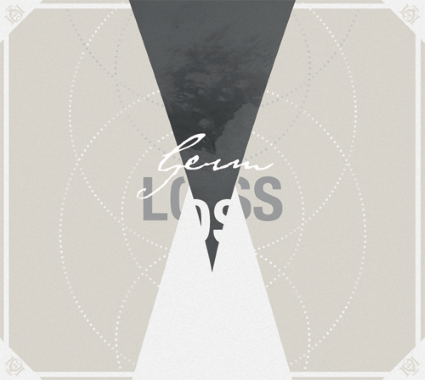
 Germ is a bi-polar side project of Tim, also known for his work in Austere, who’s obvious love for the theatrical spills over into his craft. Germ maintains a symphonic black metal essence, lead by dominant synth lines that act as the main “riffs” for most of these tracks, while the guitars take a back seat with their dissonant, full chord picking style. The keyboards are moving, yet lack depth in favor of simplistic, though catchy melodies that sound as if they were executed with one finger. The overly fake drums, clean vocal style and synthetic outward presentation of this album introduces and nurtures strong pop connotations, which is evidently an interest for the artist as he writes pop music for bigger record labels as his regular job. This is painfully evident on the jangly bubblegum pop song “Only When Every Timepiece in the World is Smash”, ripe with “ohhhh yeeeaaahhh” and wispy thin vocal lines that would dampen an entire arena of panties given the opportunity. I’m all for cross-genre experimentation, but when this style attempts to climb into bed with a stylistically well groomed and rocking form of “black metal” as on the song “Cold Grey Dawn (A New Beginning), along with processed “crying Orc” screams ala Burzum, the union makes for an awkward and unappreciated lovechild. There is a definitely memorable strand spun throughout the course of “Loss” due to the pop-sensibilities of Tim’s writing style, and I would even go as far to point out that this project sounds like a weaker and “happier” attempt at Alcest worship. Neige really doesn’t have anything to worry about here. Neither do you. -Marty
Eisenwald
Germ – Loss
•October 24, 2012 • Leave a CommentKolp – The Outside
•October 24, 2012 • Leave a Comment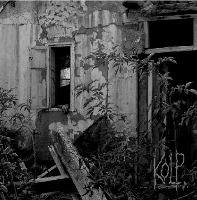 The first time I played Kolp’s The Outside, my first thought was “Burzum worship”, but I couldn’t escape the notion that there was something far more interesting going on underneath the surface. The clean production applied to the droning, murderous guitar hiss immediately provides first track ‘There Was No Place To Hide” a modern punch that’s unexpected but doesn’t undermine the minimalist approach that Hungarians Knot and Jim Jones have adopted. Traditionalism is, without a doubt, on display here, but the Second -Wave Norwegian rawness develops via the writing rather than through primitive sound engineering, flying in the face of like-minded bands. While many are seeking to expand BM’s horizons through experimentation (and I generally welcome that), I’m chuffed to know some musicians can still create a cold fog of sound through guitar, bass, and tortured vocals alone, without replicating note-for-note that which has gone before. While the repeating and staccato-picked chording found on tracks like ‘The Drowning’ aren’t surprising (we expect bastard Burzum children to express themselves this way), the oddly comforting overall feel of this album is. And though there are blast beats, most songs have that Filosofem cadence, and an understated but very real doom resonance – applied through slow, driving tempos and riffs – that can be hard to discern at first. Once you do, you will admire the influence’s subtle (but noteworthy) effect upon your mood.
Both ‘The Drowning’ and ‘The Void and the Silence’ invoke Hvis Lyset Tar Oss-style riffing, but we aren’t dealing with plagiarism here. Every song, including the aforementioned, is offset nicely by what sounds like a hardcore vocalist’s voice wailing dirges about the brevity and meaninglessness of life. Other less obvious but still provocative punk-isms rear their heads on cuts like ‘The Completion’, such as the looping, ‘beeping’ aspect of the intro riff reminiscent of The Misfits (or proto-punks The Monks). With this obscure musical accent, as well as others like it lurking beneath the static haze, shadows of Kolp’s predecessors forcibly propel the song, and with ‘The Completion”s distorted bass denouement, the track victoriously argues for itself to be considered best of the album.
Understand that The Outside is not campaigning for the most unusual black metal album of the year. Not every frozen-riffed album should anyway, for each would risk fading forgotten into the background. If creating good, memorable songs remained the ultimate goal of these past-aware BM partisans, then Kolp have quietly triumphed. -Jim
-Temple of Torturous
Trillion Red – Metaphere
•October 24, 2012 • Leave a Comment It doesn’t take long to know you’re in for an original ride once you hit play on Trillion Red’s latest, Metaphere. Odd-time drumming, joined tightly to a refreshingly audible and clangy bass guitar, carry along (jailbird-Burzum in tone, but modernly-written) dark ambient waves that punctuate angular guitar riffing that balances subtle sludginess and post-punk treble. I hear shades of Tiamat and Fields of the Nephilim here, but not without a power in the angrier moments/vocals that are reminiscent of introspective Neurosis passages. Even more captivating than those choices of colorful influences are the infusions of neo-folk, derived as they are from far less medieval techniques than most bands showcase. All of these disparate sounds coagulate to form Metal that deserves to be termed as ‘Avante-Garde’, as the press kit accurately states. Though not something of an ilk that comes across the Worm Gear inbox often, any music that truly challenges (while still having an aggressive edge) is always welcomed. Mastermind Patrick Brown, a San Franciscan solely responsible for the writing, performance and recording of Trillion Red’s latest, describes his sound as “heavy/crushing, yet calming/lulling”, and he is not wrong. Those particular dichotomies permeate each track, using whispered roars and fading piano under the ambient bits, helping to fluidly connect each song literally and figuratively. And appropriately so; this is not an album to pluck a track from and move on-it is meant to be played end-to-end. Metaphere won’t be understood in the proper context unless it is. Fortunately, enough depth and careful construction exists to merit multiple listens.
Yet despite the pull one feels to run through the whole of the album again and again in the attempt to fully absorb its impact, one point of contention does exist, centering for me on the guitar sound itself. As noted, appealing riffs abound on Metaphere, but the instrument’s distortion feels thinner than I like, perhaps diminished somewhat by the thick layers of atmospherics that here and there threaten to overwhelm it. The choice serves the post-punk passages well, but gives some of the heavier guitar rhythms an almost-Adam Jones sheen, a tonality I never quite got the appeal of. After listening to Patrick’s early ’90s black metal band Nepenthe, I know wall-of-sound remains comfortably within his repertoire, and if I had my druthers we’d have more of that here. But since Metaphere exemplifies personal statement, perhaps more such trappings would have, for him, usurped his manifesto of “in darkness, in light or anywhere in between” approach.
Whatever the case, Trillion Red successfully transforms the only-making-music-for-oneself stance into something much stronger than self-referentialism; this is a musical offering of true substance and validity. Metaphere does requires a larger view and open mind, and singling out any one of its elements could be unfair as, again, context is everything here. In the end, emotional range this wide will either turn you on or off, depending on the range of your tastes, but if given a chance, the humanity of Metaphere will reward you. -Jim
-badGod Music
This Week’s Playlist and Reviews
•October 16, 2012 • 16 CommentsSeven new reviews are up, as well as this week’s playlists (see below). Thanks to all who continue to participate by posting their own lists; it’s been a great way to get a dialogue going and promises to be a reliable way for all to find and/or rediscover worthy music above and beyond the requisite journalistic sound-offs. Please add your playlists to the comments, and enjoy the write-ups!
Jim Clifton:
Abigor – Nachthymnen (From the Twilight Kingdom)
Amon Amarth – Fate Of Norns
Bathory – Under the Sign of the Black Mark
Drowning The Light – An Alignment of Dead Stars
Evoken – Shades of Night Descending
Ulver – Bergtatt
Kult Ofenzivy – Symfonie Oceli
Vader – Litany (kudos to Kevin Gentilcore for putting this one on my radar last week)
Weapon – Embers and Revelations
Wodensthrone – Curse
Marty Rytkonen:
Finsterforst – Rastlos
Iced Earth – Night of the Stormrider
Weapon – Embers and Revelations
Deserted Fear – My Empire
Windir – Arntor
Waldgefluster – Femundsmarka – Eine Resie in drei Kapiteln
Ulver – Bergtatt
Sentenced – Amok
King Diamond – Fatal Portrait
Holy Terror – Mind Wars
Abstracter – Tomb of Feathers
•October 16, 2012 • Leave a Comment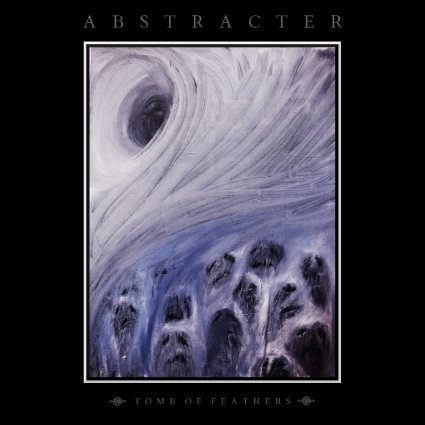 The sound of this CD initially made me take notice due to the full and real buzz this band cultivates on their quest to out sludge bands like High on Fire, Neurosis, and Swans. Before I proceed, here’s the technical info/shameless bio regurgitation:
“Entirely self-produced and self-funded by the band, Tomb of Feathers was recorded live in three days (one track per day), directly to 22-track 2-inch analog tape mounted on 30-minute reels processed by a mid-80’s Akai tape recorder, by sound engineer Josh Garcia (DEPECHE MODE, MELVINS, DWARVES). The recordings were then passed on to Greg Wilkinson at Earhammer Studios for mixing, and were then shipped to Philadelphia to be mastered by James Plotkin (ISIS, SUNN O))), OLD, KHANATE, etc.).”
Looks good on paper and pleasing to old ears such as mine who prefer analog recording techniques to all the slick tricks of the modern era. This also forces a band to practice and know their craft when hitting the studio so they can all get in the same room and knock it out live. I have a lot of respect for that. Where Abstracter lose me is in the music itself. The riffs and structures are about as open ended as you dare go. I can see why they had success playing this in the studio, for there really isn’t a whole lot going on. The 11 minute opener, “Walls that Breathe” is empowered by the bands mighty tone, but there is little to no depth or layers in the music. Powerchord riff after riff hammers and knuckle drags in a neanderthal showing of territorial dominance which I’m sure goes over great live. Scream a lot and turn it up all the way, let the audience pay for their lack of vision and sort it all out the next day amongst the grinding of eardrums and woozy alcoholic haze. “To Vomit Crows” begins with a bit of a quiet interlude before summoning the amplified erection, but it is good to hear a few dynamics enter this bands equation on this track by way of quieter passages. There is a lot of palm muted crunching on this one and the closer “Ash”. Ultra stripped down and simplistic. Again… burly, but boring.
Abstracter’s influences are evident on Tomb of Feathers and they also act as hinderance that looms over this material like a suffocating veil of what “could have been”. A bit harsh to say, especially for a band that sounds like they are on the right path in knowing what they want to accomplish technically. They have the chops and the sound, but lack the “songs”. Again…. if I saw these guys live before hearing the CD, I might have been a bit more impressed. -Marty
The Path Less Traveled Records
Deserted Fear – My Empire
•October 16, 2012 • Leave a Comment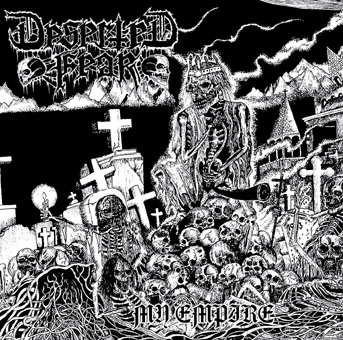 “Death the brutal way”? Indeed! Germany’s Deserted Fear unleash pure death metal. They do so by holding close the ancient flame of the genre to write within a mindset that upholds an aura often found arising from Swedish soil, by way of the Netherlands (if that makes any sense). My Empire is nothing new in regards to a band contributing something fresh to an already well established sound, BUT their execution is deadly accurate and songs are full of excellent riffs and interesting structures. Mixed and mastered by the legendary Dan Swano, this album detonates with detuned guitar fury… the tone hits you like the stench of decaying innards and a cutting snare drum further tightens up Deserted Fears attack. Not a blast beat to be found on here (yes!) which greatly appeals to my love for the old death metal charm. Instead, energetic d-beats devour with cadaveric intensity and the band offers many different tempo dynamics, allowing for memorable harmonies to rise atop the aggression as found on the excellent track, “Bury your Dead”. This song fades out with a mournful melody, putting me in mind of old Dismember. For a young band, there’s a lot of musical maturity on display here amidst the Martin Van Drunen-isms vocally (Mahne really nails it on occasion), and the interesting turns in each track also keeps things moving along and sounding fresh. From moments of catchy technical guitar work, to more simplistic, yet bruising power chord based rhythms, Deserted Fear bleed their masters and consume this sacrifice to make their songs well rounded, familiar, though never buckling to the seductive Sirens of plagiarism. My Empire really is a well-written and monstrous slab of death, sure to impress all of you who continue to support and love this genre of music. I know I will be enjoying this release and looking forward to any input that will be arising from the Deserted Fear camp in the future. -Marty
FDA Rekotz
Finsterforst – Rastlos
•October 16, 2012 • 1 Comment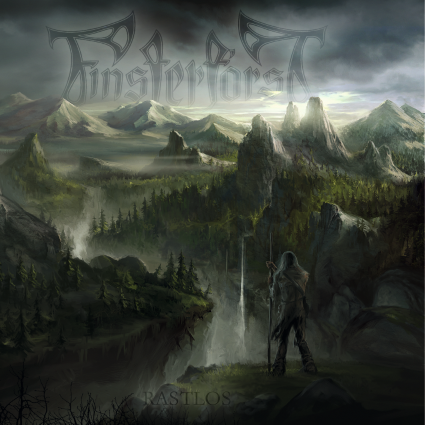 With an epic in scope aura seemingly sculpted from the Viking years of a battletorn Bathory, Germany’s Finsterforst got my attention with this very open and vibrant sounding release. Rastlos feels as spacious and mighty as the cover art would depict, allowing the listener to place him/herself atop a cliff staring down upon the mist laden valley below. I love it when music can remove my brain from this reality and unleash my thoughts into woodsier environs, and Finsterforst effortlessly achieve this with song structures that allow a lot of room for simplistic melodies, synth work and choir accompaniment to soar above other folk inspired and often mundane bands often found polluting this genre. The obvious Bathory influence is going to get me every time, but Finsterforst add so much more of their own identity to the mix that it feels like even though they may still nurture the influence, they are working hard at outgrowing it. Rastlos maintains a definite black metal foundation, for burning guitars and excellent harsh vocals are the main style on display, but Finsterforst’s delivery maintains a very inviting slow to mid-pace push, allowing traditional/acoustic instruments (flute, a horn section, and accordion all make an appearance here) and the aforementioned synth lines to wash over the guitars and provide a warm early autumn atmosphere. When the pitch singing comes in, it feels even more mighty and never out of place. You can hear the bass guitar, which is such an often overlooked element when it comes to all extreme metal genres. The Bass somehow adds so much more depth when you can hear distinct lines that stand out from the main riff.
Finsterforst have really impressed me with Rastlos, for they are clearly excellent songwriters that know how to take both folk and black metal elements, many of which we’ve all heard before on many occasions, and turn these building blocks into something special/vibrant to its core. What a nice surprise. -Marty
Napalm Records
Incantation – Vanquish in Vengeance
•October 16, 2012 • 1 Comment Incantation… the churning storm of genre defining death metal has returned once again with album #9. With 20+ years of inspired productivity and a revolving kill floor of musicians behind him, founding member John McEntee is a machine of unstoppable riff smithing and possesses a never say die commitment to this band. Through all the frustrating member changes and surviving an era where the metal community seemingly went crazy for all things black metal, Incantation’s ideals, work ethic and most importantly “sound”, remain pure and true to their legacy.
Vanquished in Vengeance is yet another well crafted strike at christian dogma with its light cursing aggression (“Invoked Infinity”) and tendency to dip down into the death doom laden abyss ala Autopsy as found on the crawling and agonized “Transcend into Absolute Dissolution”. Boiling false harmonic bends gouge a feeling of unease while powerful riffs and the ever solid drum work of longtime skins man Kyle Severn conjures a foundation that is undeniably Incantation. His drum work has really become an important part of this bands formula, for he has a distinct style that knowingly flows between simplicity and more colorful flourishes when the songs call for it. For this album, John has enlisted the talents of guitarist Alex Bouks (Goreaphobia) and bassist Chuck Sherwood (Bloodstorm) who have fit right in to the Incantation framework, keeping this band vital and ready for the live arena. Vanquish in Vengeance feels like another solid addition to this bands ever impressive catalog, even though it just can’t compete with Incantation’s musical output from Onward to Golgotha through the ever amazing Diabolical Conquest. Having said that, the one weak link that cannot be overlooked without a mention, is John’s vocals. Aesthetically it makes sense for him to sing, for it’s never easy to find the right vocalist, but ever since he has tried his hand at brutal vocals, it has sounded like a register that has been tough for him to fully fall into. Lets face it, both Craig Pillard and Daniel Corchado really put their own uniquely sick and evil vocal blasphemies all over this band and are tough shoes to fill. John get’s the job done and is getting better which is the point/a good thing, but he lacks the character and effortless disgust upheaved by the aforementioned artists. Sometimes this is a distraction for me that lasts for several songs, but once I get used to the delivery, I tend to let it go and let the music and the full push of this bands tone/style be the guide.
If you’ve never been into Incantation, Vanquished in Vengeance isn’t going to win you over to the realm of the goat, but it does display a fine cross section of songs where death and doom unite with unholy lust. Incantation are indeed an institution and can still construct material that I care about and look forward to listening to. Well done John! -Marty
Listenable Records
Melencolia Estatica – Hel
•October 16, 2012 • Leave a Comment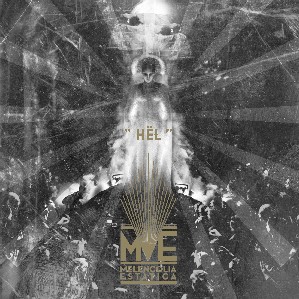 Few bands find the x-factor that enables them to be both boundary-pushing and relevant within a given genre. Typically, ‘too much’ innovation can push a group outside of the subjective boundaries of what some may consider to be black metal, but not enough individuality can keep a band in the shadows.
Melencolia Estatica, whether by design or instinct, have side-stepped the problem altogether. A project of Italian black metallist Climaxia (guitarist of Absentia Lunae, guitarist and bassist of Lintver, guitarist, bassist, and principal songwriter of Melencolia Estatica, etc, etc…I don’t think this woman ever sleeps), ME somehow manages to remain raw in overall sound yet still be able to carve a niche all their own.
Greeting you coldly on your way toward Hel, an intriguing amalgam of buzzing guitars and a ringing bell vie for space in your ear canal, and one immediately gets the sense that something powerful and unique has manifest itself in your player of choice. Taking inspiration from the 1927 German expressionstic film ‘Metropolis’, Hel drags the listener behind a vehicle of warbling woe, pulled by its proletarian inhabitants through an aural dystopia devoid of hope. When the black metal torrents abate for the sake of dynamics, truly dreamy passages appear, permeated by Climaxia’s atmospheric female vocals that make an excellent counterpoint to the rage-packed passages accompanying the roars of Afthenktos, which I find to be pleasingly reminiscent of Jan-Chris de Koeijer(!). Climaxia’s wails of discontent sit better with me than those I hear in more well known groups (WITTR); with Melencolia Estatica, they are simply more memorable. The quiet moments do have the expected gothicisms, but without whimpers, and with intentionally mixed-down synth work meant to create dark clouds of ash, as opposed to beating you over the head with aristocratic classicisms. Satisfactory surprises are always just around the corner, as evidenced on ‘Hel III’ by a nicely flanged guitar that quickly explodes into a barbarous dissonance that fans of Krallice and/or Weakling would certainly enjoy. And drummer Thorns deftly keeps it all together by not only brutalizing when necessary, but also by knowing when to lay back to create space for sullen contemplation (and obliterating said sullenness with the occasional “big” Metal back-beat).
The production of Hel is stunningly bleak, but thick, and creates an appropriately dense fog in which all the instruments find their place. The plodding march of the closing track is a fitting end to a record that does its job of bringing you on its makers’ journey to and from Metropolis, and, even without a servile concept, the understated execution of this magnum opus will leave its mark on your auditory senses. -Jim
-Temple of Torturous
Ragnarok – Malediction
•October 16, 2012 • Leave a Comment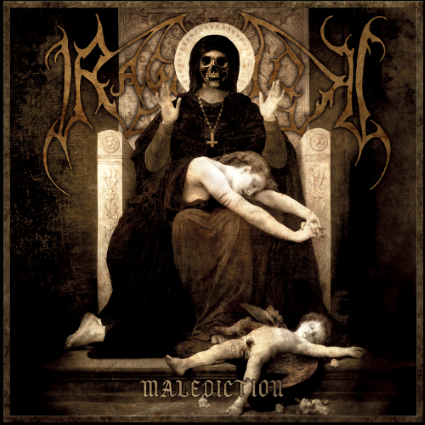 Hanging onto the past when it comes to metal is easy as for the most part, for this style of music can be timeless. But when it comes to fan crushing over a style that resonated from a particular geographical location, in this case Norway, it becomes a bit more problematic when modern times seep in to pervert an otherwise great thing. Norwegian black metal, the 90’s stuff especially, remains as one of my most worshipped genres of metal. The atmosphere. The mystery. A handful of kids took the laws written by Quorthon and infected the crypts with such a symphonic brilliance, that it was impossible not to be changed somehow by the music. Sadly, modernization has changed things drastically in respect to Norwegian black metal. I try to keep tabs on what is arising from this once fertile land, but I keep returning to the fact that Taake and Burzum are 2 of the few torch bearers left standing who still excellently create this style of music. The rest have either become more complex and cold with death metal elements, went full on punk/NWOBHM, or are wiping their tears with their Cure tour shirts in a shoegaze haze of goth/rock/metal dreariness. There’s nothing wrong with all of that I suppose, but it fails to hit me between the ears the way it used to.
Enter Ragnarok, who are incidentally from the golden age of black metal (they started in ’94), but they embrace a harsher/cold/death-like realm of expression mentioned in my little tirade. I have to give these guys kudos for their longevity. I have checked out a handful of their albums over the years, but have failed to hang onto any of them. The songwriting seems interesting. Everything rings across as sharp and hateful. The riffs feel unpredictable (in a good way) and in that respect, keep me interested. My main problem lies in the lack of depth or atmosphere. If you would consider “hate” an atmosphere, then Ragnarok effortlessly knock it out of the park on Malediction, the bands 7th album. This strand of brutal black metal certainly has its place in the pantheon of sonic evilness, but for me, it is hitting a redundant fever pitch that nearly drove me insane in much the same way as the 1994/5 explosion of brutal Cannibal Corpse/Suffocation clone bands did. Again… it all boils down to personal preference here, for the playability of Malediction covers all the right bases and important genre definers. I can understand how this will appeal to fans of this style. On the later tracks “Fade into Obscurity” and Sword of “Damocles”, Ragnarok eases up on the panzer blast attack, allowing for more melodic riff ideas and rhythmic dynamics to sink in and offer a well rounded voice. More of this mindset would have been favorable to my ears. Another strong point is HansFyrste’s (from Svarttjern) effortless affinity for diseased sounding vocal scars. His delivery is sharp and unwavering which perfectly empowers the unrelenting nature of this album. All this aside, Malediction is a good, though rather irrelevant sounding album mainly due to the delivery. It has kept me interested for the 4 listens I’ve spent with it, but I can’t shake the fact that Ragnarok puts me in mind of a less dense and disruptive Marduk, who is a band that I feel pulls this style off far more effectively due to the catchy nature of their songwriting style. I guess I’d rather listen to the later when the mood for violence rears its bloodied head. -Marty
Agonia Records
Weapon – Embers and Revelations
•October 16, 2012 • 3 Comments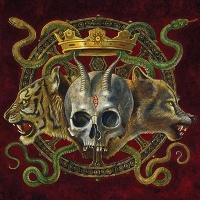 Call Embers and Revelations, the latest album to spring from the cursed minds of Vetis Monarch and co., a statement of intent. The statement reads like one we’ve seen many, many times before: we will pull the entire spectrum of our enemies’ existence, physically, spiritually, and dogmatically, down to Hell. While an admirable and familiar sentiment to those of us that enjoy black/death metal of this kind, often such a war cry gets lost, simply since so much Metal brushes past the playlist of extreme music diehards on a daily basis. And with that saturation a certain desensitization occurs, quietly diminishing the impact of honestly-communicated, unsettling emotions that were meant to be fully expressed. Even so, the rare recording can and does infrequently claw its way up from the depths, and, if its conviction is sincere enough, the album will remain impervious to this ‘weakening’ phenomenon. By utilizing their finely-honed craft and and an unrepentant, yet vivid display of wrath, Weapon have created such a work. Embers and Revelations will suspend your disbelief of monsters in the dark.
Opening with a haunting, demon-yelp of a riff, opener ‘First Witnesses of Lucifer’ sounds exactly like what the soundtrack would be to any film documenting the fate of souls ‘enjoying’ that experience. The song builds and builds, tension mounting, with triplets anchoring Rom Surtr’s melodies of technical yet imminently tasteful guitarwork (think impressive but not over-the-top arpeggiated accents). By the time the voice and blasts come in at about 2:15, you’ve been properly prepared for the feast. Vetis Monarch’s frank delivery reincarnates Altars of Madness-era David Vincent, but with a clarity that steeps his rages against the Light with its own type of vitality. Coupled with an ultra-clean, yet nevertheless warm production, the album combusts from track to track, but with variable-timing; a variety of tempos, picking styles, and yes, audible and nicely chorus-effected bass guitar breaks (courtesy of Kha Tumos) help keep the color coming through each and every song. And despite the high-level guitar playing, the technically solid drumming of ‘The Disciple’ (nee’ Paulus Kressman) will still command your attention time and again. And the catchiness…I dare you not to read/shout the lyrics along with Vetis Monarch’s urgent barks (this did not happen: “’Feral-Harlot! Unchaste-Spirit! Maha-‘ oh, hey, sorry, significant other, didn’t see you standing there…”). But Weapon can be wordless and still provoke. Instrumental and no-less-the-powerful-for-it track ‘Grotesque Carven Portal’ contains floating rhythms, screaming artificial harmonics, and a closing feedback fade-in (I say ‘in’ because it connects directly with the title track); a bit too short though. A minor quibble, worth noting only because, well, damn it, these guys can play, and unbridled instrumentation of this caliber (with taste, not wankery) deserves to be dwelt upon. The only other – also minor – issue I have with Embers and Revelations is that, while the Eastern influence is still present, I like how in comparison that particular style feels more pronounced on their last album, 2010’s From the Devil’s Tomb. Admittedly, one could argue, however, that creating an Eastern effect subtly (Embers and Revelation’s title track is a prime example) takes just as much effort, if not more, than employing these soundscapes in an overt manner.
Bottom line: buy. This is a record I’ve listened to fifteen times in the last week, and thirteen of those were not for the purposes of this review. What Mr Monarch’s impeccable word/guitar-smithing and his fellow band members contributions have given us will continue to unfold after repeated lessons. That’s what ‘impervious’ albums do. Weapon, we have received your statement of intent, and we will submit to your demands. -Jim
-Relapse Records
Playlist
•October 9, 2012 • 12 CommentsJust a quickie update this time around with a fresh new Bedemon review from Jim. We would like to encourage all of you to share your playlists with us and the rest of the class by commenting on this post with what has been contributing to your ultimate deafness. We will add new content to Worm Gear every Tuesday, with more interviews towards the end of every month. Follow us on Twitter and Facebook, for there will not be an email spam attack for every update. Thanks for making this re-launch a success! – The Worm Dudes.
Jim Clifton
Asphyx – Last One On Earth
Azaghal – Nemesis / Omega
Behexen – My Soul For His Glory
Burzum – Fallen
Entombed – Left Hand Path
Incantation – Onward to Golgotha
Inquisition – Ominous Doctrines of the Perpetual Mystical Macrocosm
Joy Division – Heart & Soul
Nazxul – Totem
Tombs – Path of Totality
Bedemon – Symphony of Shadows
•October 9, 2012 • 1 Comment Bedemon’s Symphony of Shadows carries with it the kind of baggage that any other Pentagram-related release has: doomed luck. Randy Palmer, Bedemon’s principle songwriter and an early rhythym guitarist of Pentagram, died in a car accident a few months after the original sessions in 2002. For the next decade, Geof O’Keefe (drums/lead guitar, also, as most of you know, formerly of Pentagram) worked with the remaining members to complete the album. The results, while uneven from a production standpoint, do the band’s pedigree justice.
First track ‘Saviour’ begins strong with a suitably Sabbath-y riff slab, a mover that opens the album with an earnest and aggressive strike at the senses. Newcomer Craig Junghandel’s voice arrives shortly thereafter, and, while his command of the rather simple lyrics is strong, one gets the sense the pitch singing should be lower in the mix. Here, and across most of the album, the modern cleanliness applied to the vocal tracks feels out of place (and in some cases, nearly grating); the sharp clarity detracts from the ’70s warmth of the instruments. Thankfully Randy’s handiwork is never long in bringing the listener’s attention back to where it belongs. His well-worn but effective Iommi-stylings pull you right back in before you begin to wonder if this is an album with which you actually should spend your evening. Surprisingly, O’Keefe’s handling of the lead work is far beyond what one would expect of a man whose primary vocation is skins-basher, as are those of bassist/lead guitarist Mike Matthews (their switchback solos bringing songs such as the standout ‘Godless’ to a fitting close). Each man’s sorrowful, well-phrased lead lines perfectly complement Palmer’s thick rhythym guitar sonicstorm. More of this easy meld of mostly-pentatonics and slow, evil riffing awaits you at the album’s exiter ‘Eternally Unhuman’, with Randy’s moody SG running the show from beginning to end. In all, aside from the sometimes off-kilter vocal lines and almost campy production oddities (yep, those are handclaps on ‘Kill You Now’), the doom that permeates this release remains worth diving headlong into. Even ‘Hopeless’, a track for which O’Keefe states he had to “re-do both (Mike’s and Randy’s) bass and rhythym guitar parts” is not without appeal, though knowing this prejudiced me against the song at first.
Still, ingering questions will arise for the listener. First of all, why did Randy not attempt to play the solos himself, insisting as he did for Matthews and O’Keefe to handle the task? Why was Bobby Liebling – Pentagram’s and Bedemon’s original vocalist – not asked to perform on the album? For those of you that enjoy delving deep into Pentagram lore, you will have answers to these queries and have much more to find in the album’s accompanying booklet. Besides a track-by-track breakdown of the inspirations and individual contributions of each member following the lyrics of each song, a long, candid and well-written history of the band during the album’s sessions and up to the present follows penned by O’Keefe, who warns the reader “settle in; if you’ve read my liner notes in the previous Bedemon release (2004’s Child of Darkness, a collection of bootleg Bedemon sessions from the ’70s with Bobby Liebling on vocals) or Pentagram’s First Daze Here Too, you know brevity isn’t my forte.”
Despite its flaws, I continue to feel an urge to listen through Symphony of Shadows again, feeling that, maybe this time, I’ll understand Geof’s production choices a little more, or, at least, to get a glimpse of where Palmer’s presence may have taken them next. But none of that really matters. We have in our hands the last recording of arguably one of the very first US Doom guitarists, and for that I am grateful.
-Svart Records
It’s the return of the fire and flame…
•September 30, 2012 • 10 CommentsIt has been a long time coming friends and supporters! Worm Gear has returned after 2+ years of hibernation. I have to admit… I needed the break. My wife and I had a son. Work got busier. Bindrune Recordings has gotten busier. There were things that needed attending to and honestly, WG slid down my list of priorities as I have struggled to feel alright with a changing music business and where an independent publication fits into it. The thought of just letting it all go has entered my mind over the years on more than one occasion, even though I have greatly missed writing about the music I love and sharing my thoughts with whoever wanted to stay a moment and read them. Gone was another writing outlet that I greatly respected and enjoyed contributing to (Metal Maniacs) and really, I just felt rather empty to everything that had to do with metal “journalism”.
The events leading up to the rebirth of WG happened quickly, inspired by the arrival of Jim Clifton and his family to Traverse City, MI. We became fast friends and I greatly respect the mans passion for this music. As we discussed a way to work together on some project that reflected our mutual interests, the subject of Worm Gear came up in the conversation and we both realized that he could be a great asset and coconspirator/editor in reviving this medium of opinionated expression. I’ve never felt great about losing the print side of Worm Gear, or how we left it to just kind of rot on the Net, but his ideas and excitement towards the written word and appreciation for what Scott and I had nurtured since 1995, breathed much needed inspiration into my sails. So here we are. The plan is for more frequent updates. More reviews and interviews. There are other “what if” plans that we would like to put into action, but first we must see if you’re still out there. Do you still care? If so… share the news of our return. Take time to comment and be a part of this blog/interactive medium. We would like feedback and to hear from you. If we can get this off the ground again, who knows where Worm Gear will end up…
Before I turn this over to Jim for his introduction, some of you will be asking, “Where’s Scott?” He too grew tired of the struggle to present Worm Gear to the masses, both in the writing end and the technical end as he also was the guy to do all the website stuff. He worked his ass off to see this thing survive and it was often a lot of tedious/time consuming work with little reward. My eternal thanks, love and respect go out to him for this and his friendship. Even though he’s not as vocal and involved as he used to be, he’s still here lurking and will be contributing pieces when the spirit moves him.
OK friends… there is a pulse… It is with great honor and respect that I introduce you to Worm Gear’s new co-editor, Jim Clifton! -Marty
Marty Rytkonen Playlist:
Bethlehem – Suizid and Mein Weg
Forefather – Last of the Line and Steadfast
Fates Warning – Night on Brocken
ICS Vortex – Storm Seeker
Borknagar – Urd
Weapon – Embers and Revelations
Arch/Matheos – Sympathetic Resonance
Satyricon – The Shadowthrone
Vektor – Outer Isolation
Hades – Again Shall Be
“I got up and told my idols, then still the most extreme metal group on earth, that we too were a band and that we were going to be more extreme than them. Venom reacted condescendingly to us big-mouthed little nobodies. Cronos simply replied with a bemused: ‘Oh yeah?’”
-Thomas Gabriel Fischer, “Only Death Is Real: An Illustrated History of Hellhammer and early Celtic Frost”
Those that come after are often compelled to outdo those that have gone before. I, however, am no Thomas Gabriel Fischer with decades of highly-influential riffage eventually justifying his youthful exuberance. Think of me, rather, as a ripening metal devotee that has, for most of his 38 years, shoved all things Metal into his dark heart and considers himself ready to discuss what great music lies churning beneath the waters of Acheron. I won’t try to mimic or presume to match the level of contributions made by Worm Gear Zine’s forebears (most notably of course, Scott Candey, Worm Gear Zine co-creator and Marty’s lifelong friend); any attempt to do so would serve only to diminish a history I am quite proud to continue. Instead, with my own voice and humor, I’ll carve a new niche while never taking an eye off of Worm Gear’s yesterday, wherein reviews and rants were kept honest, relevant, and informative, and have continued to be (sans the hiatus) since 1995. With gratitude and humility, I thank Mr. Rytkonen for granting me the title of co-editor. And I, if given the opportunity by all of you, will through words provide the credibility necessary for this role, as we all row forward together in a blood-stained skiff, bent on the deliberate and considered examination of extreme music. Trust that Marty and I have god-size plans for this much-heralded, newly-unearthed Worm Gear Zine, and with your participation, praise, and yes, criticism, you can be a part of this new Beast and its return.
Welcome to Hell. -Jim
Jim Clifton Playlist:
Agalloch – Faustian Echoes
Aura Noir – Out to Die
Azaghal – Teraphim
Bathory – Blood On Ice
Deströyer 666 – Phoenix Rising
Evilfeast/Marblebog – Isenheim/Abyss Calls … (split)
Ildjarn/Nidhogg – s/t (split)
Panopticon – Kentucky
Pig Destroyer – Prowler In The Yard
Vinterriket – Lichtscheier
Agalloch – What dreams may come
•September 30, 2012 • Leave a Comment Agalloch’s musical journey has been well documented and praised throughout the years and regardless of the level of notoriety the band obtains, one can expect their music to remain an all encompassing journey into the hearts and soul of its creators. This to me is a defining reason why so many people have connected with Agalloch. Their music has always struck me as welcoming and honest. Organic. Something to fall into knowing that the enveloping layers will catch and support your weight as you lean into a vibrant sound that in a lot of ways, sonically defines the flora and fauna found in the Pacific Northwest. Agalloch’s music maintains a beautiful shade of gray, borrowing from both black and white/light to achieve a well-rounded sense of self and awareness that only continues to strengthen and develop as the members of this band flow along in time, growing together creatively and working to make music that matters. Marrow of the Spirit and the recent EP, Faustian Echoes both reflect and celebrate the years of hard work and the bands seemingly spiritual upholding of their past, while not shying away from more forward thinking experimental tones and elements to achieve and perpetuate that desirable shade of gray that can only be labeled as “Agalloch”.
Having crossed paths several times through correspondence and phone conversations during the many years of our underground habitation, this interview with guitarist Don Anderson was inevitable and in many ways long overdue. We recently reconnected just on the heals of an extensive Agalloch US tour, Don getting married and returning from his honeymoon. Busy and important life events for sure, yet he still found time to pour his thoughts into this interview. Read on and learn more about the internal workings an driving thoughts behind one of the USA’s most important/potent bands. -Marty
Photos by Veleda Thorrson
Many regard Agalloch as one of the originators of a style that has in a lot of ways, injected a much needed strand of emotion into an often close minded sub-genre of metal. What was going on in your life at the time (personally and creatively) when the decision to bring black metal and Neofolk together and did it feel at the time like it was something fresh?
DON: I had always associated open acoustic strumming with either country, folk, or a kind of “campfire” music—never as something dark. Most acoustic guitars in metal, usually nylon string, are finger-picked in a classical style, but rarely strummed. When I heard Death in June’s “But, What Ends When the Symbols Shatter?” I was blown away by how moody, dark, and huge it sounded with the open strummed acoustic guitars. Between them and Sol Invictus’ “The Blade” we felt that we could merge the two since both were fundamentally dark. It felt fresh because I hadn’t really heard that much background strumming behind heavy metal riffs like we did on “The Mantle.” Now it is more commonplace, so I like to think we may have had a little something to do with that. But, that’s for history to decide.
If you would have told me 10 years ago that Agalloch would be so out in the public eye with ambitious tours both here in the states and overseas, I never would have believed it. Agalloch’s sound, design and ideals stemmed partially from John’s isolative/misanthropic creative side. As the years rush by, what has changed in Agalloch to find your boots on the ground and seeking approval from your fans in the live arena?
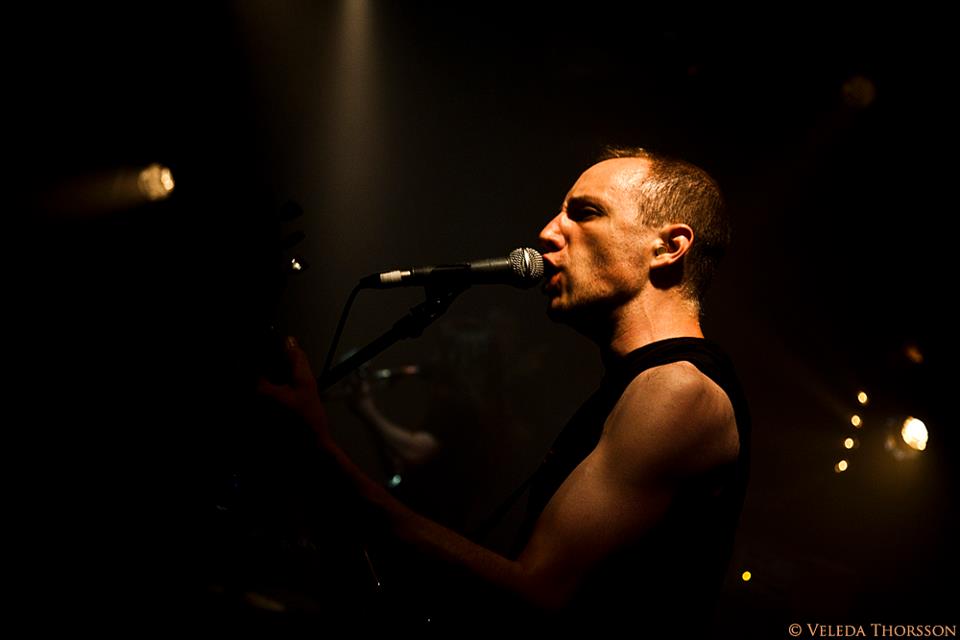 DON: We’ve always thought about what it would mean and look like to play live since we began, but it simply wasn’t practical. I’m very happy we have begun playing live because the band could not support itself otherwise. It’s true that a band today must tour to make any money. People are not buying CDs like they used to. Fortunately, the recent vinyl craze is very helpful and selling vinyl on tour is incredibly practical since we can avoid shipping and packaging costs. So, if it wasn’t for touring we would not be the independent band we are today. Also, playing live is cathartic in a way that cannot be matched in the studio or jamming together or writing at home. I think too we’ve been able to make our live shows special by incorporating film, incense, fog, and other “Agallochian” elements. We never wanted to be just a band playing the songs—live shows have to be completely immersive and representative of the band as a whole and this includes doing more than simply playing the songs.
As an outsider trying to look in, I see this as an awakening from art created for the self, to being brave enough to realize that others care and respect the art enough, to be ok with sharing it to a wider audience…
DON: It’s very humbling and rewarding to see that people enjoy our music and they express this joy by coming to the shows, singing along, and overall supporting the band. Playing live is certainly reciprocal. We feed off the energy of the crowd and then we give it back. Again, there’s nothing else like it.
Touring bands often strip down their material to make it easier to reproduce live for more impact. Do you think this new era of the band will somehow affect the way you guys approach the songwriting process in the future?
DON: Yes and no. We have begun recording as a live band and actually rehearsing the songs as a band before recording. Usually songs have been built part by part, recorded track by track, and then we’d play them as a band and adapt them for live. This is of course backwards from what most bands do, but with the distance issues in the past, there was no other way. Now, only Aesop is at a distance so we can have him visit very easily and spend a week rehearsing and writing. However, even if we record live there are still always overdubs and more guitars. We will never let the limitations of a live setup effect our songwriting. If we hear four guitars, we’ll track four guitars and worry about arranging it for live later. I see rearranging and even rewriting our songs for the live performance as an opportunity to let the songs live a new life. It’s a welcomed challenge and I love the fact that some of our songs are quite different live or have a different feel. If you want to hear the songs as they are on the albums, listen to the albums. We’ll never use back-up tracks; it’s always better in my opinion, and more honest, to reproduce your music the best you can live. If this means you have to rearrange parts, then you should. I feel that is my responsibility as the artist and musician. Songs should always evolve and it is our responsibility to let that happen.
Post tour wrap up… there is no denying that the internet has driven the metalheads deep into their fortresses of solitude, watching concerts on youtube and freely collecting 1’s and 0’s. With this in mind, how was the turnout for the US tour? How does touring this country compare to your European trek? Could you explain the differences between the continents metal scenes and share some memorable moments?
DON: The shows have all been very well attended. Of course all cities are different; you’ll not get the same numbers in Birmingham as you will in Toronto, but the crowds regardless of city are always really good and enthusiastic. Merch sales have been strong on both tours so, overall speaking for Agalloch it feels as if people do come out and support music and enjoy doing so. We couldn’t do what we do without touring and people attending and it has been a positive experience playing live. Europe is often easier to tour through because the cities are closer and venues do tend to treat the artists better regardless of stature. Both crowds on either continent are incredibly passionate, but there are cultural differences. Italy appears to have a culture that is very open to people, males in particular, expressing their emotions and feelings publicly. I’ve never felt a more intense and passionate crowd response than when we’ve played Italy. Rarely do we make guys cry, but in Italy that kind of emoting is not condemned by the culture—Italians simply love life and are passionate about art and are not afraid to show that. It’s quite the opposite of the “arms folded and glaring” variety you get in some other places. So the differences often do seem to reflect a country’s culture as a whole rather than the continent as a whole.
Marrow of the Spirit has earned critical acclaim the world over and I see it in a lot of ways as Agalloch’s most experimental full-length effort. This element has always been a part of the band for all its members musical appreciation reaches far beyond the metal realm. What was the muse for this album and what made you guys feel comfortable enough to edge into an even wider scope of musical inspiration?
DON: There are always a variety of “points of departures” for us musically. We were
 interested in being a bit rawer and “black metal” with this record. Lunar Aurora was a big influence on us this time around. But, so were bands like Tangerine Dream and the stuff that we’ve listened to forever like Fields of the Nephilim. Our engineer Steven Lobdell was very good at helping us achieve a looser and more natural sound. He showed us how to let the rhythm guitars breath a bit more rather than always lining up perfectly—you can hear this on the main verse riff that opens up the verse in “Into the Painted Grey.” But, as I’ve mentioned elsewhere, film is always a reference point. This time it was Bela Tarr’s “Werkmeister Harmonies” and the work of Andrei Tarkovsky, “Stalker” in particular for me. We were also fortunate to have the cover painting from Mark Thompson very early on to help inspire us. The dark and cold blues in that painting sort of set the tone and mood for the music. So, inspiration comes from all kinds of things and we tend to surround ourselves with those things while recording. I was also teaching “Walden” at the time and from that book came the slightly altered phrase “marrow of the spirit.”
Do you think you achieved what it was you heard in your head? Have the flood gates essentially opened? How far do you push it before you stray away from the initial meaning of the band? Is this even a concern?
DON: I’m a very different songwriter than John. For me, I deliberately try to get out of the way of the music, so I let whatever is emerging at that moment in the songwriting process, or the studio, guide my instincts. The most important part of writing music is listening to what you are doing and letting the music tell you where to go next. It’s all already there, you just have to get your ego, your subject, and your personality out of the way to see things you wouldn’t have seen otherwise. I enjoy the studio experience and letting what happens there happen a bit spontaneously. John is a bit different and he hears the music in his head and has a very concrete image or mood he wants to achieve. I guess we meet in the middle. I push on that for him and he keeps us all on track. I don’t know what the “meaning of the band” is, but if there is a key element for me it is that we remain an existential band. I have no interest pursuing music that is happy or that doesn’t explore the real troubling questions about humankind, life and death, nature, and the absence of God. I recently joked to John saying that if Alcest is the light, then we are the darkness to that light. I know there are similarities between the two bands—to a degree, but we’ll never sound bright, light, sunny, or nostalgic like that. I like Alcest, but despite the similarities, the key difference is, and always will be, our Bergman-esque interest in death and the meaninglessness of existence. But, I do want the music to continue to expand and grow, but we’ll never write a ballad or a straight up happy song. At my most cantankerous, I’d argue that happy people have nothing important to say.
After leaving The End Records, the band has taken the reigns of its own destiny so to speak. Did this feel like a risky move during this transitional time?
DON: Not really. It was liberating and caused us to all really embrace the band more fully. Being independent is the best choice any artist—if they can achieve it financially—can make.
Having more control over who the band works with and being free to ponder its own business decisions must be liberating. How has this changed the band dynamic and would you recommend a similar path to bands both new and old?
DON: I am not naïve about our success; I realize that it is the fans that support us by paying for merch and coming to shows that have allowed us to grow more independent. Remember, we went independent after being around for twelve years. It took a long time. Not all bands can afford to be independent of a label. My best advice is to go with a label early on, but never sign away your rights “in perpetuity”—because the label will own those albums forever. Better to retain the rights, or get them back later, and re-release those records on your own once you’ve achieved independence. I think Neurosis is a band that we look up to and have modeled ourselves after. Again, we all feel part of something more personal and meaningful now that we all have more control over it.
Agalloch endured drummer limbo for many years before enlisting the talents of Aesop Dekker. What did the band see in him that warranted taking a chance on a musician that lived in another state? What does he bring to Agalloch and how do you feel these attributes will mold the band?
DON: We’ve always felt a kinship with Ludicra and the music they wrote and performed. Aesop’s drumming has always reminded us of early Ulver and Ved Buens Ende. What I appreciate most about Aesop is his dedication to always getting better and expanding his drum skills. When he recently got into blue note era Jazz, you could hear it on the latest Worm Ouroboros record. A musician who is constantly reinventing themselves, always seeking to be better, and prepared to adapt other styles to their own, is priceless. Aesop is one of these musicians. So, this tells me that when he explores other drumming styles, we’ll eventually hear it in Agalloch and this will help us grow. I also think Aesop’s experience as a live musician and recording live has influenced us and helped us reach a level of performance that would have taken longer with someone else. Personally, I love playing with him because I’m always listening really carefully to his fills, his accents, where he places the beats. He keeps me on my toes and challenges me to be better.
Agalloch milestones…. Playing with Tony Wakford on stage would definitely be one. I’m sure there are many others. With so many goals achieved and special moments behind you, what sort of dream still keeps you guys going? That elusive Agalloch/Douglas P collaboration?
DON: Playing with Tony was amazing and a “coming full circle” in a way. Who would have thought that after 10 years since we recorded the Sol Invictus cover we’d have the opportunity to actually perform it with him? What keeps us going is quite simple; we love writing music and are always committed to making each record better than the last. The same excitement I feel today when we begin demoing new material or when John shares a new riff with us, is the same I felt when I was 19 working with John. That’s all it takes really to keep doing what you do. You have to truly love what you do. I know that isn’t a profound milestone, but sometimes the best and most genuine answer is the simplest.
On a personal note, knowing that you have been Agalloch focused and also relocated to Portland from Seattle, has there been any time to think about Sculptured? As that project embraces more of a progressive metal style, where would you like to see this music develop next?
DON: Yes, there is time here and there. Both projects satisfy my role as a musician, so I never feel like one takes from the other. Sculptured happens when there’s time for it. I have a handful of songs written and I am anticipating another Sculptured in the future. The music is still jarring, dissonant, and melodic, but maybe not quite as frenetic as “Embodiment.” The lineup will be slightly different, so that will naturally affect things. I wouldn’t want to do “Embodiment 2” anyways. Currently though I’ve been focusing my time on the new Sol Invictus album which will see a release next year (2013).
I look at my collection and hold the classics in high regard… so much so that it becomes tough to hear/find anything groundbreaking to carry on the torch. What black metal album(s) from the past do you feel haven’t diminished in significance? Aside from a handful of bands, the next wave of BM bands seem to be stuck emulating their idols. What have you heard recently that would perhaps change my mind on this point? Where is the creativity, or identity in 2012?
DON: I’m pretty much stuck in the early-mid 90s with the exception of bands like Deathspell Omega, Virus, Lunar Aurora, and the latest Abigor releases. It won’t surprise you that I think the following are untouchable and never get old: Satyricon “The Shadowthrone;” Emperor “In the Nightside Eclipse;” Dissection “Storm of the Light’s Bane;” Burzum “Hvis Lyset Tar Oss;” Ulver “Bergtatt;” and Mayhem “De Mysteriis Dom Sathanas.” Many of these continue to influence Agalloch. There are riffs on “Faustian Echoes” that remind me a bit of “Shadowthrone.” I honestly don’t keep up too much on contemporary black metal—again, I appreciate the atonal experiments of the initial bands I mentioned, that is something I try to do in Sculptured (although not in a black metal sense). I’m more interested in catching up on music I missed growing up. I’ve been listening to Television, The Stranglers, Dixie Dregs, Public Image Ltd., and mostly 70s era prog. That’s where my head is at.
Agalloch has had a very busy couple of years. Has writing for the next album commenced and what sort of a timeframe do the fans have before sinking their teeth into new material? If there are new tunes, how are they shaping up? Forward thinking? Perhaps more of a classic Agalloch sound?
DON: It’s still too early to tell, but we do have an archive of riffs, songs, a basic framework and themes for the fifth record. We’ll never completely return to an “old sound”—we always want to move forward. I can see the material growing more complex, not in a proggy-Opeth way necessarily, but just further experimentation with textures, tempos and times, and even tunings at this point.
Thank you Don for spinning your evening away on this interview. Please take a moment to plug away and leave us with a final thought….
DON: Thanks to everyone who came to the shows during the recent tours of Europe and the US. Thank you for supporting the band!
http://www.agalloch.org/
http://www.facebook.com/AgallochOfficial
Forefather – As we fight the Raging sea…
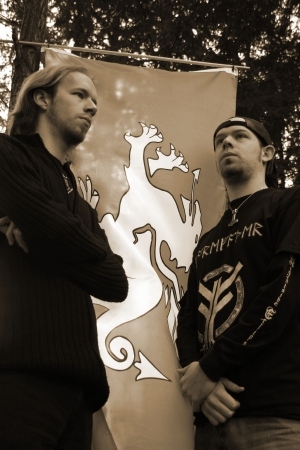
•September 30, 2012 • Leave a Comment Last of the Line, the 6th full-length release by England’s Forefather, isn’t your typical folk/black metal affair that piles on the tongue-in-cheek silliness often propagated by the overtaxed and overpopulated genre, for I haven’t heard such sharp/smart melody lines and passionate singing in ages. Upon experiencing a track from this album that someone posted on Facebook, I was instantly hooked and sought after all this band had to offer. Forefather’s power lies in their amazing songwriting skills. Mighty hooks that never feel cheap or contrived, are effortlessly lifted by a crisp guitar tone and equally smart riffs. There is a unique atmosphere to this material that somehow withstands modern production techniques, to allow the listener to fantasize about ancient times, ushering them back through the years by way of melodious harmonies and brave pitch singing. You can almost feel the sea spray on your cheeks as the chorus from “The Downfallen” swirls it’s memorable refrain deep into your consciousness. It is this world building musical magic that sets Forefather apart from other, often more popular acts. For this reason, I had to reach out to the band for more of a glimpse into their processes and history. Athelstan was kind enough to unlock some of the mysteries for us all. -Marty
Greetings Athelstan! Many thanks for setting some time aside for this interview. There is a strong cohesiveness and focus that spins throughout all of the Forefather releases… like we are experiencing the culmination of your life’s body of work as you the artist realize and refine it. What does Forefather mean to you?
I don’t think we’ve reached a culmination yet. I always feel we can do better, but I do agree we’ve grown and improved and got much closer to something we feel satisfied with. There is a strong vision we have for Forefather which is difficult to describe, but it definitely keeps us on the right track, and like you say, focused on what we need to do. Forefather is obviously very important to me (how could it not be to spend all this time on it!). It’s my creation and I’m one of those people who feel the need to leave something of worth in the world after I’m gone.
Having shared this journey with your brother, does the meaning go beyond what one would expect from a typical band dynamic?
I think so yes. The strong vision will override certain aspects of the whole “band” thing. It’s totally about the music and the idea, so the usual distractions which may lead another band off course won’t affect with us. Forefather definitely feels like more than a just band, though it’s difficult to describe exactly what it is. I suppose it’s the closest thing we have to a religion.
I think I heard the leadoff track from Last of the Line on a Facebook post and was instantly taken with it. Through the course of 2 months, I tracked down and obtained all of your releases. You have such a unique and keen ear for melody that is powerful and infectious. Even though the older material is quality, there is still has an aura of a band trying to find and maintain its full potential. Would you agree with this statement and when you look back on your past works, how would you describe Forefather’s journey as songwriters?
I agree that when you look back on the earlier albums there is obviously a lot of good stuff there; great melodies and ideas though in some areas it wasn’t quite “there” (mainly in production only). On the last two albums we’ve definitely been a lot more satisfied with the end product. I think we’ve always been pretty good at song writing right from the beginning, but we’ve got better at squeezing more out of the songs in the latter production stages.
For me, “Steadfast” was in a lot of ways a breakthrough album where melody, song structure, production, and amazing riffs all aligned to create something that is in a class far loftier than the “pagan or folk metal” tag often used to classify the band. It’s like the foundation was finally complete and steadfast if you will (sorry…. couldn’t resist!) for the next phase of the band. As a songwriter and musician, did you feel like all the years of hard work and creativity was in a place you wanted it? Being the first release on your own label, do you think it received the exposure you hoped for?
I agree with your summation. I think we were a lot less restrained on that album and threw a lot of energy into it. You can hear that when you listen to it – it sounds pretty intense, maybe a bit too intense sometimes. It did feel like we’d started a new era, partly because there’d been quite a big gap between it and the previous album “Ours is the Kingdom”. I actually feel that “Last of the Line” is more of the foundation. Steadfast was the storm that shook things up, and it settled into the new “groove” with LOTL. I certainly feel more comfortable now, like we’ve reached the kind of place we wanted to get to, and now we can expand it more. It’s getting more exposure now via the USA version on MetalHit, which is a good thing as we had quite a limited promotion plan when we released it in December. We were mainly interested in getting the thing finished!
With Last of the Line, Forefather is hitting its stride taking everything great found on Steadfast, and expanding on it. Sharper guitar tone. Soaring melodies. Piercing chorus’. As you have built up your own studio and songwriting vocabulary, is this era of the band where you always envisioned it? How has the album been received and where do you go from here?
Yes I think we’ve got a good framework to build on now and we’re more comfortable in our songwriting system. Plus we’ve finally just about learnt to tame the beast of music technology! I fully intend to produce something better than both the last two albums next time around, which is what we always aim to do. Last of the Line has been largely very well received and taken as a mature step forward. You always have the usual types who don’t understand it of course, plus this time there seems to be a Steadfast contingient who have decided that it can’t be topped. Where we go from here is towards the next album, which we have a lot of music written for.
Lyrically, Forefather is a proud upholder of English history which is something that used to be a unique theme for a band from your country when you started. Where does this pride stem from? Your upbringing? Your personal exploration of historical events? What is it about the past that calls you back? For myself, the ways of life and quality of life were probably more difficult, but it all meant so much more to those that had to work hard to survive. There was more honor. Less complacency. Less apathy. Everyday was greeted with a new sense of purpose…
I agree with the sense of purpose thing. I’m not very suited to this world where we all just have fun and party. It seems pointless. You need to have struggled to appreciate the good times. There was certainly more room for honour in those times as it was essential to survival. You had to know who you could trust and bonds of kin especially were therefore very important. Our attraction to English history is a long story, but it started proper in our late teens from a sense that we weren’t really being allowed to be proud of being English, and this went against our instinctive feelings. So that naturally led us to look more into the matter and discover more about the history of our land and fellow countrymen. At the same time we started the band and it was the perfect theme which hadn’t been touched on much before in metal (at that time). I suppose our sense of English pride must just have developed naturally through upbringing, but it was not ever mentioned as an important issue, until more recent, politically correct times.
Having said that, do you see there as being any hope for the future? Future of England? The future of mankind?
I have to admit it’s all heading in a pretty worrying direction, but it doesn’t do much good to dwell on the negative. There is potential for good and improvement and all you can do is concentrate on that and project your vision as much as you can. The way I see it is there are two types of people in the world; the ones who are happy to live their life in the world as it was offered to them in a natural way, and those who are constantly trying to manipulate the world towards their deranged world view. All problems come from these people! And they rule us at the moment! Nature knows best.
Taken from “Proud to be Proud”: “Heroes passed unto ye we give hail. Mighty men without fear, without shame. Some will say that our pride is a sin. But in their name we’ll unite and we’re proud to be proud”. Staying true to your forefathers and being proud of who you are and where you come from, in spite of what others say. How do you carry this sense of national pride with you, and how is it perceived by others you come in contact with? Has this been seen in a negative light as far as the band is concerned?
I’m not the type of person to go around shouting my thoughts from the rooftops, so I carry it mostly within, other than Forefather which is our personal expression in musical form. If someone asks me I’ll tell them. Sometimes people will feel uneasy with talk of national pride as they’ve been programmed to believe this is a bad thing in relation to England. I can’t think of any specific instances where this has been viewed negatively regarding Forefather, but maybe it was a long time ago and I forgot. Sometimes interviewers will highlight this “problem” and mention the far-right, though this was more in the early days. It seems to have died down. It was probably that song (Proud to be Proud) that caused a lot of this.
From dealing with every aspect of the band, leading to the creation of your own label, Seven Kingdoms, Forefather is very much a controlled and nurtured entity. What lead to you wanting to start the label? Fear of a corrupt music industry? Or did you just want more of a hand in what went in and came out of your releases?
After being on a bigger label from 2003-6ish and having a generally bad experience, we definitely decided we wanted control over the whole process again (from ’99 to 02 we released the 1st three albums ourselves, before they were re-released later) to make sure we could be happy with the final product, as there were many things that bugged us. We’re meticulous about every detail on the albums we make, right down to the copyright blurb and every word in the booklet. Promises weren’t kept and it left us feeling like there was a mess that needed to be cleared up. We wanted to put an album out and feel satisfied with it. It felt like Forefather was too important to trust to someone else, especially a record label!
How has this desire to carry the financial burden yourselves effected the band? I’m sure it has been a learning experience, but have the successes and pride of ownership made this more of a personal victory? Should the right label come along, is there any desire to take some of the workload off your hands?
It’s satisfying to be in control of everything, but a lot of work, especially if you want to do a good job on promotion and distribution. Inevitably these aspects will suffer on self-released CDs, but it doesn’t bother us too much at the moment. I’ve had enough time leaning and sometimes enjoying the process of releasing CDs, so if the right label came along then yes I’d gladly let them do the work. If!
Is there a wish to expand the label to align yourselves with other like minded musicians?
In the early days of Seven Kingdoms we did release a couple of CDs by other bands as we were quite motivated to do that at the time, but at the moment we are content with just managing our own affairs. It’s enough effort to concentrate on your own music, and probably best to put all our energy into that. There are plenty of other labels around who can handle the many (probably too many) artists wanting to release material.
The internet has made our musical community/world seemingly smaller do to instant communication, instant gratification, and the ease of marketing. Having both a label and a band, how has this medium impacted what you do both good and bad? Many are calling for the death of CDs, or other such tangible mediums in favor of digital distribution. What are your thoughts on this and the direction music world is going?
Personally I buy CDs and haven’t bought many downloads, usually because it’s still cheaper to buy the CD than the download (the kind of stuff I buy anyway). But I do have a large mp3 collection (transferred from my CDs) and player which I use a lot. I think necessity will dictate what happens. I’m not one of these vinyl freaks that go on about the sound quality. The fact is it isn’t practical in the world we live in. When I think of all the awful CDs that have been mass produced in factories, filling up the world with plastic waste then I think downloads are a good idea, and just small print runs for more die-hard fans is ok, which is basically what we are doing now. Seeing as we’re not very prolific advertisers I can’t really comment on that, but it’s certainly easier to get news out there via the various websites, and it’s easier to communicate directly with fans, which is good. With all this stuff available though there is a lot of chaff to wade through to see the wheat and it’s very easy for anyone to start a band and have a website. That’s the only negative really. Some say it’s bad for musicians financially, but personally speaking I haven’t really noticed that. Making a profit is not a necessity for us though. I think it’s mainly bad for huge stars on major labels that are more geared to making money.
Thank you Athelstan for time and efforts! I’m honored to have Forefather as a part of the Worm Gear re-launch. Please take this time to offer your closing statement and plug your sites! Take care.
Thanks for having us! All the news can be found at forefather.net and you can get merchandise at seven-kingdoms.com. Downloads are available at the usual suspects and metalhit.com. I hope to bring you some new music in the not too distant future, but I dare not give any concrete dates (a past lesson learned!).
http://www.forefather.net
http://www.myspace.com/forefatherfyrd
Merchandise: http://www.seven-kingdoms.com
A Forest of Stars – A Shadowplay For Yesterdays
•September 30, 2012 • 4 Comments Having been a music critic for many years now, I can look back and think of countless times when I have crucified decent, but stylistically redundant bands for not being original, or creative enough. Like my unimpressed facial expression and stubborn/arms folded in front of me shield of judgement means anything outside of my little world, but when one is faced with countless bands that tend to ape a sound handed down by their musical influences, one tends to be overrun and dragged down by reanimated riffs and predictable presentation. But what does one do when the pendulum swings in favor of complete artistic freedom? Does one eat their crow while being taken aback and a bit turned off by the pure creativity devoid of inhibitions? Serve me up that dirty bird deep fried with a side of slaw if you would…
With “A Shadowplay For Yesterdays” being my first experience with England’s A Forest of Stars, I guess my initial reaction was complete befuddlement. I had no expectations going into it, so I was instantly impressed with the bands theatrical grand scope when it comes to fearlessly combining black metal, prog, neofolk and an obvious pension for the overly dramatic. Did I like this open minded, multicultural, multi-genre absorbing take on the arts? Not exactly. It has taken several heated listens to peel back the layers in an attempt to find that thread of atmosphere and sorrow that I tend to gravitate towards when it comes to black influenced metal. “A Shadowplay For Yesterdays” is set up in what feels like the “acts” of a play with a budget behind it. Professional actors/performers who live for the theater, pouring their souls into every scripted word, dance and tragedy, acting out their desires and passion in front of a captivated crowd. Such flamboyant images put to music generally strike me as pretentious and geared more towards the few highbrow metal connoisseurs out there sitting in their basements in frilly greek sailors shirts while sipping red wine, but this bands delivery, overall attention to detail and mighty songcrafting skills began to chip away at my uncertainty by the time I made it through this album 3 times. Electronics, fiddle, various cultural percussion styles, both male and female pitch and harsh vocals, clean and gritty guitars… the dynamics commanded by AFOS are quite impressive and at times dare I say “otherwordly”. The story they are portraying with this music is indeed twisted and sometimes hard to stomach. When the black metal hackles rise, speed and a vocal ferocity borrows from decades of BM musical building blocks, but never sounds like any band in particular, giving A Forest of Stars their own identity. Tracks like “The Underside of Eden” and “A Prophet for a Pound of Flesh” settle in a heavy groove/flow that washes over the listener with a fresh movement and memorable hooks that do come away with you after the album ends. This was the connection I needed to fight to obtain with this band. That one song or 2 that felt somewhat comfortable, or attempting to be “normal” enough to make me want to investigate further. Of course AFOS expand upon the themes with a depressive violin line here, morose singing and an accordion there as found buried in the Pink Floyd theatrics of “Gatherer of the Pure”, to hurl the feel of “A Shadowplay For Yesterdays” under the bigtop in much the same way that “The Wall” portrayed a bad acid trip at the circus. The melodies/harmonies are always smart and every twist that contorts out of this whirling dervish of an album seems mathematically planned. Exhausting. Confusing. Bizarre. But planned.
So getting back to my initial thought of what makes a band worth your time…. “good” uninspired, or over the top original? Really, both can be a bad thing when looking to spend time with an album. Even though the wall of art that A Forest of Stars fearlessly constructs and maintains with their borderline schizophrenic songs was tough for me to scale, I have invested the time and truly want to see what lurks on the other side. This to me is the sign of a good album. The more you spin it, the deeper the connection, or realization of the artists intentions. I can’t say that I love “A Shadowplay For Yesterdays”, nor will I want to listen to this album often, but every time I do, I will be entertained, amazed, and one step closer to getting it. The band describes themselves as “the decadent Victorian Gentleman’s Club”… that description really hits the nail right on the head. -Marty
Prophecy Productions
Agalloch – Faustian Echoes
•September 30, 2012 • 3 Comments
Tackling Goethe’s Faust, a literary subject as epic in scope and as essential an examination of the human condition as any ever written, would, in the hands of lesser musicians, fail miserably as an exercise of pretention or -worse- devolve completely into self-parody, as the level of skill, class, and intelligence required to succeed in such an undertaking would require Atlas-size shoulders and strength.
But – and I make no apology for the forthcoming hyperbole – we are not talking about lesser musicians. We are talking about Agalloch, a group responsible for not only successfully infusing neofolk and post-rock elements into a genre hitherto devoid of such, but of inspiring hundreds of others to do the same, all while resetting the standard for what constitutes critically-acclaimed extreme music. Agalloch remains the band thinking Metal fans direct heaviness haters and curiosity-seekers alike toward, as these Portland, OR, dwellers embody the height of what this genre of, by, and for outcasts can do at the pinnacle of its own potential.
So it is that John Haughm and co. embrace Faust as the focus for their one-song EP follow-up to Marrow Of The Spirit. Twenty-one minutes of what we have come to expect from Agalloch are on display herein; folk/atmospheric/black metal guitars from Haughm and Don Anderson, deftly-performed bass lines courtesy of Jason Walton, and talented, powerful drumming by Aesop Dekker, along with a subtle sharpening of the production techniques applied on the EP’s aforementioned predecessor. This time, however, samples from Jan Švankmajer’s film version of Faust are employed to keep the thematic focus on Goethe’s masterpiece at the forefront of the listener’s mind, preventing one from simply escaping into Agalloch’s expertly crafted, haunting melodies. For example, attention must be paid to and contemplation engaged upon during the song’s closing quotes taken from the film:
Faust: “Then what of longing, affection, pain or grief. I can’t describe these, yet I know they are in my breast. What are they?”
Devil: “Without substance, as mist is.”
Faust: “In that case man is only air as well.”
Admittedly, employing direct literal quotation runs the risk of hampering a listener’s ability to draw their own experience of the music, but Agalloch’s balanced handling of the sampled material, utilized for bookending the song and separating it into two halves , keeps the portal to one’s own mind open with its meld of aural art and intent. This melding lays the foundation for Haughm’s black metal wails to perfectly compliment Heinrich Faust’s willingess to forgo his own soul for the edification to be found both beyond human experience and any moral (or religious) constraints.
Suffice it to say, any fan of Agalloch or thought-provoking music should give this a spin, for this record challenges in the way that only powerful music can, and does so in unique fashion: by pulling its partakers into the world of written Word. And therein lies Faustian Echoes relevance, for -as is sometimes the case with those of us unconcerned with what BM vocalists are actually screaming about, because what’s being said likely has little to do with our daily lives- we too often allow ourselves to be enamored solely with the effect of the music as a whole, trusting that the lyrical content is dark and interesting enough to support the extremity of the instrumentation. But you will get no such easy out here, and will instead be compelled to dig a little deeper, to look beyond escapism, and remember:
Faust: “What? Do you mean that words are greater yet than man?”
Devil: “Indeed they are.” -Jim
– Dämmerung Arts
Altar of Oblivion – Grand Gesture of Defiance
•September 30, 2012 • Leave a Comment There’s a lot of talk going around how Denmark’s Altar of Oblivion sound like a soon to retire Candlemass. Though they are retooling a similar traditional heavy metal/doom style as their Swedish counterparts, and yes, singer Meister der Töne at times resembles Robert Lowe (Solitude Aeturnus), mainly in his mid-range tone, Altar of Oblivion are far less Sabbath inspired and tend to lean into the heavy metal realm. Especially the guitar solos, which to me are one of the highlights of the album. Slow, thoughtful and melodious solowork really gives each track another dimension of class. Such tasteful guitar work should never go unnoticed and the quality thankfully spills over into the grand riffs and seriously “big” song structures that allow well considered chorus’ to truly shine and give each track a memorable leg to stand on. With such a focus on powerful songwriting, you really need a singer that is versatile and able to sing in key. Meister der Töne’s singing is indeed dynamic as he can swing between nearly every register, with his strength being the aforementioned mid-range, BUT I can’t help hear and become annoyed by out of tune vocal passages that creep in and plague him throughout the bulk of “Grand Gesture of Defiance”. He’s not always way off the mark, for his style does fit well with the timber of AoO’s musicianship, but it is just enough to sound “wrong” on occasion as he reaches to place words within a melody outside of his comfort zone. Honestly, the more I have spun this album, and you will as well due to the excellent hooks and well produced trad metal on display, the less of an annoyance this has become. If the guy would just go in and get some training, he’s not far off from tightening up his delivery and finding his true voice. Having said that, “Grand Gesture of Defiance” has been a nice change of pace, and even though Altar of Oblivion aren’t quite at the level to step into the void soon to be vacated by Candlemass (do you really think Leif is going to let that band go? Me either!), they can write a damn fine batch of songs appealing to fans of the genre. This being my first taste of what AoO can offer, I will be looking back in their catalog to see what I have missed. -Marty
Shadow Kingdom Records
Brume d’Automne – S/T
•September 30, 2012 • Leave a Comment Yes! No preamble, no intro; Brume d’ Automne (French for ‘Autumn Mist’) waste no time getting to the crux on self-titled Brume d’ Automne, the Canadians latest album and first full-length in seven years. Yes, non-musical album beginnings can often be exceptional, but after a day of dealing with humanity you sometimes need the hammer to hit the earhole right away. Opener ‘Tels des Béliers’ obliges, bringing said hammer via an expectantly cold, yet somehow smooth production, strengthened with fury-filled, precise riffage, and confident drumming. Tortured vocals cut through loudly when emphasis is called for (particularly on emotive shrieks), yet these meld perfectly with the mix elsewise. Early Nocturno Culto stylings are the order of the day vocally, performed and placed in a manner such that atmosphere and instrumentation are never sacrificed. But despite the immediacy of our greeting by these Quebecois, as with their earlier material, the folk element rises over subsequent tracks. In the final moments of L’Esprit du Courant, a calming medieval moment writhes over the miasma of drums and distorted guitars below, creating a haunting, intoxicating vibe, and an eye-opening, frenetically-strummed neofolk break makes its case some four minutes into ‘Moé J’me Souviens’. Still, you’re never too far from straightforward intensity on this record, as thereafter a chorus of anguish heralds the coming of ‘Saint Eustache – Traditionnelle V’, a blasting beast anchored by a steady mid-tempo double-bass roll forcefully taking its listener on a wagon-ride into the forest. Only one misstep exists on this album: its closer, ‘Quand Les Corbeaux Crient Leur Haine’, wherein an overly-used squawking (crow? raven? let’s just say ‘bird’) sample paired with (depending on whether or not a comedic effect was intended) an awkward/awful Black-metal-vox-mimes-minstrel moment conspires to shake you from your happy black metal reverie. Even so, the hypnotic playing during the last half of the song nearly succeeds in redeeming the rest, so one shouldn’t be put off by this anticlimactic track or the crude album cover – Brume d’ Automne carries attention-demanding weight beyond the simple sum of its parts. -Jim
Sepulchral Productions
 Worm Gear