 Having recently witnessed Aaron Carey perform as Nechochwen at last years Heathen Crusade III festival, so unexpected was the one man with acoustic guitars equation, the beautiful, though seriously loaded musical content deeply clicked within and blew me away. You could simply feel the history and passion pouring out of the songs Aaron has created, with a definite cultural spirit and longing for older times riding upon the winds. Nechochwen’s “Algonkian Mythos” is even more inspired and poignant. Even with predominantly instrumental songs, the atmosphere and flow of this CD speaks volumes and demands that the listener step into the vision and join in the journey. A lot of ground has been covered in this interview and I hope the sincerity and candid view that Aaron has so graciously shared with all of you, inspires one to dig deeper into the music of Nechochwen. -Marty
Congratulations in creating such a passionate album. “Algonkian Mythos” fearlessly embraces powerful songwriting and an atmosphere that transports the listener back in time. What is it with Nechochwen that you want to share with the listener on this journey? Could you educate us on the creation and history of this project and what you hope achieve?
Thank you. Those are massive compliments. I think this album has been brewing inside me for about 15 years, but just took shape about 3 years ago. I revisited books from my teenage years and found some historical reprints that captivated me. The fur trade/French and Indian War era made sense to me as the subject of an album for so many reasons. It was the last era of the traditional American Indian way of life in my home area, the Ohio Valley; there is a lot of info available on it; people are avid reenactors of this time period; I have a family connection to historical figures of the time; and the historical events are varied, interesting, and dark. The songs just came out as I brushed up on my history and visited some places like Gnadenhutten, the Cross Creek Cemetery, Fort Steuben, and others. I hope people will read about this stuff and begin to adopt the old ways. If you think the old times were brutal, you are correct. But if you watch the news nowadays, I think I’d prefer the past. Take the old skills and healing methods and use this to replace our rotting societies. If you dig into this era and read documents and books written back then, you might discover you are living in the wrong time period. I hope Algonkian Mythos carries this spirit. Listen to it and cast off the 21st Century for a half hour or so.
It is infrequent that so much cultural research goes into a musical project… especially one that is largely instrumental. Have you ever taken the time to trace your lineage back to get a clearer view of where you came from? Has this had some sort of an impact on the music you create with this project?
More time than you know, my friend. I’m finding genealogical sources in the weirdest places. I found an old fiddle tune in an old book about an ancestor of mine. She was an old West Virginia fiddling lady who was supposedly strong as an ox. I have an eighth great-grandfather who apparently fathered most of the population of Wetzel County, WV. His family was the first European family to have a permanent trading post in the Monongahela River Valley in what used to be Virginia. They married local Indians, which is where the Indian blood comes into my family. My grandfather is 84 now, my last living grandparent. He gave me a picture of his grandparents yesterday. I have pictures of his mother also, she was real good at healing with herbs and roots, but I think she died when I was too young to learn tribal matters directly from her. I started this project in the hope that this will start a dialogue with someone who knows more than I do about my lineage. Most people in Northern West Virginia claim some Indian heritage; most know very little specifics because the assimilation process in this area began about 230 years ago in a time when many people couldn’t read or write. Do you see why historical references and artistic freedom had to fill in the blanks for Algonkian Mythos?
The plight of the Indian nation is one documented in tales of struggle and sadness as this proud people fought to the death to rid their lands of the plague of the white man, not to mention brutal in-fighting between warring tribes. In your studies, what did you find most inspiring about the history of these brave people? Anything that surprised you, or that you didn’t already know?
I believe that the cunning and perseverence of Tecumseh and the compassion of Logan (Talgayeeta) exemplify what you are referring to. Their names are immortal now. Tecumseh united many tribes to try to drive the Europeans back to Europe. The alliance was sabotaged by his own brother and other circumstances, but the intent was there. These tribes put behind centuries of war to fight a greater war together. We could learn something about that in modern times, as other invasions are inevitable. It’s human nature. The simplicity, intelligence, love, and family bond within a Native American village or clan is what I find inspiring. The biggest surprise was the degree of torture between Europeans and Indians. It was widespread and horrific. They really knew how to make someone die slowly and painfully.
What interested you most about the time around the French and Indian war?
I hate to Admit it, but it has to be warfare. Firearms technology had advanced from the matchlock to the flintlock, which was quicker and more reliable. Settlers learned to fight like Indians, which was invaluable during the American Revolution.Pipe tomahawks, scalpers, ball end clubs, these are classic instruments of warfare that came from this era. The concept of barbed wire in battle started here, with felled trees carved into a spiky barricade called and abatis.
I feel that you perfectly embraced these tales with the individual tracks on the album, with each song taking on a distinct atmosphere. Does the thought behind the nondescript mood sculpting take just as much effort and forethought as the notes you play within the songs, or is this simply a fortunate result of the outcome?
Honestly it just came out that way! I think the mood comes from where you are in your life when you’re writing and recording your record. When I listen to it, I think about the places I went to and the spiritual and philosophical conversations I was having with a variety of people. Re-enactors, authors, relatives, and actors gave me insight into their perceptions of frontier America. From the very beginning, I haven’t been focused on particular battles, chiefs, or other specifics as much as the feel of the era. What did it feel like to be tortured for hours like Cresap or Greathouse or to be disemboweled like Logan’s family? What did it feel like to feel your nation slipping from your grip after the Battle of Fallen Timbers? What about dying from a disease that we could cure easily today? These are things I pondered. Algonkian was unlike anything I’ve ever done so I think I accidentally figured out how to create these atmospheres by just being honest and trying to put myself in the mindset of these people.
With such an important message, or telling of ancient stories behind the crafting of this album, do you feel that the participant might miss out on the point and hopeful education that you’re trying to share with them?
It happens all the time, but that’s ok.I find that strangers are more into it than my friends.. Friends expect me to do metal, and wonder why I’m doing all this acoustic stuff.I wonder what’s strange about it. Some people have no interest in history, or have audio attention deficit disorder and can only tolerate metal and get bored with no words to follow. But many people would get bored and miss the point of the books I read too. This music is destined to have a very small audience. But it’s here for those who want it, I force nothing on anyone.
Knowing that you also expressed yourself one time creatively within the metal framework of Angelrust, how did it feel to step out of that aggression to fully explore the classical style?
It was exciting. I had all this music that didn’t fit Angelrust or Forest of the Soul, a Celtic/Native/Folk project with Andrew D’Cagna. But I must clarify something; I explored classical guitar and music history extensively for five years prior to joining Harvist. I usually just pick up an acoustic or classical guitar when I want to play or write, because I’m always on the go and I hate lugging an amp around with me. Sometimes I’ll write five songs in a week, sometimes I won’t write anything for months. I feel more comfortable playing the acoustic guitars for some reason, even if I’m writing metal riffs. I feel just as comfortable not playing anything at all for a while.
The classical guitar work found on this album is truly inspiring and world building… would you say that you feel more comfortable within this genre of music? Even the way you incorporated other folk instruments for that otherworldly aura and even some hints of a dark ambient all works so seamlessly together… please give us all a glimpse into the creation and musical intention of this album.
Thank you. Yes, I’m very comfortable with classical guitar work. It’s my bread-and-butter, and my formal training was filled with lots of performances. I didn’t have time for some minimum wage crap in college, there’s too much studying and practicing. I needed quick cash. So I started getting gigs, especially weddings because they pay well, and there were lots of resorts around where I went to school. This was a little intimidating at first, I was pretty young and you have to play your best but after a few gigs I learned a lot about adapting to different situations. You seemed a little perplexed, Marty, that I was performing at Heathen Crusade amidst all the distortion and aggression, but that was more comfortable than some other situations I’ve been in, like dodging golf balls on Hole 9 while playing Bach during a wedding. That’s distracting. I’ve played on train tracks, I’ve played at Taco Bell. Competing with sound checks at Heathen Crusade was much better than competing with a freight train horn at a PBS festival last year!
As far as the musical intention, I wanted to bridge the gap between classical guitar playing and steel string acoustic guitar playing. I love both styles, but it seems most records are one or the other. I’ve had some anxiety about this actually. I was thinking the whole time, “Can’t you write a whole album of classical guitar only? Isn’t this your forte?” This album would have suffered though, it would‘ve limited it. Typhus (Dark Horizon Records) was very open to whatever I wanted to do. I think we both thought of a very Kveldssanger type of album but without the vocals. Then I started experimenting with different tunings on my acoustic more and more, and songs like “Gnadenhutten” and “Fallen Timbers” came about. I didn’t know what to do with them, they seemed too heavy for what I wanted to do even though they’re acoustic songs. And “Coffin of the Flesh”, it’s played on the organ! I didn’t think it fit at all at first but now it seems essential to the flow. I learned to not let other people or other albums dictate what is right for me to do.This helped me see the bigger picture in writing an album rather than just a collection of songs. If I do it right, no one will feel the need to press the skip button at any time to get what they desire from the record.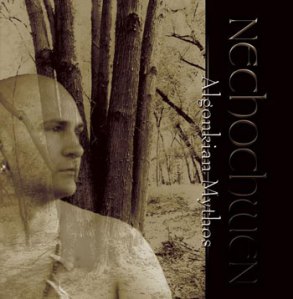
From the French and Indian War, to the area surrounding your home, the new Nechochwen material is gaining inspiration from the remnants and earthworks left behind from the tribes that one time resided around your area. Could you give our readers more of an idea what spirits lurk in the forests and what monuments were left behind? How extensively have you investigated these landmarks? How has this inspiration set the new material apart from Algonkian Mythos, if at all?
This album was a no-brainer for me, as far as what to write about for a second album. “Spirits”. You hit the nail on the head Marty. The influence was from the earthworks that are no longer there, more than the ones that still are. They still lurk in the forests. I firmly believe these people were magicians in a way, that their reality was not dulled by living in the physical realm only. How did they know how to make perfect circles, hexagons, straight lines, and line up mounds and effigies to lunar events that only happen once a generation? These earthworks are massive and intelligently designed. It pisses me off how many have been destroyed. This is not aimed toward people of our time, but more toward our great-grandparents generation and before. There used to be hundreds and hundreds of mounds within an hour’s drive of my home and now there are just a handful. They leveled them to make buildings that are mostly now empty. 2000 years of rest in a tomb wiped out on the taxpayer’s dollar. We still have old maps that show where they were but now in their place we have something else. I’ve been to many of the earthworks that remain, but some are on private property and you have to make connections with the landowners to get there. One time I was preparing a sweat lodge near a mound on corporate property. The cops showed up and wondered what the hell I was up to. My lodge was hidden in dense growth, so I told them I was looking for a place to go turkey hunting. They looked at me suspiciously until two of my turkey brothers walked out into the open right behind me, supporting my story. The spirits are still there.
Back to your question, these earthworks were built long before Columbus arrived. There was no (known) white or black influence, but there was some southern (Aztec and Mississipian) influence from what I’ve read. I could easily do research on languages and customs of the French and Indian War era, but not much is known about the Adena and Hopewell. No language, music, etc. is known, so I am left to try to channel those spirits in my own way. This is frustrating and liberating at the same time. I feel metal elements are appropriate for this album to get my point across. It works somehow. This is not to say Nechochwen is a metal band now, it’s just another medium for producing sounds. So the new material has this very archaic feel, cold and dark like an earthen tomb. The true focus of this next album is to ponder the idea that these earthworks were constructed to transport their dead through an angular portal to the “Otherworld” by lining them up to lunar occurrences. The mystery that electrical storms would have brought to these people has also encouraged me to use more electric instruments this time around.
Was it initially your intention to keep Nechochwen pure from the more destructive scales and nodes found in metal? As you work on the new material, will more of a metal feel come into play, as on the very intense track, “Death Ritual”? What is the inspiration behind this track?
That’s a pretty accurate description, but I don’t know how intentional it was. I’ve tried to explore pentatonic scales the way natives do, which is a challenge. It’s the same scale used extensively in rock and blues. Even with more metal sounds, I can convey a distinctly American sound by thinking musically the way a native does. This is contrary to a lot of my training. I was trained in the European tradition. The challenge is doing something original with just five notes in a scale. But if I knew of “destructive” scales I’d use them all the time. I haven’t thought of scales this way. Thanks for bringing this up, I’ll have to explore this idea.
There is a bit more of a metal feel on some of the new material. I think it fits better this time around, and it wouldn’t have on Algonkian. I really miss playing metal, I haven’t played in a metal band in some time and this is a good outlet for doomier and blacker styles than I’ve done before. “The Forgotten Death Ritual” is my idea of an Adena burial rite. The layered acoustics have a creepy, otherworldly vibe that was perfect to add some heavy chords and drums over. The chanting is my interpretation of what the Adena language might have sounded like, as I have no source to refer to for this. The inspiration was from old line drawings of an artist’s perception of an interment atop a mound in northern West Virginia. I believe the rite would have been accompanied by painting the body with stamps of red ocher paint, a funeral pyre, and some sacred speech delivered by clan shamans. The soul would have been released, possibly transported to the Otherworld by aligning the body to the correct azimuth to the horizon depending on the moon’s position. Maybe I’m reading way too much into this! But close your eyes and burn some sage when you listen to this and see what you think.
Having witnessed your performance at this past Heathen Crusade Festival in Minnesota, I must say the more intimate setting really fits the nature of this music. However, the festival venue was loud and sound checks interfered with your performance, but your professionalism really shined through the adversity. Will you be getting out more with Nechochwen? As the music grows and takes on more of the metal elements that we touched on earlier, can you see this all being incorporated into the performance? What in your mind is the perfect environment/stage setting for this music?
Heathen Crusade III was a great time. I don’t think the interruptions were malicious or intentional, but there wasn’t much I could do to stop them. I travelled a long way and wasn’t about to let stage circumstances get the best of me. I like the performance practice of entrainment, which is where the performer is so focused mentally on the rhythm he is conveying that the audience feels it physically. Thus the group transcended the distractions together rather than collectively getting pissed about it. I just had to steer the group one way or the other, and I chose that we should ignore it. There is hidden power in music, whether it’s nylon strings or a Marshall stack.
I’d like to play this music more, but I don’t know how realistic it would be right now. I have so many irons in the fire personally and professionally. I think for now it would be acoustic performances, unless I turned this into an actual performing band. I’ll think about this more once this album is complete! A good venue would be a smaller stage, but I’d incorporate more ritualistic elements than at Heathen Crusade. An outdoor fest would be killer! Maybe a group of 3 or 4 could cover most of the parts of the newer stuff, but done right it would be very powerful.
It seems that you have been involved in a lot of musical projects over the years, many of them have been of the metal persuasion. Could you give us a run down of the bands you have been a part of and what have you been the most proud of?
The first band I was in was Dethroned, a cult West Virginia death metal band. One demo was released before I joined, “Dark Rebirth”. I was like 15, and very into bands like Incantation, Amorphis, and Malevolent Creation. We started checking out early recordings by Immortal, Samael, Master’s Hammer, etc. so our sound went blacker. The drummer was none other than Dusk from Harvist, Typhus, and Warkult, and we’re still great friends and collaborators. The band continued with Andrew Della Cagna after I left for college, who is now the drummer, bassist and engineer for Nechochwen. Six years later we were all in Harvist, and released Turmoil of the Seed and Lightning Storm in the Veins. This material was much different than other Harvist albums, and eventually Della Cagna and I left to concentrate on Angelrust, a black/death band and Forest of the Soul, an acoustic project. That first Forest of the Soul album and Angelrust’s The Nightmare Unfolds are some of my proudest moments, and besides Algonkian, seem to be fan favorites as well.
Native American culture I can only imagine is one of those things that isn’t a lifestyle one can strive to obtain, but rather, it is in their blood, soul, and spirituality. Metal music is also it’s own culture and many feel that the same levels of sincerity apply (to a much lesser extent of course). Knowing that you walk in both worlds, do you ever feel that there is a conflict of interests? Is there room for both in your life and how are both lifestyles perceived by folks within their respective cultures?
That’s a good analogy. You describe something I struggle with all the time. Almost all of my time is spent teaching, performing, or recording, which leaves little time for outdoor experiences, sweating, meditation, etc. This is the stuff that directly or indirectly provides the music I make. The well of creativity can become quite dry in a hurry if you don’t recharge. I’m trying to keep the traditions alive that I have been taught and believe in, but I’m kind of on my own, I have no clan or community of what would be considered a tribe or native thinkers. This is essentially why the name Nechochwen was given to me in the first place; it means “walks alone”. Since I’ve taken on several more jobs and am starting a family, I am at a crossroads and I’m trying to find new ways to balance this fast paced physical world we live in with the ancient ways that transcend the flesh. My view of American Indian culture is much different than someone who grew up on a reservation or in a Native community. All I ever wanted to know was more about that part of my heritage, since assimilation in my family occurred generations ago. To answer your question about lifestyle perceptions, I’ll put it this way: lots of people here in the Ohio Valley claim Indian descent, and a great reverence for it, but very few know more than that. It’s like the details are locked away somewhere in their great-grandmother’s attic, and everyone is curious to know more about how their ancestors lived. But the prevailing narrow-mindedness here kills a lot of the enthusiasm, and basically the only people who organize are reenactors and historians, not the average citizen. It’s weird man. I want to return to those old ways, and since I am living in a modern lifestyle most of the time I’m a walking conflict of interests. So I’ve put rattles, chanting, and distortion on the same album. I don’t really know how these lifestyles are perceived by other people, I think it depends on the person. Most people into Native philosophy, Indian religions, primitive skills and the like that I’ve talked to are happy to meet someone else they can relate to and realize they are in the minority of people. They know their ways and culture are shrinking as the world goes more insane, and they realize their languages are dying. All you can do is teach others and stand your ground. People in the “mainstream” world seem mystified by this culture and maybe are genuinely interested in it, and sometimes seek out older wisdom to fulfill something missing from their lives.
How has it been working with a metal label with the release of Nechochwen’s music? It seems like an awkward fit knowing that there is a chance of widespread close-mindedness in the metal community in regards to classical based folk music. Or has the folk and metal union over the past several years maybe opened the herd’s eyes a bit to new things? Algonkian Mythos really seems like it would have been more commonly suited on a folk or cultural/spirituality based record label, which in a lot of ways, is a completely separate and huge underground in its own right.
Think of it this way; if I had released it on some new age or ethnic label, there’s no way in hell they’d want to release the new one. It’s got some very heavy moments. Nothing I’m doing is going to be as heavy and violent as Typhus or some other Dark Horizon Records band, so I can be as dark as I want with this. At the same time, I could do a whole album of just classical guitar if that’s what I want to do. I will not be restricted artistically, even if that means releasing it myself and just my uncle and three of my friends buying it. Besides, we shopped the Forest of the Soul album to a ton of NewAge/ spiritual labels a few years ago, and not one of about 150 labels worldwide wrote back. Not one. The only albums I even own on a new age/folk/spiritual label are Michael Hedges and R. Carlos Nakai. I can’t believe how open-minded metalheads are to Nechochwen, I never thought anyone would care about it besides me. It was written and signed before folk metal started getting real big and folk metal tours were everywhere. So at first I wondered if people would hate it or ignore it but neither has been the case. They write me and ask me about some of the song themes. So apparently by releasing classical/folkish stuff I have an audience with people that like metal. Maybe by putting more metal elements in the music, I will gain some classical and folk fans. Things like that make sense to me, because everything I do is ass-backwards. So I think I’ll be working with metal labels for the duration. Algonkian Mythos may be mellow and acoustic, but it’s still about war, torture, and genocide, is it not?
Knowing that you’re also classical guitar teacher, do you share with your students your various projects? What do you feel is the most important thing to instill with your students when it comes to approaching the instrument? I often think back on all my failed guitar lessons and how I’ve come to realize that it stems from a teacher that had an agenda, and didn’t take the time to get to know the student, and in turn, trying to steer me in a direction that he felt was “normal” or convenient for him….
Sometimes students will ask me what music I’ve done, but most of the younger ones seem to find out anyway. Google, perhaps? All it takes is a quick web search and they know all kinds of crap about you. Sometimes they’ll buy cd’s and then their parents will take them and listen to them and keep them for themselves. I always encourage people to do their homework, but always approach the guitar efficiently and in a relaxed way. Learn to tell stories with the guitar. Learn to read music, don’t be lazy and just settle for reading tablature. Learn envisioning and entrainment and make sure you know the sound the note will make before you play it. And the best advice given to me by my teacher and mentor, try not to suck
I see the approach to teaching that you mentioned all the time, it’s like fast-food teaching. Come in, give me money, play this chord and see you later. It’s essential to find out why the student wanted to learn, you know, find their motivation. Help them achieve their goals just like they help you pay your bills. But never cheat them out of the things they really need to know just so they can be limited and only learn what they want to learn. Open their minds to theory and how it can enhance their skills. I’m sorry you had such a bad time with lessons. I hope I’ve enhanced my students’ lives as much as they’ve enhanced mine. I’ve learned more teaching than I did in college.
Thank you Aaron for taking the time to sift through these questions. I have been greatly moved by your music and look forward to the future of Nechochwen. Please give us all a glimpse into your plans for the rest of the year, what merch you currently have available and anything else you feel like plugging….. take care!
It’s an honor Marty, I’ve been reading your words for years. The new album should be finished in the next two to three months and I’ll be working on layout. Live shows are still up in the air, but I’m open to playing. I plan on getting some shirts and patches made and launching the official website this summer. In the meantime, you can get cd’s of my various projects at the Nechochwen myspace page. Look for album number two late this year or early next year. Thanks for your great questions man, all the best to you!
Nechochwen on the web:
Myspace: www.myspace.com/nechochwenstronghold
Label: www.myspace.com/strongholdrecordsnet
Posted in INTERVIEWS
Tags: Algonkian Mythos, Dark Horizon Records, Nechochwen, Stronghold Records
 With 3 members of Suicidal Winds in tow, I guess you could call Axis Powers a side project, obsessed with the crusty old death metal spirit of their Swedish homeland possessing their souls. “Marching Towards Destruction” is a mammoth sounding wedge of simplistic, but very effective death, bloated by low tuning and a buzz sawing guitar tone that’ll make the Entombed and Dismember camps pat themselves on the back once again for creating sickened perfection when it comes to THE classic death sound. Mid-ranged guttural vocals lead the charge for “Marching Towards Destruction” to enter the arena, while the unfaltering, no frills songwriting style is so completely solid, the punishing attack of this material easily devours the lions in said arena with conviction and a ravenous bite. The bass is ruptured in distortion and fills in the bottom end, for moshless rhythms and blastless speed to further cement death metal’s mid 90’s reanimated corpse firmly under the microscope where its spirit can live on and be in the public eye once again. The technicality and “turbo” perplexities of the modern death movement are thankfully taking a back seat to the real, evil, and far more powerful forefather of the genre. The turbo stuff had/has its place I suppose, but greatly lacks the feeling and overall human side of this beast. Old death doesn’t need the flash and speed which the modern side uses a crutch. This forces bands like Axis Powers to borrow from the older days in sound and style, BUT they have to write more memorable and meaningful songs to compensate for the annoying scales and hyperspeed regurgitation of sonic math problems. I’ll take real songs over calculus any day. “Marching…” is a welcomed addition to my collection indeed. –Marty
 Even though the quartet Burial Hordes is located in Greece, they defy the soaring and melodic underground black metal leanings of their countries stylistic brilliance in favor of a stripped down, older than dirt black metal vibe and overall intent in their sound. If it wasn’t for the corpse painted image and typical, though effective screaming style, Burial Hordes is teetering dangerously close to being pigeonholed as a punk band, for their guitar tone is overdriven, but still sounds very clean. It’s like they recorded a clean tone on a small amp, turned up all the way for that tortured speaker cone form of natural distortion. This is further compounded by the stripped to the bare bones/simplistic/punk/punchy riff work, most evident on “God’s Cutthroat”. A lot of motion can be felt in these structures with very little layering musically, so every song relies on the catchiness and powerful tempo shifts that range from aggressive speed to a heavy mid-paced, almost “rock” styled beat that does give these riffs even more room to work their way into my appreciation. It’s obvious one of the guitarists is also the vocalist, for the screaming structures follow the musical lines, nearly exactly, which works, but offers very little in dimension when trying to deepen the bite of this music. “Devotion to Unholy Creed” is quite memorable, but makes Burial Hordes come off as sounding VERY much like a solid garage band in overall power and loose playability. A deep listen this is not, but Burial Hordes has been suiting me just fine in the car for short trips when a lot of thought isn’t really needed to enjoy the music coming out of the speakers. This otherwise low caliber achievement is probably not what the band was shooting for, but their attempt for straight up sonic evilness and despair really didn’t translate through this unencumbered metal style. Enjoyable, but don’t expect to wear this one out. –Marty
 Debate all you want about the pantheon of metal and who is sitting among the exalted thrones near the top, but gaze up upon that cloud encircled mountain and you will see one Kai Hansen perched up there wielding a flying V and looking for his pack of cigarettes. Metal god? Rob Halford? Nah…. In my book, it is Kai, hands down. I’ve always liked Helloween better than Priest. The albums that he was involved in were all gold. Then moving on to Gamma Ray… once he reassumed the mic position, Gamma Ray became something truly special, as if it was a more developed Helloween jacked up on Queen (the band). Aggression meets soaring twin harmonies and excellent singing, really… Gamma Ray crushes the power metal competition because Kai and company had a hand in creating the genre, leaving everyone in one form or another aspiring to be them, or rip them off.
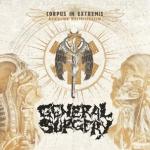 General Surgery 2009 is something old and something new, thrown into the grinder with the days aging meat and other giblets and it is this stylistic spanning of all the era’s of death and grind, which gives the band a very lethal lease on life (or death?). Featuring members from bands such as Maze of Torment, Afflicted, Repugnant, Jigsore Terror and others, “Corpus in Extremis” skillfully holds onto the classic sound and riff writing style that has become the staple for Swedish death metal, but they inject this very modern edge to their sound by way of complex structures and an exacting speed attack that erupts on occasion from the core of this material with blistering results. Fans of Aborted and the like will greatly appreciate the technicality of Carcass inspired tracks like “Exotoxic Septicity”, while older fans of Dismember and Grave will gravitate towards pure Swedish burn and churners like “Virulent Corpus Dispersement” (this is probably my fave on this album) and “Restrained Remains”. When General Surgery stick to the slower elements of their sound, it’s where I find my head nodding the hardest and my senses yearning for even more of those sick harmonies and mid-paced tremolo searing riffs that always stick within my thoughts. Vocally, deep brutality co-exists with a cancerous snarl for diversity and a bit of simplistic layering. I’ve found myself hitting repeat on this CD on more than one occasion for the well written hammering that GS uphold and revel in with boundless skill and venomous execution. –Marty
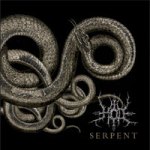 Featuring members of Thornspawn and Necrovore, San Antonio’s HOD are a new US black metal band that have shied away from the more brutal and out of key leanings of their main bands, but they still cling to a slight death metal meatiness in sound. With a strange drum production (triggered kick drums and an otherwise over compressed sound highlight a sloppy performance) leading the charge and an atypical, almost croaked out vocal approach, HOD is a strange addition to the US scene. I give them definite respect for not sounding like anyone that comes to mind, but the simplicity and awkward sloppiness of their riffs and song structures leaves me feeling like something is missing, or not hitting the mark. The guitar work and songs overall just feel like they are going through the motions, not sounding particularly evil, memorable, or inventive… They are just striving for that old black metal vibe where the lines between death and black were a bit fuzzier. In a lot of ways, they are within the realm of their musical aspirations, but this is just one of those dry sounding releases that isn’t bad by any means, but needs so much more aggression or spirit in the material to give HOD a much needed boost of interest. –Marty
 Having been a long time follower of Finland’s Horna, 2005’s “Envaatnags Eflos Solf Esgantaavne” struck me as the pinnacle of this bands creativity in both sound and song forging quality. Every track on that album was memorable in the rocked out grime and blasphemy framework widely known and revered when it comes to Finnish black metal. Since then, Horna continue to unleash albums that all possess a potent strike of ugliness, but none yet have tapped into the charm and strength of “Envaatnags Eflos Solf Esgantaavne”. “Sanojesi Aarelle” certainly isn’t a bad album, for all those Hornaisms are intact from the bands keen knack for writing well paced material where speed is sensibly dispersed, to their own influential strain of woodland filth, not to mention even a few catchy riffs that will stick in your head. The problem for me is that the vibe on “Sanojesi Aarelle” is dedicated to pure, unrelenting hate. Probably not a bad thing in regards to pure black metal, but the more hate you pile on in intention and sound, the more alienating an album can become. Corvus’ vocals are searing to the ear as he pulses agony through his terror throat with little or no inflection to ensure he slaughters us all with his dismay. Quite an impressive and scaring delivery, but it gets a bit redundant as the album progresses. By far, the most memorable track on this album goes to “Katseet”, a mid-paced mood scultper. Finally a morose atmosphere I can wrap my head around before Horna fall back to rally behind their wall of suffering with punishing, out of key riff structures and chaotic blasts. For longtime fans of this band, Horna are to again be applauded for sticking to their unfaltering passion for black metal and never losing vision for the traditional ways of the genre. I guess for me, I’ve found “Sanojesi Aarelle” to be one of those albums I need to be in more of a mood for. It’s bleak brutality I’m sure will translate well to the live forum, but when sitting back, trying to lose myself in an album with atmospheric substance, straight forward and destructive musical nihilism is hard to endure for nearly 90 minutes worth of material (2CD’s). The sharp production adds to this caustic delivery, featuring a clear sound field, but the treble heavy wash of the vocals and standard E tuned guitar tone cuts the listener to the core. –Marty
 The opening track, “Once Moonlight…” is a lot thrashier than I was expecting from this long standing and twisted musical entity. In fact, this comes off as a definite stylistic change. The vocals don’t strike me as demonic as they were in the past and the overall production feels a bit thinner, focusing on the treble in the guitars rather than the frigid bite and dimension that blew in from the west so amazingly on this bands past efforts. “Cruel Black Death” picks back up with more speed and dissonant intensity, with the thrash riffage creeping into the bridge. Even though I’m a bit taken aback by the shift in sound for this band, the expanded direction seems to suit them well. It’s just not as distinct of a tone as past efforts… in fact if this was playing at a party, I wouldn’t know who it was. As “Death Nord Kult” continues, more intricate guitar lines and galloped verse riffs put one in mind of the old Kreator and Destruction, German thrash vibe, mixed with a slight unique twist from this bands frozen tundra home in Russia. Digging further into this material, a slower tempo as found on the title track and the disc closer, “Cold Northern Order” finds Old Wainds reveling in the coldvoid black metal atmosphere of their earlier albums with interesting structures and some very bizarre, tormented sounding chords for that perplexing atmosphere that makes this band so unique. The one sheet proclaims, “Mandatory for fans of Leviathan, Watain and Khrom”… 3 bands that Old Wainds sounds nothing like. Even though this one took me a few dedicated listens to fully embrace, I’m finally there and once again appreciate this Russian entity even though they initially threw me for a loop. –Marty
 The tragedy that life can instill upon a tortured soul can indeed be debilitating, and as the throngs of suicidal black metal continue to grow and share their misery both in style and quite often, 2 dimensional close mindedness when it comes to its craft, the impact is quite often lost, coming off as a whiney sonic proclamations of “I swear I’m gonna kill myself!” Sigh…unfulfilled promises. I guess I have grown callus towards this genre as the years have progressed as everyone borrows from their neighbors. Bethlehem were the kings as their “Suizid” masterpiece so perfectly displayed… all the rest fall in line beneath the dried blood adorned banner, shaking their rusty blades in protest, “what about me???????” Having said that, France’s Pensees Nocturnes have emerged victorious from out of nowhere with “Vacuum”, which is a very well recorded and stylistically developed/diverse bleeding of musical ideas. The beauty of “Vacuum” lies in the maturity and bold musical experimentation. Classical pieces with real horns, eerie synth, harpsichord, violin, acoustic guitar, and even a traditional lounge blues song (a VERY interesting twist this track inspires), sit alongside the predominant black metal misanthropy quite well, decorating the overall concept of this album with highly skilled layering and depth. The metal side of Pensees Nocturnes lumbers along in a dreary cloud of depression both in mid-paced to slow tempo, and content, featuring atypical riff ideas that act as the foundation, only to flower into soaring harmonies that’ll give you a chill once they seep in. It has taken many listens to absorb this album, and every trip through PN’s dark visions only unveil even more interesting twists and abysmal content for the listener to become hypnotized by. Vocally, this was the biggest hurdle for me to get over. Initially, sole member, Vaerohn (this guy plays ALL the instruments) focused on the tired and true Burzum crying Orc screams, but stuck them way out in front of the mix making the performance feel like the most typical element to this otherwise gifted release. But the more I fell under Vacuum’s spell, the more his performance seemed to fit, even feeling more like a Marco Kehren (Deinonychus, Bethlehem) and Landfermann (Bethlehem) caliber of creativity and vocal agony. The emotion really pours out of this performance and you can truly feel the despondency, whether it’s authentic or not, and it gives Pensees Nocturnes a vibrant sense of legitimacy when it comes to giving the genre of suicidal black metal a greatly needed injection of conviction. It is long overdue. -Marty
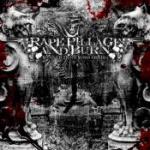 Featuring 2/3 of Divine Eve and Richard Cabeza (Dismember) on bass and some vocals, “Songs of Death… Songs of Hell” is Rape Pillage and Burn’s debut release that certainly isn’t reinventing the wheel when it comes to traditional death metal, but we really don’t want them to do we? Not I! This material is blastless death metal in the vein of the early 90’s with a burly and warm guitar tone ala Divine Eve and a burnt out, throaty death metal vocal style stirring the sonic abyss. The mid-paced to slow plod of these songs allows the open nature of the riffs to dig in with Celtic Frostian might and catchiness. A very organic and dirty sounding EP from a project that I look forward to hearing more development from in the form of a full-length should this power trio last. –Marty
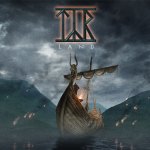 It has taken a few listens to try and get past the sing-a-long chorus’ on “Land”, in fact, the whole of this Viking/pagan pride resurgence in the metal world, really strikes me as quite silly. Ultra happy chorus’ with gang singing and ale swilling carelessness is at the core of this and it’s really hard to take seriously. Especially when going to a fest like the Heathen Crusade (RIP), seeing Midwestern adolescent males wearing Braveheart styled war facepaint and kilts, kinda takes a bit of the sincerity and cultural meaning away from the musical intention. Regarding Tyr… perhaps they’re not to blame for upholding this stylistic genre, for they didn’t invent it, but when the basis of their music is centered around the clean vocals and each hook of the song being the hokey chorus’ in which I have been venting about, it becomes a tall hurdle for me to clear. Especially when their music is so subdued and simplistic… it feels like “Land” isn’t flashy enough to fit within the power metal realm where technical drum and guitar work takes center stage. In fact, the drumming on this album is really basic and rather neutering to the whole body of work. The guitar work follows suit, falling into predictable note runs and power chord dominant riffs that act as a lackluster foundation for the pitch singing to attempt to tow the line. Subtle solos do creep in on occasion to offer a bit of color, but it’s simply not enough variation or depth in the music for one to warrant the amount of coverage and recognition this band has received over the past year. “Land” definitely isn’t airy or majestic enough to fit into the battle or epic metal genres ala Manilla Road either. It’s like Tyr are content to blindly follow the Viking metal trend as the short lived wave it will eventually prove itself to be, leaving the band listless and lost at the end of the day without a concrete identity to call their own. Tyr sound like warriors without a country and when the smoke clears, there really isn’t enough on display here for them to be remembered. Average at best, “Land” is an emotionless and uninspired listen, which really seem to be the combination these days that sells a decent amount of CDs. Tyr should send their publicity staff a fruit basket or something. –Marty
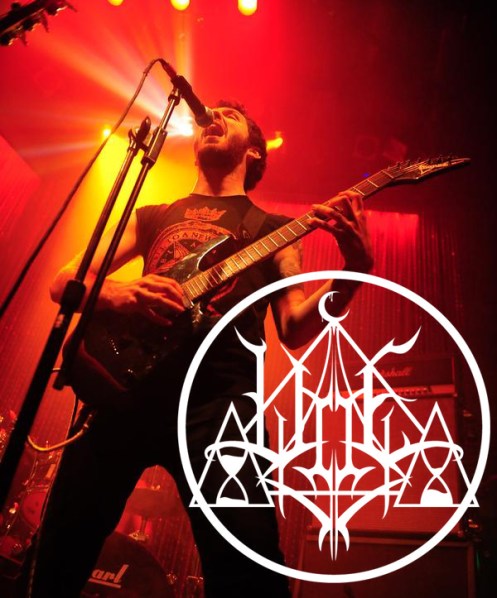 A spirited descent into the burning fields of sonic drama and unruly despair, Pennsylvania’s Woe are at the tip of the spear of the US’ black metal attack as the colonies strike out against their Euro/Scandinavian counterparts. Sole visionary, Chris Grigg, has taken the 1 man black metal aesthetic to higher ground with stunning/inspiring songsmithing rarely experienced in this genre, not to mention a very talented musician as he has handled every duty on Woe’s latest album, “A Spell for the Death of Man”. Technical and heavy as hell drum work fuels the antagonizing speed of this material, for melancholic riffs to further twist the atmosphere of this mans musical vision into a very intense and moving statement of anger and isolation. Chris was kind enough to recently dig deeper and reveal the workings behind his process and further unearth the unholy fire that is the essence of Woe. -Marty
 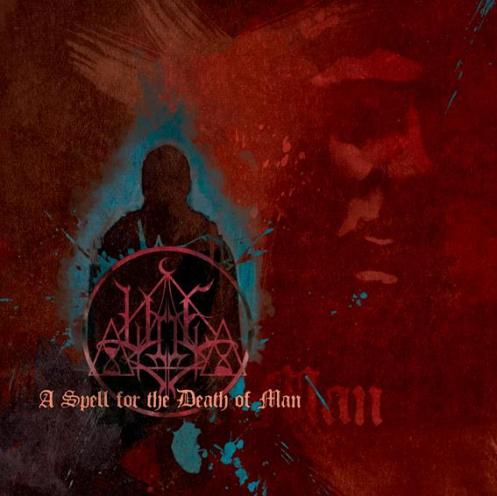 Lyrically, I found your approach to be quite refreshing… Occult topics have been cast aside for more of an introspective and personal glimpse into your life and psyche. Would you consider Woe to be a purging of those negative burrows in the mind? Just how personal are the lyrics on this album to you?
 Having seen several live clips online, I’m quite impressed at how well the Woe material translates live. Especially for predominantly fast music, the intensity cuts through the PA with ease and clarity. From being the only one behind this band, was it always your intention to get Woe’s music in front of a crowd? How have the live experiences been? What you expected or more?
 Bible of the Devil are a four piece Rock and Roll threat hailing from Chicago, Illinois mixing the best parts of Thin Lizzy, Drunk Horse, Slough Feg, Boulder, and Running Wild into a brew all their own. Bible of the Devil is the kind of band you are singing along to after listening to them once. They are the kind of band that makes you miss Manilla Road because you drank too much enjoying their set. They make you break out your air guitar and wonder how it’s taken you so long to discover them. They are one of the harder working bands in Heavy Metal right now and their newest album “Freedom Metal” is a welcome addition to any collection. I recently asked Guitarist/Vocalist Mark Hoffman a few questions and this is what he had to say. –Mike Bushur
 I have recently been receiving an onslaught of I Hate Records releases, and I have not been disappointed. Ranging from old school thrash to classic doom, someone at I Hate seems to have a good ear for talent. Serbia’s Space Eater have definitely done their homework in the thrash department. If there wasn’t a calendar on my desk that said that the year was 2009, I’d be convinced that the year was 1987, just by what was coming out of my speakers. What goes around comes around, and it seems that thrash has come around again. That’s ok with me, I was in high school in 1987, and firmly entrenched in the genre, with my jean jacket with the Megadeth patch and me sporting an incredible mullet. Merciful Angel takes me right back to that glorious time, and for that I have to thank them. But before you write these guys off to the nostalgia cutout bin, Space Eater is not just going through the motions. There’s nothing tongue-in-cheek about these Serbian thrashers. I get the real impression that they really mean it. The songs are well written and catchy, and the production is stellar; I can hear everything perfectly. There’s not really a standout track on here, but the entire album is strong. I hate those stickers on all the cd’s now, “If you like this band, you’ll like this”, but on one hand there’s so much garbage out there, that little system may be the only way some bands will ever get heard. Gone are the days where you could buy everything on a label and not get burned. I Hate Records says that if you like Testament, Agent Steel, and Heathen, you’ll like this. I can agree with that, I would add that they sound a little like Vio-lence also, mostly in the vocals. So there it is. If you fondly remember thrash, never got out of it, or are young enough to have parents who may have been thrashers in their days, take a listen to Space Eater. These guys kick just as much ass as their forefathers. –Matt
 Dear Marty-
 Indie rockers decide to play Children of Bodom-esque catchy metal. As is the case with CoB, this is damn catchy stuff. I can’t bring myself to particularly dislike it, but I certainly can’t take it seriously either. Take some of Cradle’s theatrical moments, some speed metal, some alterna-rock harmonizing vocals, and bam – instant Candelight contract. But then, Abigail Williams and Candlelight deserve each other. Keep churning out the unimpressive and unmemorable, boys. I’ll keep avoiding it. – Christine
 Worm Gear
The Fall of Print Zines
•February 4, 2009 • 8 CommentsI don’t want to turn this space into a music news dump, but some things are worth mentioning.
You may have heard, Metal Maniacs is shutting down after its next issue. Blabbermouth has the story here.
As some of you probably know Marty has written for Metal Maniacs, off and on for years now. I don’t think I have looked at a copy since I found the underground, but if I remember correctly it was something in Metal Maniacs that led me to write a letters to Vio-Lence, Sadus and others to get their demos before they were signed.
Worm Gear was a print zine for 11 issues, a free one at that. It was advertisers expecting a “you scratch my back I’ll scratch yours” approach that led us to stop… that and the obscene amount of work and money that went in to distributing 10,000 issues. We depended on advertisers to keep the zine free. If they didn’t place ads, we couldn’t pay for the printing, and if we didn’t do what they wanted, they wouldn’t place ads. So we decided rather than compromise we’d go to the web and, theoretically anyway, save ourselves a lot of hassle. We still get people telling us here that they miss the print zine. One by one though, the print zines have gone away in favor if the web.
If the print zine is such a coveted format, what has led to its near eradication? Clearly cost is one thing, but if the reader support is there, there are was to make it work. Look at Maximum Rock N Roll. Is it that the new generation of fans didn’t have to go through the same trenches that spawned the zines, and thus didn’t know they existed? Is it advertisers choosing to ignore the underground as some forms of Metal have enjoyed a mainstream resurgence. The instantaneous nature of the web? Some of all I suppose.
Curious to hear your thoughts on the face of music coverage, and web versus print and all of that….
Share this:
Posted in COMMENTARY
Tags: Metal Maniacs, print zines, publishing, web zines