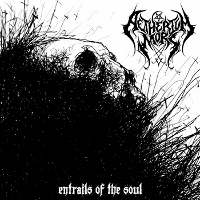
Aetherium Mors – Entrails of the Soul EP

•November 20, 2013 • Leave a Comment

AetheriumMors (200x200)What a complete difference a year can make. In 2012, Aetherium Mors’ debut left me frustrated, as half the album was a headed-in-the-right-direction display of melodic/blackened death metal, but the rest of the record felt disconnected with the intensity of its first three tracks. Recently I saw a link for their new EP in my in-box, and what ensued bitch-slapped me with a slab of Metal so worthy I have literally spun it ten times in the last few days.

Title track ‘Entrails of the Soul’ opens with a foreboding acoustic intro, followed by a repeated chord casting a swarm-of-insects affect, and then the death metal arrives. Blistering, frantic drumming, introduces guitars that fuse understated melody and overt dissonance all at once, with riffs that jump from low to high on the fretboard with determination, but shy away from boring the listener with tech-death wankery. Multi-instrumentalist Dan Couch’s skills are more Azagthoth than Yngwie, in the way that evil intention reigns supreme over convoluted composition (as it should with death metal). Listen for the insane, bent-note/speed-picked riff near the the first song’s end and you’ll hear what I mean. Song two, ‘Ritual to Evince the Subsurface of Purity’, opens loud and proud with Bill Steer-like guitar harmony, but before ‘happiness’ ensues, vocalist/lyricist Kane Nelson screams ‘SATAAAAAAN! (pause) LUCIFEEERR!’ (heh) and we’re once again off to the races. A potent Spiritual Healing album/Death-style riff carries you into the chorus, and this writer (Chuck disciple that I am) nearly dropped my laptop with glee. At 3:15, a brief homage to Piggy surfaces, that famous spazz jazz chording of his channeling Voivod out of the headphones. Fuck yes, I thought to myself, these guys fucking get it. And then, more: a variation of that glorious aforementioned Schuldiner riff backs the excellent solo that – dare I say it – reminds me of that ’90s era of James Murphy’s leadwork. Kane finishes the song by exclaiming ‘So it is done!’

Goddamn right.

‘Divine Order Without God’ follows with a main riff screeched out high on the neck, sewn to a ‘sweep-picked’ turnaround that feels wholly appropriate with the song’s feel, rather than being obnoxious. The final moments of the track recall pre-action-figure Amon Amarth, smoldering with melodic, axe-wielding bloodlust, but here imbued with a fully Satanic purpose, as the moment of its focus – the murder of God with the same Lance of Longinus that finished off his son – is detailed: Staring into dilating eyes – Of the weakest men – This is the place – Where all divinities go to die …

Another unexpected palette of sound opens closer ‘Souls Diseased by Faith’, wherein a dying-note Jerry Cantrell-ism showcases Couch’s flexibility without diminishing what follows – a song with penetrating thrash at its blackened death metal heart, clanging bass (resonating nicely in the chorus) and all. The song is sinister without ever leaving its listener lost in a maelstrom, by virtue of its pacing and current production, both of which hit the mark.

This band has returned in 2013 re-energized, revitalized, and ready to conquer, and have proven that melodic death metal sounds can coexist with atonal, modern blackened death riffery and have a repeated-listen result. Their music has evolved in the best of ways, and with an EP like Entrails of the Soul, Aetherium Mors won’t be unsigned for long. -Jim

Self-released

Nocturnal Graves – …From the Bloodline of Cain

•November 20, 2013 • Leave a Comment

NocturanlGOne extreme sub-genre can serve well as the temporary antidote for another, and I’ve been looking for a cure for the wobbly-string, down-tuned Death I usually enjoy, but am hearing too much of as of late. Enter the ear-cleansing pure Australian black/death/thrash of Nocturnal Graves. Head honcho Jarro Raphael played drums on (among many other things) Deströyer 666’s amazing Phoenix Rising and the preceding 1998 EP Satanic Speed Metal, and what you’ll find here is close in spirit with the tenets of that band (though perhaps a bit more straight-thrash infused): …From the Bloodline of Cain is sharp, relentless, and, to these old ears, catchy – as much as Satanic-themed music can be, at any rate. Jarro’s (aka ‘Nuclear Exterminator’) arsenal in this band consists of bass and lead vocals, having handed guitar duties over to Denouncement Pyre’s D. and Shrapnel (also formerly of Deströyer 666) since 2007’s Satan’s Cross. Their riffs, dutifully lain upon …From the Bloodline of Cain have that standard-tuned, precise, ‘quickness’ in execution found in Teutonic thrash, and Jarro’s vocals, while yelled and retched with aplomb, remain intelligible and memorable. The bass thunders along (though not as high in the mix as I’d like), backed with a percussion attack straight from the South American sounds of extremity. All of which is nothing new, but the professional approach and attention to detail sets this release apart. From the thrash salvos of ‘Promethean War’, replete with machine-gun picking and a brief-and-clean (hammer-on?) scale sewn in the verse riff, you’ll be transported to the locomotive brutality of the days of early ’80s death/thrash, with just a few particles of black chording thrown in as anti-sweetener. Cracking bones with a flourish that can only come with experience and good classic taste, Nocturnal Graves create real songs that don’t disappear into forgettable, disjointed riffery; the tracks of …From the Bloodline of Cain drill into your skull and lay maggot larvae in your brain in much the same way songs of Sodom, Possessed, Sarcophago and Show No Mercy-Slayer once did. It’s refreshing to hear the discernible song structures of the black/death/thrash sound with songs that clearly are new. Jarro and co. know their craft well, and …From the Bloodline of Cain fills my prescription for a necessary respite from the cooling-lava Death Metal I’ve been spinning (which I still love, mind you…). -Jim

Hells Headbangers

Thrall – Aokigahara Jukai

•November 20, 2013 • Leave a Comment

PromoImage (200x200)Having never heard Thrall, but being enamored with a good chunk of Australian metal exports as of late, I looked forward to spinning their third and latest album, Aokigahara Jukai. I hit play on ‘Longing For Death’, and was greeted with a guitar tone both crackled and warm, creating a humid fog of black metal setting the stage for the evil up-tempo onslaught to come. Thrall take BM orthodoxy and suffuse it with a healthy dose of crust, heaped upon the plate courtesy Tom Void’s punk-wraith voicings. In the hands of lesser musicians this combo of vocal styles could be annoying, but not so here; Void’s earnest wails and roars are the propellant to an understated riff spectrum that surrounds rather than confronts the ear. The guitars exude a suffocating quality that breaks for air with an unexpected (and welcome) snail-like doom before any blasting moments linger too long. Surprises continue as the album moves onward; ‘Its Toothless Maw’ simply rocks with a 4/4 stomp that will have you head-nodding with headphones ridiculously as passers-by roll their eyes. In tempo it reminds me of later Satyricon, but far more, well, ‘crustier’ and all the better for it with the dirt. Less pronounced but still present is Thrall’s death metal influence, as heard on ‘Ubasute’, which disturbs the between-song silence on arrival with a mud-crunching tremolo riff, carrying quickly onward towards a feedback break, only to return to the blasting black afterward, as the song ends with Silencer-like screams of anguish.

Thinking I new where the remainder of the record was headed, I was unprepared for the star-shimmering guitars of ‘The Pact’ that give off the feeling of an astral-projection gone awry. Midway through the track, just enough melody for color seeps through its churning riff-mire for you to sense a real sorrow amongst the musical horror, something I’d like to have heard even more of, but either way, it works.

Many emotions – excepting depression! – comprise the whole of Aokigahara Jukai, making it difficult to sum up where I leave off with the record. But I think leaving the listener with an uncertainty about what they’ve just heard may have been Thrall’s intent all along. If so, I’ll be glad to play this record again and again in an attempt to fully decipher it. -Jim

Moribund Records

The madness a turmoil that swells up inside…

•November 13, 2013 • 12 Comments

Your patience in our taking a week off was greatly appreciated, and now we return with more critiques for you to devour!

The views on this blog continue to hold steady, but are noticeably creeping up on a weekly basis. We deeply appreciate all of you taking some time to sit with our efforts as we know there is no shortage of metal blogs out there in the vastness of the Internet. If you continue to like what you see, please take that extra step and share the links with your friends, your facebook friends, or the cronies down at the local bar. Hell, we want to tell them about our metal listening habits as well.

For us the Worm Gear dudes, the weather is noticeably shifting to winter which means a bit more time should be freed up for our writing (mis)adventures. We have been waiting on a handful of interviews to return and will continue to chip away at this digital mountain of review material. This truly is our labor of love and mutual “poker night” that we all look forward to getting into every week. Looking forward to see what 2014 brings Worm Gear. So yes… we’re calling you out to get involved. Comments. Sharing playlists and discussions. Telling people about us. It all helps and keeps us working towards a bigger goal. Thank you.

There…. nothing poetic or fancy this week for the intro, but necessary all the same. Till next time, listen to some Edge of Sanity and maybe old Brenda Lee can fuck right off with her rocking around the christmas tree nonsense for another year… -Marty

Jim Clifton Playlist

The Exploited – Horror Epics
Black Flag – Everything Went Black
Fear – More Beer
Dead Kennedys – Frankenchrist
Lustre – Wonder
Forteresse – Les Hivers De Notre Époque
Horna – Ääniä Yössä
Agathocles – Mincer
Darkthrone – The Underground Resistance
Blood of the Black Owl / Celestiial – Split 12″

Marty Rytkonen Playlist
Infera Bruo – Desolate Unknown
Iced Earth – Horror Show
Ashes of Ares – S/T
L’Hiver en Deuil – Ter Aarde
Lvcifyre – Svn Eater
Arghoslent – Hornets of the Pogrom
Edge of Sanity – Crimson
Necromantia – Scarlet Evil Witching Black
Necros Christos – Doom of the Occult
Stargazer – The Scream that Tore the Sky

S. Craig Zahler Playlist
Magma – Üdü Wüdü
Blue Oyster Cult – Spectres
Magma – Üdü Wüdü
Blue Oyster Cult – Imaginos
Magma – Üdü Wüdü
Phil Lynott’s Grand Slam Studio Sessions
Magma – Üdü Wüdü
Automat – Automat
Magma – Üdü Wüdü
Skrillex – Scary Monsters and Nice Sprites
Magma – Üdü Wüdü
Museo Rosenbach – Zarathustra
Magma – Üdü Wüdü
Museo Rosenbach – Barbarica
Magma – Üdü Wüdü
Anglagard – Hybris
Magma – Üdü Wüdü

Blue Oyster Cult – Spectres

•November 13, 2013 • Leave a Comment

BlueOysterCultSpectresSpectres is the richest and most atmospheric album made by Blue Oyster Cult, and my personal favorite by them.  I’ve followed this band for most of my life—I’ve seen them in concert twenty-one times, including what turned out to be the final reunion of all five original members—and never have all of the singers and songwriters in and connected to this band constructed more fantastical worlds than those found on Spectres.

The LP is not as heavy as their straighter, more obviously heavy metal albums (Fire of Unknown Origin and Cultosaurus Erectus), nor as quirky and off kilter as the first three releases, but I find it to be their grandest, saddest and most rewarding effort.  Although some feel it is simply a commercial followup to Agents of Fortune, I find it to be superior in all departments and hugely cinematic.

In terms of progressive songwriting, The Golden Age of Leather is a marvel of instrumentation that drives through various landscapes of twin guitar harmonies, funky bass lines, plaintive leads, and rich the harmony vocals (one of the top strengths of this band).  This tune compares structurally to Before the Kiss, A Redcap (from their debut), but has far, far better core ideas and is more haunting.  Certainly one of their most adventurous songs ever.  Fireworks, Celestial the Queen, and Death Valley Nights are three of the finest examples of harmony vocals in rock–on these tunes Blue Oyster Cult the rock band performs a bit more like BOC the studio consortium, bringing to mind tunes like The Raven by  Alan Parsons Project or Dark Side of the Moon.  These three BOC cuts are all gorgeous chorus tapestries.

Certainly, one can draw comparisons between the I Love the Night and Don’t Fear the Reaper, but I’ve always preferred I Love the Night, which is more ethereal and haunting musically, if not lyrically, and has more tasty lead guitar by Buck Dharma, my favorite guitarist ever.  (See his solo in the live version of Veterans of the Psychic Wars to see why…)  And then there’s Nosferatu–a haunting and forlorn masterwork that concludes the album with one of the two best songs ever recorded by the band.  (The other is Astronomy.)

Unlike Secret Treaties, the debut, and Fire of Unknown Origin, Spectres did not grab me initially, when I first heard it as a kid.  But–much like their similarly rich Imaginos album–Spectres reveals itself to those who spend time with it– it is incredibly colorful tapestry of gothic, lonely, and obscure worlds. – S. Craig Zahler
Columbia

A link to Blue Oyster Cult’s Nosferatu:

Bones – Sons of Sleaze

•November 13, 2013 • 1 Comment

bonesWith that Murder One reminiscent bass throttle open wide and rattling beneath/filling out the guitar sound, it is easy to draw comparisons between Chicago’s filth metal hounds and the muse for legions of heavy rock-n-roll heshers, Motorhead. The simplistic, though catchy movement in the tracks also helps sell the fact that Bones are shameless Lemmy disciples that will likely work for free beer and maybe enough scratch on the side to replace a blown speaker cone. Add a more uglified metal persona to the guitar tone and strained screaming style and you have a bluesmetalbarband that will aid you successfully on your merry way to inebriation. Tight roto-tom fills cut through this raw production and demonstrate that the drummer at the helm has been practicing and fights to keep this power trio together and ready to kill as a unified force. The 12 songs that comprises Sons of Sleaze come and go with little surprise (other than Bones’ blasting rendition of Terroroizer’s Fear of Napalm), yet entertain in their brief hack-n-punch delivery.

Though I don’t find myself investigating this style of metal/punk/rock often, my time here was spent enjoying the beating I was receiving. It helps when the band’s obvious love for the music being created spills forth so effortlessly and with a ruthless fire, that it’s hard to deny the conviction on display. -Marty
Planet Metal

Lake of Blood – Omnipotens Tyrannus CS

•November 13, 2013 • Leave a Comment

LakeOBlood (200x197)The superfluous swath of popular culture emanating from southern California does not permeate the hearts of all its inhabitants. Case in point: black metal soul-searchers Lake of Blood, whose sophomore release Omnipotens Tyrannus showcases a return dripping in angry quarts of the liquid that is their namesake.

With an EP and a split preceding, Lake of Blood’s 2011 full-length As Time and Tide Erodes Stone debuted with crashing waves of the bands’ coastline juxtaposed with walls of math rock/melodic black metal riffs caving in, its in-your-face yet sharp production leaving nothing to the imagination about its human-hating intent. In the intervening years, however, with a new lineup and a live album making the rounds, Lake of Blood have re-imagined themselves. I enjoyed As Time…, but I was unprepared for the ferocity and wonderfully disturbing qualities of Omnipotens Tyrannus. Each note of the guitar attacks with more precision and strength, each snap of the snare smacks harder and faster. Haagr chants his bemoaned misanthropy with even more sincerity than before. Interludes of disharmonic noise and barely audible, female spoken-word moments evoke terror and loss (no soothing field recordings will be found here). The distorted bass props all these up with a crisp wash, strongly underpinning the chaos of the frequencies above. In short, the clean production of the previous record has been shelved for a more ‘humid’ tone, dirty and dank and altogether more evil. No tracks escape the mould – when doomier moments surface (as on ‘Agape’), the black metal intensity never lets up; the album’s air asphyxiates no matter the tempo. When the post-metal/jazz intro of ‘Tyrranus’ readies you for the pillaging to come, the sorrow conveyed is too palpable to be overly-settling. A check of the promo materials, and the list of helping hands clarifies the goings-on. Wrest (Leviathan, Lurker of Chalice) has left his stamp on the album, providing lyrics, howls, and ‘strings’. Atmospherics were all orchestrated by Scott Miller of Sutekh Hexen. No matter who did what, its the whole that matters, and the whole of Omnipotens Tyrannus has texture and depth, encouraging repeated explorations. No sophomore slump here, folks, just punk-prog character twinged with California darkness. -Jim

Cult of Melancholia

stream can be found here: http://www.brooklynvegan.com/archives/2013/11/lake_of_blood_r_2.html

L’Hiver en Deuil – Ter Aarde

•November 13, 2013 • Leave a Comment

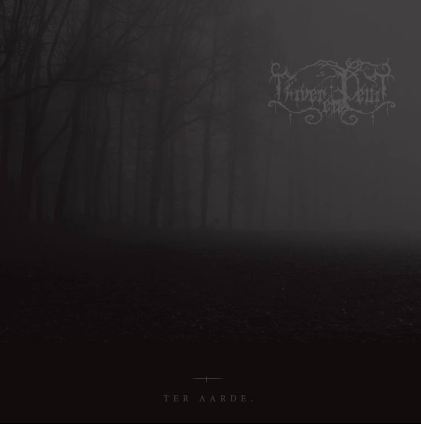
L'Hiver en DeuilI still don’t fully understand what the hell “post” black metal even is. I know the bands that earn this genre descriptor tend to be shying away from metal in the form of distortionless, reverb drenched Cure worship ala Alcest or others that dwell within this dreary veil. I’m fine with that, but ultimately, who cares? Other musical genres entering into the metal (or lack thereof) sphere bring in a wealth of new ideas or what could be considered a much needed infusion of inventive cross-pollination. Though Belgium’s L’Hiver en Deuil don’t necessarily claim to be a post black metal band, they are certainly flirting with the idea on their debut EP, Ter Aarde with it’s lushly dismal atmosphere and airy guitar melodies that spin a very depressive tone throughout the 6 well considered tracks on this piece of work.

Recorded by Phorgath from the bands Enthroned and Emptiness, Ter Aarde is a very clean, though mystical sounding release that perfectly captures the varying rise and fall of musical ideas contained herein. L’Hiver en Deuil’s main delivery system is firmly rooted in downtrodden black metal, focusing on a mid to slower tempo set which allows the harsh vocals to really dig down deep into the verse riffs to discover an adventurous path to share lyrical ideas and interesting vocal structures. The unencumbered nature of the music finds the sharply dissonant, though atmospherically distorted guitar tone giving L’Hiver en Deuil a pleasing foundation for their songs to come alive. The band builds upon the emotive intensity with pulsing tempo swells, only to effortlessly switch gears to cascade into melancholic clean guitar lines where the vocals follow suit and introduce pitch singing to further enchant the sound. The free and powerful nature of the clean bass tone points to gothic music appreciation and the prescience of this instrument further adds to the dimension and vitality created by L’Hiver en Deuil. There is no denying the attention to detail in the musicianship and songs on this EP, but I’d be lying if I told you that I wasn’t moved at all by the obvious nod to mid 90’s Norwegian black metal found clinging to this material like a moonlit fog. It suits the music of L’Hiver en Deuil well and taps into a largely forgotten strand of atmosphere that this band has thankfully reawakened. I can only imagine what they will do with it in the future.

Ter Aarde is a very mature/engaging release that borrows influence from bands like Agalloch and older Ulver, but L’Hiver en Deuil have thankfully kept full assimilation of their influences at bay with their own unique way of approaching their songwriting craft and for it, cultivated a very moving and enjoyable piece of music that hints at far greater things to come. -Marty
Consouling Agency

Lvcifyre – Svn Eater

•November 13, 2013 • 1 Comment

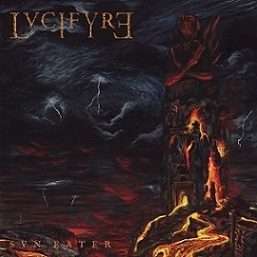
LvcifyreWith their 2nd full-length album, Svn Eater, England’s Lvcifyre have sent a blistering statement in the form of 9 crushing death anthems, convoluted by a minor black metal atmosphere sonically and augmented further by a pure darkness and endlessly tormented intensity that laps at the heavens with vengeful flames. The UK may not be as known for pure death metal such as this, but Lvcifyre have struggled through obscurity (very little PR) to secure a spot on Dark Descent’s excellent roster and are the perfect fit within the gristled musical pantheon Matt and crew have constructed. With the bleak outpouring of aggression and layered waves of dissonant riff storms, Lvcifyre have unearthed a potent opus eager for consumption.

Night Seas Sorcery starts off this album with a lengthy and twisted journey that embraces the snarled mid-range of black metal vocally and a metallic clanging bass tone. The song slowly builds, adding motion and consuming all light as the deep gutturalizations of the vocalist reclaim the foreground and the riffs turn even farther away from the suns warmth. Building speed and intricacy as it unfolds, Night Seas Sorcery acts as a long intro with substance that unlocks the gates for tracks like Chalice of Doom and Liber Lilith to tare all life asunder with barbaric/hard hitting speed and unique guitar work that skillfully walks the line between manically disjointed riffs and moving segments of music that are memorable within their own spectrum of cold void expression. As the album progresses, I cannot stress enough how “alive” this production sounds and simply how hard Lvcifyre are playing to achieve their tone and deliver their songs. After repeated listens, influences like older Morbid Angel surface in tracks like Nekuomanteion with it’s mid-paced, sharp double bass crawl initially and riffs that lurch and congeal into unique phrases that could have erupted from the mind of Trey Azagthoth, yet coming out more perverted/strange (in a good way). The pacing and tempo dynamics on this album are excellent and it helps to make this overly alienating sound seem a bit more palatable when setting out to comprehend the complex rituals so skillfully given life by this impressive quartet.

Lvcifyre may not be at the forefront (yet) of this eras endlessly tormented and constantly growing underground death metal movement, but with such a powerful body of material emanating from the molten core of Svn Eater, they are quickly ascending the ranks and consuming their way through this swarming horde on the grounds of solid/inventive songwriting and a delivery that feels like it is exploding out of the speakers with an intensity rarely experienced. Svn Eater is a damn good album that will appeal to fans of bands like Desolate Shrine, Maveth and Portal. My eyes have been opened and can now see the flames! -Marty
Dark Descent Records


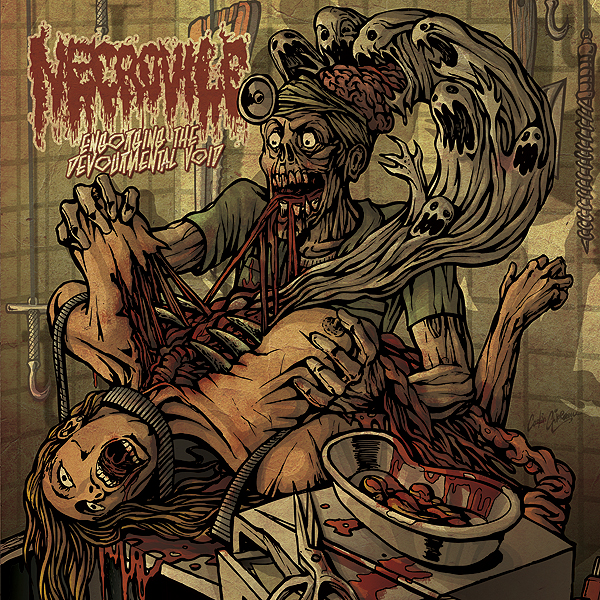
Necrovile – Engorging the Devourmental Void

•November 13, 2013 • Leave a Comment

NecrovileThe second full length offering by the death outfit Necrovile from Romania is a different and better experience than their first.  The slams and ugliness and overall brutal ethic have been replaced by a crisper, catchier and more upbeat brand of death metal.  There’s lots of nimble fretwork on display here and the album has more of an emphasis on catchy hooks and energy than atmosphere or brutality.

The deep guttural vocals are probably what prompt people to classify this as brutal death metal on the metal archives, but really, this music is pretty accessible death metal, certainly far less brutal than something like Hate Eternal in terms of how abstruse it is.  Necrovile shuffles catchy hooks in fairly standard arrangements—these aren’t more complicated than Razor songs—throughout this platter.  The riffs is occasionally complex, but these songs aren’t…and they don’t have to be.  Although many brutal death metal bands prefer shorter songs (Pathology, Abominable Putridity, Kraanium, etc.) the arrangements are rarely as classically minded as are Ncrovile’s: The major part of this album is verses, choruses, departures and solos.

It’s very clear that these Romanian’s are having a good time playing a fun type of brutal death metal and their joy leaps out of the speakers.   Maybe it doesn’t sound like a compliment when I refer to a brutal death metal album as joyous, but I mean it as one here.  Things are pretty tight and simple, excepting the more complex track Submit to Dehumanization, which has more digressions and some weirdly out of sync blasting (the latter seeming out of place on this otherwise locked in album).

I’d like more thick chords, more slower moments, and more heaviness on their next release, but unlike the first Necrovile album, which is decent, but forgettable, Engorging the Devourmental Void is exciting and catchy “brutal” death metal with a a thrash ethic. It’ll either grab you right away—at song 1, opening riff—or not at all. – S. Craig Zahler
Lacerate Enemy Records

Slaughterday – Nightmare Vortex

•November 13, 2013 • 1 Comment

Slaughterday (199x200)Napalm Tom G. Warrior, Chris Reifert, and Peter Tägtgren into a single liquefied pile of pungent flesh, freeze it in carbonite, then electrify and unleash the result in Deutschland, and you will create a monster capable of twisting the output of all three musicians into new devilry.  And while the body parts of this particular Death Metal beast have been displayed time and time again, the sum of this band’s riffs brought together here feels fresh. Germany’s Slaughterday have the gumption (and instinct) to take T. Gabriel Fischer’s get-up-and-say-Hey! vox, back it with tested-and-true Oakland CA death/doom found in the collection of every serial killer, and inject the mishmash with a Swedish melodic sensibility cultivated from the early ’90s to present. In so doing, Slaughterday have concocted a first full-length that feels both comfortably familiar and energetic. Metal’s characteristic of reliving what has already been continues to be its greatest asset and greatest Achille’s heel, and most bands spend their entire careers trying to gingerly traverse the balance between homage and plagiarism; for Nightmare Vortex at least, Slaughterday have tightroped across the  dam between the two traits by taking the best the aforementioned triumvirate has to offer, while hacking enough chops into OSDM to keep the ’80s/’90s stale at bay. This is cheap-beer-drinking DM with a smidgen of class, courtesy Nik Godgrinder’s (heh) epic leadwork that has (heh heh) emotion – yep, go back and read that word again – emotion beyond the expected hate, giving color to the boilerplate metal-of-death that will be at home in any gravedigger’s 25-year-old Sony Walkman (cassette of course). Now, now, do not worry that ‘thar-be-whining’ here, fellow cemetery fiends; track titles ‘Addicted to the Grave’ and ‘Cult of the Dreaming Dead’ (to name but two) attest to Slaughterday’s adherence to true Death Metal ingredients. These Germans have proven with Nightmare Vortex that you can in fact ‘keep it simple, stupid’ on the E/A/D/G strings, while making memorable, melodic zombie-porn muzak on the B and high E’s. Get ready for what you already love, but can now enjoy without playing Mental Funeral, To Mega Therion and Penetralia all at the same time. -Jim

FDA Rektoz

Hollow halls of the damned…

•November 6, 2013 • 10 Comments

Due to work obligations, there won’t be an update this week, but we shall return next Wednesday with more opinionated rants and hopefully a completed interview or 2.

Lastly, us Worm guys would like to thank you all for making our Halloween update our most successful and viewed posting since the re-launch of Worm Gear! It means a lot and we hope you have been enjoying yourself over at our little corner of the net.

Till next week, feel free to deposit your playlists here and spark up a topic of conversation. We will be adding ours to this thread as time permits. -Marty

Rise…Rise…Rise…It’s Halloween

•October 30, 2013 • 10 Comments

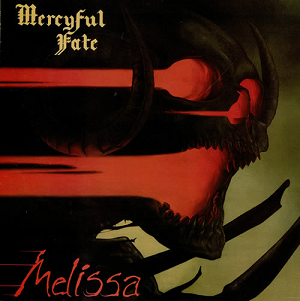
Thirty years ago, a ritually-conceived artifact arose out of Denmark that would alter the landscape of Satanic Metal for all time: Mercyful Fate’s Melissa.  In celebration, Marty, myself, and Jack Hannert (Giant Kind, guest-vocalist of Seidr) are drinking Thor’s Imperial Porter from Hammerheart Brewery in Lino Lakes, MN, and running through King Diamond and Co.’s entire catalogue.  But tonight isn’t just about us, or The Devil’s favorite Texan, no, dear reader, tonight is about you, and to prove it, we offer up no less than nine reviews from the usual suspects and from your favorite screenwriter and ours, S. Craig Zahler. “But wait, there’s more!” Yes, the GORGUTS INTERVIEW HAS ARRIVED and awaits the touch of your drying eyeballs.  Most important of all, Mr Rytkonen honors The Great Falsetto Gene-Simmons-Agitator and Friends from Copenhagen with his essay “Howl like a wolf and a witch will open the door … celebrating 30 years of Mercyful Fate’s Melissa.”  Enjoy, comment, ejaculate!

Jack Hannert Playlist
Pyha – Koulema
Seidr – Ginnungagap
Summoning – Old Mornings Dawn
Agalloch – Of Stone, Wind, and Pillar
Dissection – Storm of the Light’s Bane
Blood Ceremony – The Eldritch Dark
Agitated Radio Pilot – The Rural Arcane
Drowning The Light – The Fallen Years
Dommedagssalme – Division

Marty Rytkonen Playlist
Carcass – Surgical Steel
Mercyful Fate – Melissa
Mercyful Fate – Don’t Break the Oath
Squash Bowels – Grindcoholism
Brodequin – Methods of Execution
Inquisition – Obscure Verses for the Multiverse
Speed Kills – The Very best in Speed Metal comp
Blood of the Black Owl – Light the Fires!
Gamma Ray – Heading for Tomorrow
Thou Art Lord – The Regal Pulse of Lucifer

Jim Clifton Playlist
Alda – s/t
Alda – Tahoma
Katatonia – For Funerals to Come …
Necros Christos – Doom of the Occult
Gris – À l’Âme Enflammée, l’Äme Constellée…
Sombres Forêts – La Mort du Soleil
Taake – Over Bjoergvin Graater Himmerik
Darkthrone – Total Death
Dismember – Misanthropy
White Medal –  Guthmers Hahl

Jake Moran Playlist
Fearthainne – Fearthainne
Alethes – Alethia
Richard Moult – Aonaran
Heathen Harvest – Samhainwork II
Arnaut Pavle – Arnaut Pavle
Moloch – II
Grifteskymfning – Demo 2008
Steven R. Smith – Owl
Stray Ghost – An Avalanche of Swollen Tongues
Wreathes – The Reigns / Full Turn

S. Craig Zahler Playlist
Biglietto Per L’Inferno – Biglietto Per L’Inferno
Antonius Rex – Zora
Goblin – Patrick
Goblin – Phenomena
Genesis – Trespass
Blue Oyster Cult – Imaginos
Gastrorrexis – The Taste of Putrefaction
Tyrants Blood – Into the Kingdom of Graves
Warmarch – The Declaration

Howl like a wolf and a witch will open the door… celebrating 30 years of Mercyful Fate’s Melissa.

•October 30, 2013 • 3 Comments

Melissa_albumIt has been 30 years, to the day, that Melissa was released upon mankind and it has been filling hearts with its legitimate evil ever since. This album was my first introduction to this band and I can remember being initially turned off by the vocals and obvious lack of outward aggression that was employed by bands I loved at that time like Metallica, Venom and Celtic Frost. Mercyful Fate was a grower band for me, but when the formula and that demon summoning falsetto clicked, it was evident that this amazing Danish quintet possessed something 100 times more special and musically gifted than all the bands previously mentioned, along with just about everyone else in the metal world as well. I have never been one to follow Christian dogma, but even today, when I listen to Melissa and Don’t Break the Oath, I am certain that the Devil is indeed real and King Diamond once held counsel with the lord of this world.

As an album, Melissa is to be commended for arising out of 1983 and not sounding like Iron Maiden, or any other high profile metal band from that era. Instead, Mercyful Fate cultivated their style into something unique and with so much dimension, that it is commonplace to hear the songs on this album and become lost in the twin guitar genius of Michael Denner and Hank Shermann. The way they built riffs with varying harmonies… at times it sounds like demons laughing. For the separate guitar lines to conjoin and make something even more substantial or downright chilling, was an obvious influence from 70’s hard rock bands, but the forward thinking of both of these guitarists felt so alive and rich that it sets them apart from the Smith and Murry’s of the world. Both of them are stellar guitarists coming together to form a seamless songwriting unit. With such amazing riffs being created, I still listen to Melissa and am blown away at how the solos uniquely break away from the foundations of each track, to effortlessly fall back into the main guitar parts and become integral to the flow and character of each song.

But Mercyful Fate doesn’t begin and end with it’s fantastic 6 string interplay. Timi Hansen’s bass work is stunning and sits so naturally with this material. His lines are playful and always colorful whether he’s stirring the pocket, or breaking away with passionate fills. Kim Ruzz was such a solid drummer and strikes me as a Clive Burr caliber player with penetrating hi-hat work and rhythmically interesting fills and double bass patterns. His playing borders on jazz inspired, but far less pretentious. He’s just a “REAL” player with a gifted knowledge of what each song needs to be held together and pushed one step closer to perfection. And the voice… King Diamond… folks either love or hate the shrill blasphemies lifting from Mr. Petersen’s lips, but this unique style is the atmospheric and a tad bit creepy icing on what could almost be considered a perfect cake. This early in his career, his high-end is piercing and so sinister sounding, only to be made more so by waves of effectively used reverb to give us all that lost in a ritual chamber sense of drug addled vertigo. All 5 members brought their distinct talents to this band and this album for a union that sounds just as fresh and vital today as it did 30 years ago. I would be remiss if I didn’t give each song a moment of my time…

Evil: What grandiose opening statement! The intro cackles to life like a horde of demons mocking a priest, while the endlessly catchy push of the verse riff seals this track as a classic for the ages! “I was born in a cemetery, under the sign of the moon…” still sends chills down my spine. The solos playfully interact with King’s vocal lines to further bring this song to life and offer a subtle and calculated impact giving King all the room and drama he needs to torment the listener with his twisted visions. “And when you’re down beyond the ground, I’ll dig up your body again and make love to shame”. Fuck yes. Such an amazing opening track.

Curse of the Pharoah: Many consider to this to be one of the bands best songs, and from a songwriting standpoint, it probably is. I just think it should have fallen later in the album since following up the impact of Evil with such a mellow groove always struck me as a bit anti-climatic. Still, the hooks dig deep in this one and the slower tempo really gives Denner and Shermann a lot of space to work in their flair. I guess I’ve just heard this song too many times that it has become Mercyful Fate’s “Paranoid” if that makes any sense…

Into the Coven: The next 3 songs are pure unholy gold and stand the test of time as some of my favorite music ever. Into the Coven is the musical equivalent to pure evil. There is a chill in the air and the candles flicker to the currents of cloaked figures slowly passing the altar. This is the atmosphere that permeates this track and it is a similar vibe experienced when watching 70’s classic horror films like Rosemary’s Baby, The Exorcist and The Omen. King’s gift of presenting a melodic vocal line that works with the guitar riffs, yet sail just a bit independently of them, is genius. Bring on those passionate solos and this one always had me looking over my shoulder in my darkened teenage bedroom. “Because my soul belongs to Satan” never sounded so fucking serious and heartfelt.

At the Sound of the Demon Bell: I’ve always loved the flow and drive of this song and how the guitars are always in motion. There is a groove established here, but it’s very busy and builds to an intensity not yet experienced on this album until now. King’s vocals are soaring on this one… probably why it was never a mainstay in their live set, if it was played at all. Love the bluesy riff work just before the speed kicks in…

Black Funeral: A perfect song. Truly. This is yet another pure proclamation of evil set to chilling music. Kings’s use of “OOOOOooooo” sounds otherworldly as he hails Satan from his dark altar of sacrifice. The lyrics were so much more satanic and downright shocking to anything Jack Van Impe ever warned our parents about during the years of evangelical “Satanic Panic”, yet Mercyful Fate often slid under the radar of the Christians during the witch hunt set upon bands like Judas Priest and Ozzy Osbourne. And the music… again… such a sensible flow and the riffs spoke volumes with interesting melody and that soul wrenching darkness. My only complaint is that the song ends after an amazing solo and always seemed like they could have returned to the main verse riff for more structural substance. It’s an amazing song that just sounds unfinished to me.

Satan’s Fall: If I were to have a complaint with Melissa, it would be Satan’s Fall. Let’s face it… the song is a mess. It’s like they set out to write a long song, yet didn’t have a cohesive strand or musical theme to carry throughout the bulk of it so the structure is linear and disjointed. Each change in the song is ushered in by an intro riff where the drums fall away and a solitary guitar line brings in the next segment. This is an indication that they had a handful of riffs that didn’t go together all that well and they made it work by bridging the gap in key or tempo with these unnecessary intros. Start. Stop. Start. Stop. And the finished product sounds forced. Such a lack of feel musically forces King to sing in an equally awkward manner, finding a lot of his vocal ideas to sound strained and just off from the rest of this song and album as a whole as he struggles to hold onto a segment of melody that just isn’t there. Again… Satan’s Fall is a mess and would have been much better suited if the band harvested 5 or 6 quality riffs from this monster and made 3 new, more focused songs. But still…. some of the segments in this song are great by themselves. It’s just hard to envision them extracted from this track and repurposed.

Melissa: A great way to end what remains such a passionate and largely stunning album. After enduring the beating that is S.F., the title track ends the procession with pure emotion and atmosphere, a much needed change of dynamic and hint at the genius that is to come on Mercyful Fate’s follow-up, Don’t Break the Oath. On Melissa, the transition from quiet/sad moments to the more bombastic middle of the song is inspired and once again demonstrates just how scary this band was not only in their talent and cohesion in playing together as a band, but their dedication to King’s unholy vision for what MF needed to be to stand apart from so many other bands starting out in metal looking to make a name for themselves.

The songs are an impressive statement themselves, but would have been a bit less potent if it wasn’t for the production. Melissa has a haunting sense of antiquity to it, for even though there is obvious distortion in the guitars (supplied by an old amp and NOT a distortion pedal), everything has it’s own clean voice that can be heard/felt. What helps unify these independent elements is reverb. In fact, the reverb on this album is like the 5th instrument that pulls everything together into a theater of awareness and twists it into an even darker voice of expression. The production of Melissa possesses a life all it’s own and I love how the older mastering techniques of the time make the listener have to crank up the volume for more intensity and an all encompassing journey. Melissa further benefits from an organic and very real listening experience. Funny how this concept is often lost to the ages as the world races to embrace technological advancements in the recording industry. Even the members that made up this band can no longer replicate, or get the old formula right. But that is another discussion for another time.

Melissa is the reason why Mercyful Fate remains one of my favorite, if not THE favorite, bands in metal. And that says a lot. The songs on this album never get old. “I think Melissa’s still with us…” It is indeed and has remained in constant rotation in my life since the day teenage me finally “got it” and quickly devoured everything that this band and King Diamond as a solo artist would release. When I find myself getting burned out by the modern evolution of metal, Melissa and Don’t Break the Oath always stand as my happy place/safe houses and reset my senses with pure artistry and vision for the way it should be. Melissa is a timeless classic. I cannot believe it is 30 years old today. -Marty
Megaforce Records

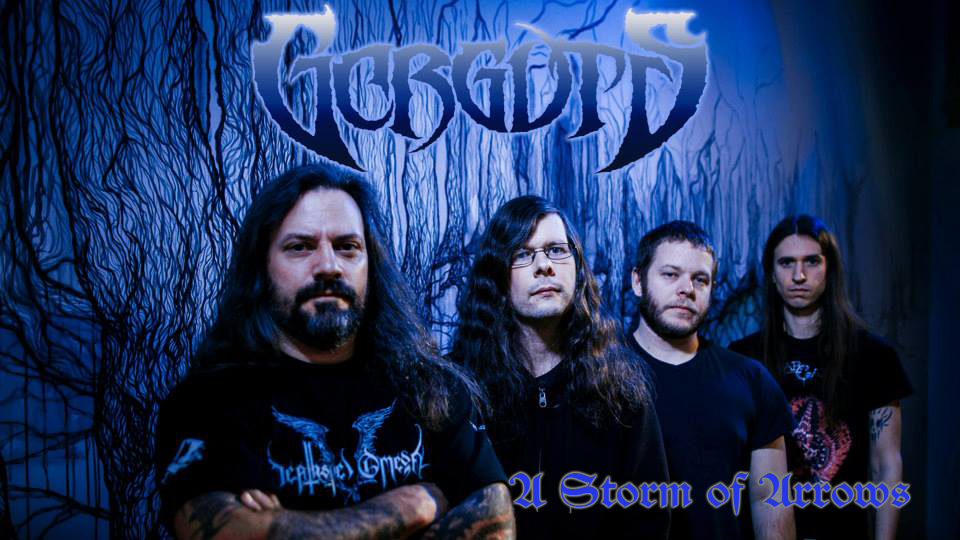
Gorguts – A Storm of Arrows

•October 30, 2013 • Leave a Comment

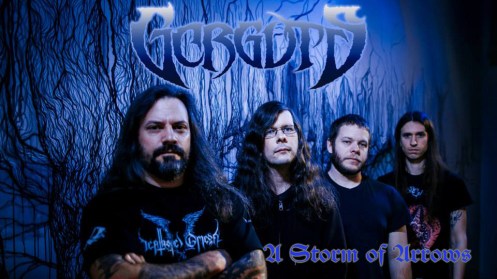
gorguts header copyI think we all knew that Gorguts return to making music again was going to be good, but I don’t think any of us had any idea what was about to strike. Colored Sands is one of those special releases that is definitely a collective product of a bands past, but so highly developed on all levels, that it defies explanation and inspires total immersion. Founding father Luc Lemay has endured much over the 24 years of Gorguts on again and off again existence, but through it all he has been a pioneer for creative death metal and most importantly, a musical innovator in respect to pushing the boundaries for not only the genre, but also what you can do with 12 notes on a guitar. Amidst a groundswell of press I’m sure he has been dealing with since Colored Sands release, I am honored that he took some time out of his busy day to give us all more of a candid glimpse into the workings of this amazing piece of art, and also his life. -Marty     photo credit: Alyssa Lorenzon

Worm Gear: Your style of song/riff writing has greatly evolved over the years into a sound that is endlessly unique. What do you attribute this growth to? How does one look into the death metal formula and arrive at such a free spirited sense of composition when this genre often displays a rather close minded execution of songwriting where “sound” trumps depth or complexity…
Luc Lemay: This musical language was born from the will of not wanting to use “typical” Death Metal ingredients in our guitar and bass playing. With the “OBSCURA” line-up, we intentionally sat down before writing a single note for this record and discussed about what we wanted and what we did not want for this record. So we told to each other: no fast picking riffs (like we have on “EROSION”), no more “Slayer beat”, we would admit only blast beats or mid tempo to slow tempo. So, from there we had to create a new dark, heavy, compositional language out of our comfort zone. This way it forced us to explore and be more rigorous. Then, one song after the other we slowly developed something that we would have never found if we would have allowed ourselves to stay in our normal, traditional Death Metal writing.

WG: Having said that, when listening back to your previous release, how do such classic albums like Considered Dead and The Erosion of Sanity sit with you? Do you feel they are under developed in light of what this band has become, or perfect as they stand as building blocks on the way to greater things?
LL: I think they are good records for the time they were written. We always wrote the best music we could with the experience we had at the time, so I don’t think they are under developed. But, for me, “OBSCURA” would be the record that defined our sound.

WW: Colored Sands strikes me as a very dark and at times sonically scary record with tentacle-like guitar work and a boiling atmosphere lurking within the structures. What was the impetus behind such a stirring approach?
LL: Writing dark music was surely my intention when I wrote this record. Even in classical music…I like very dark, epic sounding compositions. I wanted the music to have a story telling mood, I wanted the sound to be descriptive.
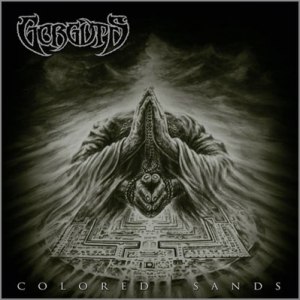
gorgutscolored_sands.400WG: While possessing such a dark vibe on this album, I was surprised to read the lyrics expressing a more positive/enlightened thought process. Could you share your intentions with the lyrical concepts this time around and how the message may work as a polarizing force up against the urgent, and at times frenzied state of the music? The give and take of it all is quite an amazing balance…
LL: The concept canvas for the record is Tibet. One day my attention got caught by the Mandala drawing ritual. I got very much fascinated by the look, meaning and the process of drawing Mandalas. At first I wanted to do the whole record about each step of drawing these Mandalas….but after reading on this topic I found out that it was too complex and I would need to educate myself for a decade before I knew what I was talking about. And also, I didn’t want to do a “documentary” record. The sense of “story telling” was missing. So I decided to change my angle and tell a story about the Tibetan culture.

The album is divided in 2 parts. The first one deals with the beauty, the philosophy and culture of these people. Then you have the orchestral instrumental piece which illustrates the Chinese invasion of 1950, then after that everything changed for the worst for those people.

“LE TOIT DU MONDE” Which means: Roof of the world, brings the listeners in the geographical place where the story is going to take place. I talk about the mighty mountain range in a poetic way…

“AN OCEAN OF WISDOM” tells the story about how they found the 14th Dalai Lama. The rituals, the sacred lake (lake of vision) Lhamo-Latso, and the epic quest for the reincarnation of the Dalai-Lama’s soul. But above all, “ocean of wisdom” means : Dalai Lama.

“FORGOTTEN ARROWS” is about the rules of causality. Everything that happens in life happens for a reason. I got inspired by a text of : Matthieu Ricard, who is the French interpret of the Dalai Lama. He wrote that all the actions that we do in life are like arrows that we thrown in the sky one day, then we forget about them, and suddenly, one day, they strike back on us…the echoes of our actions.

“COLORED SANDS” Tell the process and the mystic experience of Mandala drawings. Pilgrims who walk for months towards the place where the ritual is going to take place. They walk and they prostrate every 3 footsteps…face to the ground…

“ENEMIES OF COMPASSION” Is about the Chinese invading Tibet and taking control by persecuting Tibetan people.

“EMBER’S VOICE” deals with the horror of Tibetan people immolating themselves in public to protest against the Chinese occupation.

“ABSCONDERS” tells the story of a murder captured on tape by mountain climbers who witness Chinese border guards deliberately shooting Tibetan fugitive trying to escape to Nepal.

“REDUCED TO SILENCE” is questioning the “non-violence” philosophy….the silence of the international community witnessing the genocide of the Tibetan culture and people. Will the “non-violent” way of life bring them to their own end?
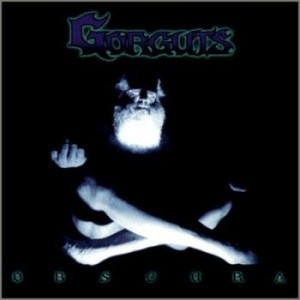
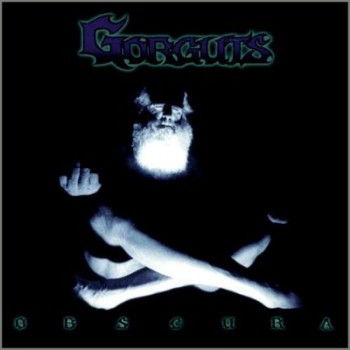
gorgutsobscura.400-350x350WG: Obscura marked a technical and stylistic shift into more complex and groundbreaking musical ideas. There was a freedom and even a “playful” feeling on that album showing a band eager to embrace infinite possibilities. Did you achieve what you set out to do on that album? What was the reaction of the fans to Obscura’s more advanced approach?
LL: Well, it was and it’s still a “like it” or “hate it” album. When it came out a lot of people thought it was very refreshing to have a record like this in the Death Metal scene and some other people thought it was total garbage. I think time gave justice to this record…I think it aged very well and I don’t think it sounds old. It opened many doors for the extreme music sound.

WG: Could you describe the mood within the band at this time and how the album was received by the masses? Was this in any sort of a way an influence on where you would continue to take the direction of Gorguts?
LL: We never change our way of thinking to please the masses. As artists, we always wrote the music we wanted and I’m not going to go back to write music like my first 2 records just to please people who don’t like “OBSCURA”. Even “COLORED SANDS” is different than “OBSCURA” so, I don’t expect my new record to sound like “COLORED SANDS” either. I need to move forward all the time. I don’t like sticking with formulas.

WG: Would you agree that there is a similar open minded spirit in the songwriting that has surfaced again for Colored Sands? The album just has a feeling of you being eager to share a re-awakened and exciting energy with the world.
LL: I think this music is very open minded. I think everything is possible from there. I don’t have the feeling that I’m trapped in a style. I have the feeling that anything can be incorporated to our sound and if it’s brought with an intention of making it “heavy” it’s always going to work.

WG: After From Wisdom to Hate, you stopped making music under the Gorguts moniker shortly after the untimely death of your friend Steve MacDonald. It’s such a hard thing to accept and move on from. Did time away from the band help you with the grieving process? I know you joined Negativa for a while… did work in a new band seem foreign to you, or did this also help you through the tough times?
LL: After Steve’s death, I just wanted to do different things. I was happy with everything the band had done at the time and I never felt I had some unfinished business. I decided to move from music to work more with my hands. I started to do woodworking. Then by joining NEGATIVA, the flame of doing music with other has lit in me again.

WG: During the 7 year hiatus between Wisdom and Colored Sands, how closely did you stick with creating music? What other activities did you do to vent your boundless creativity? With so much skill and technical dexterity on display for the new album, it sounds like you kept playing during this time. Also I wouldn’t be surprised to hear that Colored Sands took 7 years to compose with all that’s going on within it…
LL: “COLORED SANDS” took about 2 years to write the music and it took about 1 and a half years to write the lyrics. There was a big break because I had to go through a lot a legal and business issues. But before I joined NEGATIVA I stopped playing for maybe 3 or 4 years.

WG: Tell us about the new members of Gorguts. What sort of fuel has the new line-up brought to your song writing process? Is there a strong commitment from these guys, or will other band commitments eventually complicate their contribution of talent and time?
LL: The new members are amazing! We get along great! They are very talented and they each brought something very creative to the band’s sound. Schedule wise, it’s a matter of good communication. We need to share far ahead enough to book tours and practice. So far so good!

WG: Having seen John Longstreth myself drumming live for both Angel Corpse and Origin over the years, I found his skills to be awe-inspiring. It seems like such an unbridled talent would be a freeing force to have at your disposal…
LL: John is great!!!!! When I heard his performance on DIMMAK “Knifes Of Ice” that made me choose him to be part of the new GORGUTS.

WG: Time is unending and moves quickly along, but in the music world, a lot can happen in a short period of time. After 7 years of being away from Gorguts, have you noticed a change within the death metal world? Maybe a more noticeable return to popularity now that black metal seems to have released its grip on the imagination of extreme metal fans?
LL: It’s totally coming back. I feel like there’s a big buzz around extreme music in general. This is great!!!!!!

WG: Any changes as well in the business side? Are labels learning how to adapt and work with the crisis instituted by the internet and crashing sales that you have noticed? How has the modern era affected Gorguts if at all?
LL: I don’t feel like it affected GORGUTS…I don’t really pay attention to that. I focus my energy on writing and planning for touring.

WG: Correct me if I’m wrong, but I have heard that you have been involved over the years with classical music as a composer. If so, how did this come about and is it an avenue of music you still pursue?
LL: Yes, I’m involved in writing classical music. I’m in the process of setting up a little home studio to work on newer compositions.

I started to write classical music around 1994. I stared violin lesson in 1993 then switched to viola 1994. Being in contact with music partitions made me want to understand how so many stacked staves could work all together at once. So, I wrote a short piece for string quartet in 94’ then when we moved the band to Montréal I got admitted to a private college to study viola from 95 – 96…then I auditioned for the composition class at music conservatory in spring of 96’ and I studied composition, orchestration, harmony, analysis, counterpoint and choir singing from 96’ to 2000’. Then I decided to leave, without finishing my diploma. I had to study electro acoustic composition then and I was not interested in that medium…so I dropped out. Those years were fantastic! It was amazing to share with all these Masters in each of the disciplines. Also, what I liked about the conservatory was that some of the discipline had like 3 to 5 students per classes, so you get a much closer relationship with the teacher and you can ask way more questions than a normal class.
Someday I would love to release a CD with orchestral and chamber music but it costs soooooo much money to hire musicians, that doesn’t make the projects easy.

Gorguts

WG: What does death metal give you on a creative level that may be lacking in classical music if such a void does indeed exist?
LL: I don’t write classical music cause I feel I’m missing something with Death Metal. I do it for the simple reason that I love it.

I don’t think a void exists between the two forms of writing. The act of composition remains the same. Its how it’s put together with the final instrumentation that feels like a very different form of Art but it’s not to me. There are some modern classical composers like Carter and Varese that sounds way more modern than Metal music writers.

WG: It has become a popular pattern for older and influential bands to get back together and release new music. A lot of times this is a horrible idea as a lot of artists forget what they were or how to get back into that youthful mindset of creating music with fire. What are your thoughts on this recent phenomenon? Do you see this nostalgia trip as a healthy thing for the metal market as a whole or should bands simply leave the past alone?
LL: I think it’s all good as long as you have to something to say musically. Some bands will simply surf on a name while offering nothing new nor interesting to the fans. Nothing wrong with being away from the scene for many years…some will stay in the scene while writing the same record over and over again. Personally, I like to take more time between releases to make sure I have enough time to take a step back at think about what I would like to write.

WG: Many thanks Luc for spending time with this interview and our readers. I have been a longstanding fan of your works since the early 90’s and find Colored Sands to be an inspiring force in the death metal genre. Be well and take this moment to offer your final statement.
LL: Thank you very much for the interview! I could not be more grateful for the fans and the press response! Thanks to all and we’ll see you on tour!!!!!

Home

https://www.facebook.com/GorgutsOfficial?ref=br_tf

Antonius Rex – Zora

•October 30, 2013 • Leave a Comment

ZoragrZora is a flawed, but ultimately fun album by the bizarre Italian outfit Antonius Rex released in 1977.

Were it not for the incredibly charming opener, The Gnome, I’m not sure that I would have stuck it out, but that tune is like a kiddy version of something Goblin might do (and I adore Goblin), with happy creepy synth melodies woven atop driving rhythms.  The band adds some pretty questionable vocals to this piece–timid and off key–but since the cut feels a bit like Halloween for the bambinos, the singing comes off as charming rather than inept.  The second tune (Necromancer) is acceptable lounge music, but it is the third cut that will probably eject most listeners.  On this cut, Spiritualist Seance, Antonius Rex returns to the Jacula approach (the band that was their first incarnation) and discard that formal entity known as “song” in favor of organ music with sound effects and other adornments.  This track is intended to be atmospheric, but it isn’t for me, mainly because the organ delivers very little— there’s almost no melody and the lines (often held chords) rarely acknowledge a consistent tempo for the major part of its ten minute duration.  It’s not quite baseball field organ music, but it is close to that and isn’t worthy of the hunk of time it devours, or even half that amount of time.  Some latin invocations give it some flavor, and the final two minutes actually grow more interesting with some distant percussion and bass lines and wiry guitar and so it is not devoid of interest in its (long overdue) conclusion.

The following cut, Zora, peddles a riff with some strange tuning before exploring some melodic open sections and some new age music, and the final cut is an equally successful gothic/psychedelic rocker that brings Iron Butterfly to mind.

The very enjoyable bonus track Monastery seems to indicate that the sounds of Goblin, Mike Oldfield and new age music were pursued further by Antonius Rex, and so I intend to check out more of their music.  This one is uneven, but more good than otherwise.

A side note/request to Black Widow and other record labels:
Please leave some space between the conclusion of the album proper and any added bonus tracks—  a couple of minutes or at least 60 seconds.  Considering that I am in now the dwindling group that never downloads music and only buys hard copies, I don’t want to lunge for the CD player, nor tear open my bag to get to my disc player so that the album can end where the artist intended it to end.  An album has a stopping point, and it should be respected, even if more material is placed afterwards. -S. Craig Zahler
Black Widow Records

Biglietto Per L’Inferno – Biglietto Per L’Inferno

•October 30, 2013 • 2 Comments

biglietto1The debut by Biglietto Per L’Inferno is one of the most consistent albums of progressive rock that I’ve ever heard.  Although it does not have the high peaks of my top favorite prog albums (Roller, Cherry Five, Zarusthra, Animals, Atom Heart Mother, Meddle, Red, Court of the Crimson King, Larks Tongues in Aspic, Drama, Close to the Edge, Thick as a Brick, Minstrel in the Gallery, There’s the Rub), most true progressive rock albums–partially because of their daring nature–have some material that doesn’t work.  Yes occasionally gets a bit too “fa-la-la” happy, King Crimson sometimes loses me with their exploratory improvisations and I never want to eat Alan’s Psychedelic Breakfast or go to San Tropez…and Yes, Crimson and Floyd are three of my all time favorite bands.  On Biglietto Per L’Inferno’s remarkable debut, I count about four (4) minutes of losing the thread/below par ideas, all of which are contained in one song, track 3, Una Strana Regina.  Other than that stuff—and some singing that seems a bit shy of the pitch—this album casts a spell for its duration.  That is rare.

The song Confessione is quite stunning symphonic/heavy prog, and probably the highlight, with lots of parts–loud and gentle–that all flow together, and it’s reprise is very welcome at the end of the album, but the tune that really struck me the most was the lengthy L’Amico Suicida.  An argument could be made that this is one of the most “progressive” songs ever, though of course that depends upon how you define progressive.   The song progresses from one ending to the next, refusing to give up, in an almost comical manner at times, it shifts and turns and reinvents itself.  There are about fifteen sections that could be the ending for this song, BUT owing the aforementioned consistency of BPL’s musical material, it somehow works…even though many of these part have wild instrumentation shifts or huge tonal changes or both.  Not a suite of mini-songs strung together (like 2112 or Supper’s Ready), but a long, amazing and confounding run on sentence of a song, L’Amico Suicida is a marvel that refuses punctuation.  Bravo.

Fans of Floyd’s Atom Heart Mother, Banco (esp. their debut), and PFM (who never made an album that I like as much as this one) are encouraged to seek out Biglietto Per L’Inferno, and listeners who enjoy heavier, more rockin’ things things like Thick as Brick and Salisbury will also get into this.  This is top notch RPI, perhaps only bested by Roller, Cherry Five and Zarusthra. -S. Craig Zahler
Trident

Endlichkeit – I-II

•October 30, 2013 • 6 Comments

?????????????????Across the heights and amongst the depths, like it or not, we will fall or rise again into some semblance of balance. The path taken to that purgatory – a numbness, a safety we subconsciously strive for – is surrounded on all sides by flora whose color drains more and more as we near our inevitable center, and by fauna whose fight to persevere dissolves into surrender with every step forward. Here, in this world between the harsh and beautiful, you will find the sounds that fire the songs of Endlichkeit. I-II, a cassette released by the mighty Fallen Empire, contains a litany of layers as impenetrable as the unconscious mind of its listener, as its army of guitar tracks work together as one with a low-mixed, but present and relentless percussion to shut down whatever neuroses haunt you at this moment, here and now, allowing you to disperse your body of stress into Endlichkeit’s distortion-driven cloud, one glimmering with the pale twilight of melody and anti-melody. The tangible world will dissipate, you will lose your focus on what does and does not matter, you will become one with sonic composition. Beyond the growing shadows at the edge of your aural periphery you will hear a tortured voice darting out from beyond the vortex, reminding you that yes, you are indeed still listening to black metal music, but a kind of black metal meant to subvert visceral reaction, to negate the senses, to reach nothingness. Endlichkeit’s enemy has a name, and that name is response – and in order to destroy response the band overwhelms its audience with a rogue wave of emotion so dense no emotional high, no emotional low, can hope to escape its erasing power. And in its wake, an intangible bliss remains.

Aside from the information already given you about Endlichkeit and I-II (their debut cassette), I can tell you no more. For a band whose music aids those who experience it in the achievement of emptiness, perhaps any banal listing of facts is inappropriate. If you understand what the purpose of ‘hazy’ black metal is or are at the very least interested in finding out what it is, you will click the link below, strap on your headphones and escape. If the answer is no to both, well … perhaps you’re better off seeking out more superficial examples of extreme art anyway. -Jim

Fallen Empire Records

Inquisition – Obscure Verses for the Multiverse

•October 30, 2013 • 1 Comment

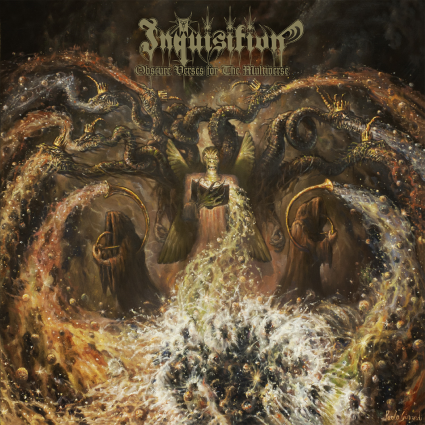
inquisitionAs we hit “play” on Inquisition’s 6th full-length decent into the not so distant realms of the unholy, it sets a mental image of the seal on this ancient document being broken. As it is opened, the malevolent forces explode from the pages with an urgent fury as if the imprisoned devils were tortured by the hex set to enslave them. Maddened by centuries of internment, the hordes take to the sky swarming to blot out the sun, then turn their torment on the living with viscous teeth and glistening claws eager to flay human flesh. And that is all contained with in track 1, “Force of the Floating Tomb”.

Obscure Verses for the Multiverse is by far the most intense opus in Inquisitions arsenal of devilry, as speed is the main delivery system for their twisted chord structures and endlessly evil atmosphere to send the listener off on an audial journey to gaze upon the lake of fire. Where tracks like the opener, Darkness Flows Towards Unseen Horizons, and many others revel in the unbridled intensity of blasting speed and tremolo based riffs that decay into noisey bends and sweeps that have become the mainstay characteristic of Inquisition’s style. No matter the speed being manipulated, what is a constant in Inquisition’s world is that the riffs remain impenetrable in their weird catchiness, which always makes their material engaging and memorable. Where Ominous Doctrines of the Perpetual Mystical Macrocosm relied more so on crawling blasphemies and a very bleak atmosphere, it was initially surprising to hear this much aggression on display. That and the fact that Dagon’s sinister croak sounds more like Immortal’s Abbath than ever before, this new album was admittedly a bit of a transition for me to get over. Once I adjusted to the more urgent delivery and songs that avoid long buildups to achieve a dark mastery, in favor of cutting to the point quickly and proficiently, the magical realm unlocked by Inquisition once again enchanted and hurled my soul into the vast portal of satanic majesty. As we sail through the firestorm, Inquisition do offer impressive slower tracks as Joined by Dark Matter Repelled by Dark Energy and the title track to demonstrate the diversity within their sound and songwriting style, and to nurture that brooding atmosphere that this duo have always been so proficient at cultivating. This album is a well considered and hungry display of a complete and unique songwriting vision that doesn’t deny its influences, but rather grows stronger because of them.

Sonically, Obscure Verses for the Multiverse is perhaps the brightest sounding album in Inquisition’s catalog, featuring a very full and lively production where every tom hit and obscure note buzzing within a chord can be felt and taken to heart. The cleanliness of the production may initially be a bit off-putting, but Inquisition’s overall independent sound triumphs and the obvious improvements in production act as a potent vehicle for this material to burrow down deep and stay with the listener to demand repeated journey’s to the chaos that is the Multiverse.

Obscure Verses for the Multiverse is yet another impressive release for Inquisition, a band that has never compromised their beliefs or overall songwriting vision to reach a wider audience. If anything, this deliberately conservative domination of their music has earned an army of devout followers and now their current union with Season of Mist undoubtedly raises their awareness on more of a global scale. Will the masses take to such a unique telling of such abysmal tales and become just as lost within the spell set forth by Obscure Verses as I have? Only time will tell. One thing is for sure, Inquisition will keep forging onward oblivious to outside influence and continue to stoke the chaotic flames of the end and look to the cosmos for their master to return. -Marty
Season of Mist

Masachist – Scorned

•October 30, 2013 • 1 Comment

Masachist_scorn (200x200)Polish export Masachist released second album Scorn last year, a collection of down-tuned, double-bass syncopated riffery that has no lacking of churning, mostly mid-tempo death metal sure to please fans of the style. The sound relays ‘Where the Slime Lives’-moment Morbid Angel (albeit with more palm-mutes, less Hell) and dissonant chord-slides of Hate Eternal, with blasts a plenty and atonal shifts riding along the go-stop-go composition. Credit must be given to Masachist for implementing appropriately spooky keyboards to sections here and there amidst the spatter, keeping the bloodletting of the cover artwork and insert front and center of the mind’s eye throughout Scorned‘s nine intestinal-stab tracks. Oddly enough, it is this synthwork and Pig’s vocals that generate the most interest for me, with growler Pig’s bark being pleasingly reminiscent of good ol’ George Corpsegrinder Fisher, with a bit of Erik Rutan thrown in. Still, the band works hard to develop their own musical voice, with tracks such as ‘Manifesto’ (100% D.M.K.M.) containing a nice eerie staccato-picked riff over the blasting, diverging nicely with the song’s preceding structure of ascending octave chording. ‘Opposing Normality’ and ‘Liberation’ reverently recalls the slithery guitar lines of Covenant-era Trey Azagthoh and mid-00’s Nergal, and if either (or both) bands have you left you wanting with their most recent releases, you might apply these tracks as replacement wounds for your …Insanus scars.

All in all, Scorned remains a solid offering of an album of the cleaner side of the DM genre, and is yet another reminder of Poland’s legacy of being a Metal exporter of all shapes and colors. Myself, I’ll stick to DM’s filthier sounds and the older albums of Masachist’s influences when feeling the need for this strain of heavy, but if you seek percussive DM from across the pond, you should give these Poles a play. -Jim

Selfmadegod Records

 
Design a site like this with WordPress.com
Get started