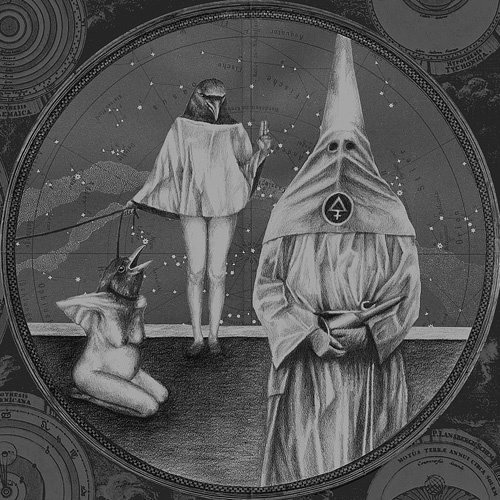
Katechon – Man, God, Giant

•July 17, 2013 • 1 Comment

a1967811851_10There’s something about the term “blackened death metal” that has a nails down the hood of a rusty truck effect on my spine. Maybe it’s the association I hold with those words and the mid-2000’s musical climate of Belphegor and Behemoth, but for whatever reason the term is marked in my head as vomit worthy. I bring this up because it’s the genre title that was continuously rattling in my head as I listened to Man, God, Giant. Thankfully, the black metal infused death that Katechon from Trondheim (no association with the Nidrosian scene) is putting forth on their debut bears no resemblance to a commercialized Napalm Records or Nuclear Blast excretion. There’s a really vicious streak to the sound of Katechon, an almost relentless assault of dissonant buzz-saw-to-flesh tremolo, Hades descending hammer on’s, and pulverizing trudges into places most of us would rather not think about. It’s this punchy, visceral attack that takes the potentially grating and gimmicky union of black and death and forges it into an integral whole that doesn’t tempt you to really call it either. That’s a good start, but something more than a simple “it works” is necessary to hook a discerning listener into any bands morbid trap. Does Katechon follow up on that solid foundation of gristle and bone with enough tainted meat to satisfy a ghoul that’s made his rounds through the graveyard more than once? Well… Yes and no.

I’ll start with what doesn’t work. There’s another limb present in Katechon’s sound I neglected to mention, and it’s an important one. It doesn’t take much google sorcery to excavate the origins of Katechon; a grindcore band with the odd name “Sexy Police”. You wouldn’t have to look that up to realize its presence here though (well, you would to discover that name…), as its very much at the forefront of most of the album. Many of the songs are driven forward by d-beat lashings and de facto hardcore riffs, giving an almost crusty air to Man, God, Giant as a whole. Listen to the, er, bouncy feeling intro to “Spring of Man” for an example of this. And while there’s absolutely nothing wrong with that, it can lead bands into a trap of 3-4 note riffs in heard-this-before-never-want-to-here-it-again progressions and rhythms. Unfortunately, I do feel that is often the case on Man, God, Giant, which is a shame considering it has a nearly equal presence of captivating and truly creative riffwork. Beyond that, a more varied vocal approach would have been appreciated; the low-to-midrange growl is suitably venomous but ultimately one-dimensional enough to become irksome at its worst. The lyrics are simplistic and often feel more appropriate to a “core” rather than “metal” style. Rumbling along in the background, the bass is, well, it’s there, but the drummer provides a slightly more active performance with enough interesting fills to keep the blood pumping in these brief songs.

What does work here then? I’d draw your attention to the closer, “Beautiful Desolation”. This is the song that ensnared me into the world of Man, God, Giant in the first place, and it easily displays Katechon at their best. An initial, serrated riff lacerates your senses before a serpentine tremolo melody drips the blackest, most acrid poison imaginable into the wounds. A grinding riff smears the venom in when, very suddenly, an ethereal keyboard voice fills the song, backed by tension mounting drums, strummed guitars, and the bass playing out its own elegiac hymn. This explodes into the final moments of the album, guided by an eerie, sinuous, almost beautiful melody that claws its way into your veins to stay. It’s a moment that shows Katechon has a lot more potential than what is often apparent through the album as a whole. In that sense, Man, God, Giant is a solid debut, worth checking out and possibly buying, but I’ll be expecting greater things from this band next time around. -Jake

Nuclear War Now Productions

Moss of Moonlight – Winterwheel

•July 17, 2013 • Leave a Comment

moss_of_moonlightIf you consider Cascadian black metal as a genre classifier, and the media at large does consider it quite often, an emotive, nature driven, crust laden strain of melodic dissonance comes to mind that borrows from decades of European/Scandinavian blackness, injecting it’s own unique influence on the final product. Enter Moss of Moonlight… touting their pride for Cascadian lands through their own conceptual journey that considers their geographical location as an independent country, and affinity for an at times very celtic spin on their overall sound. Ok… something different to sing about I suppose to further glorify their surroundings, but this husband and wife duo’s union of black metal characteristics, folk embellishments by way of traditional instrumentation, and a very “pro” production unveils a level of pretentiousness that rides through Winterwheel.

Harsh vocals are the main and most palatable focus for the bulk of this material, but when the clean male and female singing comes in, it strikes me as underdeveloped and awkward. It further paints a light-hearted mental image created by the music in which Moss of Moonlight further empowers with flutes and other traditional twists in the compositions. Sometimes it works and I must applaud the band for spinning just outside their comfort zone, striving to mature their overall style. Those who succeed in attempting this just have “it” and pull it off as an effortless extension of their creative spark. MoM’s efforts sound forced to me. Granted, folk elements in black metal tend to sound “off” to my ear, unless a band is really on their game. I prefer a warm atmosphere over hokey melodies and he said-she said roll-play in the lyrical/vocal department. Having said that, the stylistically black metal touched elements in this projects sound are by far the most comfortable for them, with lengthy tracks like Gaet being quite an undertaking with a lot of riffs to be heard and painstaking song structure. As the solo for this song fumbles through some sour notes which act as nails on the chalk board, I’m once again reminded of a band trying so hard to reach a level they’re just not at yet and it is moments like this that stick with me and add up as Winterwheel progresses. As this album ends with the somber non metal track, Hraefne, we are finally treated to a 6 minute journey that I found interesting and quite passionate. Minimal. Primitive. Voices are the foundation and a subtle synth line carries them along. The male and female vocals gel perfectly on this and the band finally nail a level of folk-based music that engages and achieves an otherworldly plateau. I guess it’s where this style intertwines with a metal canvas when they lose me, but this could be a colorful glimpse into what’s to come for Moss of Moonlight.

Perhaps this is a negative review in the long run, but I must say that there is a lot of impressive and talented ideas on display here that may mean a lot more to fans of Agalloch and the like than it does to me with Moss of Moonlight’s lofty melody lines, but the clean vocals detract so much away from my enjoyment of this album that it’s hard to work through. A lot of potential for sure, but ultimately just not for me. -Marty
Cascadian Alliance

Serocs – The Next

•July 17, 2013 • Leave a Comment

serocs“With similarities to Cryptopsy, Wormed, Decapitated and Gorguts”. Behold the sweet band bio wisdom summons forth the descriptive conjuration once again! In this cast, I could probably paste the band comparisons and leave it at that, but since I pride myself on working “harder NOT smarter”, I shall stumble forth into the digital wasteland of the internet once again…

With 2 Eps and “The Next” being the bands second full-length, Mexico’s Serocs have seemingly cultivated a prolific 4 years. The material devouring this slab of technically gifted death metal is surprisingly catchy and cleanly produced which keeps ones attention tuned in on the songs even though the riff wizardry is quite perplexing. I like the fact that vocalist Jason Hohenstein (ex-Lecherous Nocturne, ex-Narcolepsy) sticks to a mid-ranged death scream, never dipping down into cupped mic brutalization. This keeps his delivery intense and free from the knuckle dragging classification that could have lumped these guys in with the brutal crowd. Where the Gorguts tag would suggest over the top, if not an awkward sense of riff sculpting, Serocs riff style is more of a “normal” caliber of technicality, with a lot of precision tremolo picking and stop on a dime transitions. Not until the closing track “Alienus Gignesthai” does the band implement slower and more tortured chords and mildly bent note verse riffs to offset the speed and complexity found in their impressive songwriting arsenal.

In the end, The Next is a good mix of tempos and interesting songs that I found worthwhile to spend time with, even thought the underlying sense of stylistic familiarity employed by Serocs is evident. Certainly nothing new to behold here, just well done and complex death metal for those trips to the grocery store several times a year when you feel like beating on the steering wheel and pretending your air guitar knows every note inside and out. -Marty
Comatose Music

Thou Art Lord –The Regal Pulse of Lucifer

•July 17, 2013 • 5 Comments

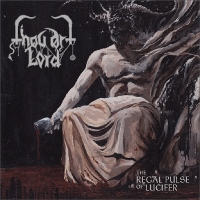
cover (200x200)The Regal Pulse of Lucifer doesn’t merely suggest monarchical tendencies. An album title that brazen hammers all that encompasses royalty into your skull with a ferocity no longer found amongst the sea of human offal we find ourselves drowning in on a daily basis. And with a Greek Black Metal bloodline as pure as this one, comprised of current and former members of Rotting Christ, Necromantia, and Soulskinner, Thou Art Lord lay an absolutely legitimate claim to a crown belonging only to kings of the extreme scene. The band’s first release in eight years, consider The Regal Pulse of Lucifer the sonic standard bearer standing proudly at the front of Thou Art Lord’s procession amongst all that you love about classic Rotting Christ (ie, before their electro-weird wanderings) and Greek Black Metal, writ large. Deceptively simple/profoundly eerie keyboards; discernible, nigh-classic Metal guitar solos and harmonies; non-knuckle-dragging Thrash Metal riffs that inspire rather than grate; Black Metal tremolo and tri-tone conglomerations that are, in fact, evil, and not some paltry attempt to be; and vocals that switchback effortlessly from clear growls to harsh screams like the asphalt of the Nürburgring. A percussive spine connects all that bone-encircled Metal marrow together in the form of ‘new’ drummer Maelstrom, a supremely talented skin-peeler who knows how to employ tom- and cymbal-work to great effect; his embellishments are in equal measure skilled and quite memorable, and played with an aplomb that is inextricably woven within each track – sadly a rarity in many other underground Black Metal projects, as throwaway drumming is, in many cases, the norm.

Regal Pulse of Lucifer rises high above the mire of mediocrity for this writer, and I can envision worn grooves occurring all too soon in the vinyl rapidly approaching my doorstep. No doubt the foe-crushing quality of the album and the band itself can be attributed to a lineage established on their 1993 demo Cult of the Horned One (an absolute must-listen as well), and the fact that these individual forces in Metal conjoin infrequently, allowing for time and thought to coalesce Thou Art Lord’s sources of dark inspiration into music both provocative and lasting. Sometimes evil things do come to those who wait, and fan patience is being rewarded handsomely with this record and its substantial staying power. -Jim

Nuclear War Now! Productions

Peace won’t be obtained…

•July 10, 2013 • 4 Comments

As we try to settle back into a level of normalcy in the Worm compound after Jim’s move and just dealing with whatever obstacles that creep into our trajectory, we have pulled together a few more reviews for all of you fine folks to weed through. Interviews will be reintroduced once the mood and muse strikes again, but it is summertime and we all find ourselves… well… busy. You know…. Working on that stunning bronze beach tan, and throwing parties in the sun. That is how we roll up here in the north country. And the livin’s easy. Right.
We shall return next week with hopefully a bit more meat on the bone. Until then… playlists and comments could be enjoyed by all!! -Marty

Jim Clifton Playlist
Wyrd – Heathen
Mutiilation – Black Millenium (Grimly Reborn)
Sacriphyx – The Western Front
Graveland – In the Glare of Burning Churches
Dodsferd – Suicide and the Rest of your Kind (Will Follow)
Månegarm – Nordstjärnans Tidsålder
Rage Nucleaire – Unrelenting Fucking Hatred
Veles – Night on the Bare Mountain
Vemod – Venter På Stormene

Marty Rytkonen Playlist
Sinister – Cross the Styx (remains one of my favorite albums. Perfect death metal!)
Gorguts – Colored Sands
Summoning – Old Mornings Dawn
Weapon – Embers and Revelations
Gorefest – Rise to Ruin
Gorguts – From Wisdom to Hate
Saor – Roots
Dodheimsgard – Satanbic Art
Unwilling Flesh – album rough mixes
Morrigan – Celts

Jake Moran
Grifteskymfning – Djävulens boning
Grifteskymfning – Likpsalm
Seirom – Sparkle Night
White Medal – Yorkshire Steel (I love the new recording of “Agbrigg Beast”)
Grouper – The Man Who Died In His Boat
Kinit Her – Storm of Radiance
Kinit Her – The Cavern Stanzas
Lost Harbours – Hymns & Ghosts
Skepticism – Stormcrowfleet
Eitarnora – Murmurations

Gorguts – Colored Sands

•July 10, 2013 • 1 Comment

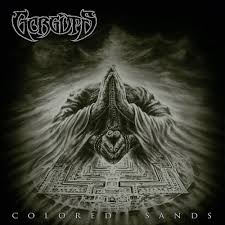
gorgutsIt truly was worth the wait. Who would have guessed that such a twisted and hulking fray of beauty would flow out of something so utterly complex and downright scary. Luc Lemay has surrounded himself with technically amazing players and taken 10 years to nurture the Gorguts name and overall vision for this moment. Colored Sands is 9 blistering songs that evade stagnation and somehow paint a bleak landscape of mystery and suffering through mind bending riffs that boil out of the speakers like rabid mathematics. Typically, the technical side of death metal is lost on me, for a bands desire to walk us through a demonstration of how much they have practiced their instruments over the years may be aesthetically impressive, but often produces music that is largely lifeless. Thankfully, Colored Sands breaks the circle with a bold showing of emotion and creativity.

Rhythmically complicated beyond most of the things you have heard over the years, the songs contained herein beg for variety and dynamics to survive over the cardiovascular workout of precision blasts that often unnecessarily perplex albums such as this. Yes this element is on display as well, but percussion mastermind John Longstreth (Ex-Angel Corpse, Origin) allows these songs to breath and sometimes what he doesn’t play produces just as much of an impact as what he does. Luc’s composition has become truly awe-inspiring. Every song on this album is a bizarre journey into the dark and never once did I have a clue as to where I was going. Such a listening experience is endlessly enjoyable for me as countless years of hearing the same old formula reheated and repackaged tends to wear on the most devoted and stubborn of metal connoisseurs. The complexity of this material stretches through every element of Colored Sands, but through waves of disjointed rhythms, there is form and strange hooks that offer inspired recurring segments of music for the listener to comprehend and be led to believe that they are a part of the whole experience. Led to believe? Yes. There are forces at work beneath the surface here that I’m not sure I could ever understand and my time with this album sometimes feels like one of the ugliest nightmares you have ever experienced, but you want to subject yourself to the horror just to see how the end presents itself. Where the fast parts found in tracks like Forgotten Arrows and Reduced to Silence are impressive if not fleeting, the crawling and disjointed… dare I say “doom” side of this opus is the main tempo of perversion and it creates a dark underbelly far more wretched than could ever hope to be produced by the death and black metal world at large. Luc’s desperate death moans are the constant artifact for you to cling to while the hammering motion of songs like the title track and Enemies of Compassion bludgeon with malice. How the riffs can sound so utterly bleak (made even more so by a crisp, distorted, and audible bass tone), only to take flight with endlessly innovative and beautiful harmonies continues to amaze and keep me wanting this album over and over again to unlock even more levels that were missed previously.

If you scrutinize Gorguts entire impressive catalog, you can see that every step was leading to this elevated plateau of clarity. Even though I have always enjoyed Obscura, the tech side of that album struck me as a bit lighthearted, if not too playful. From Wisdom to Hate a bit more controlled, but the foundation was set for the monster that is Colored Sands to take shape and in a lot of ways render all 4 albums that came before it obsolete. With “The Battle of Chamdo” offering even more culture with a modern and malevolent classical piece, Colored Sands is pure and as close to perfect as you’re going to hear arising from a technical death metal album. Seriously great composition from one of the genres die hard death metal musicians. Really… where does one go from here? -Marty
Season of Mist

Kinit Her – The Poet & The Blue Flower

•July 10, 2013 • 1 Comment

a1769098363_2When I’m searching (as I tend to be) for that strange and elusive edge where completely unique, experimental music meets a degree of quality usually reserved for bands working in more familiar territories, Brave Mysteries is one of my first stops. And while this Wisconsin label puts out a healthy variety of great music, including that brilliant Ulaan Passerine tape I reviewed back in June, the releases of theirs that most interest me are the works of Nathaniel Ritter and Troy Schafer, one or both of which is involved in Kinit Her, Wreathes, Circulation of Light, Compass Hour, and more. Kinit Her itself is quite a wild creature, incorporating elements of neofolk, early and traditional music, neoclassical, and electronics into a vitally unique whole that sounds like it was created by some forgotten culture, hidden away deep in the woods of the northern midwest. Following up on The Cavern Stanzas LP, The Poet & The Blue Flower is Kinit Her’s 2nd of 4 (5 if you count the Storm of Radiance vinyl release!) announced releases for this year alone.

The Poet & The Blue Flower is formed around a diptych structure, framed in the beginning, middle, and end by two renditions of two songs: “Feast of Death” and “Silence, My Song.” The former opens each frame of the album with a sing-song melody that vaguely reminds me of German drinking songs, driven by violin and Kinit Her’s idiosyncratic vocals; dramatic and strange drawls that often drift into feral growls, while subtle percussion and piano add texture to the soundscape. The 2nd version of the song is a more somber, slow take on the theme of the 1st. “Silence, My Song” closes each side of the album. It has more of an ancient air about it, something you could imagine as a paean to an early Indo-European god with its driving percussion, oriental tinged melody, backing horns, and impassioned vocals. It’s 2nd exploration is also a slower approach, but no less ecstatic. The drawn out vocals unfold over the piano, violin, and what sounds like an organ in a manner that gives the album proper a satisfying end.

It’s the longer songs between these interludes that makes up the core of The Poet & The Blue Flower. The song of the album’s namesake and “Reconcile” inhabit the first side. “The Poet & The Blue Flower” opens in regal fashion, led by a stirring violin and vocal melody soaring over pulsing drums and a stringed instrument I can’t identify creating a light, scintillating sound. About halfway through it climaxes with a spirited chant with clanging bells, sonorous horns, and a cthonic croak buried under the rapturous incantations of the higher vocals. The attention to the depth of the sound on this album creates a rich atmosphere to sink into and become thoroughly immersed in the sonic world that Kinit Her has crafted. That’s especially impressive considering the album relies mostly (entirely?) on acoustic instrumentation. “Reconcile” is a slightly shorter track, and it absolutely breathes with that entrancing atmosphere. It is the least dynamic of the core songs, but the slowly transforming layers and waves of vocals, along with its shorter length, maintain its engrossing nature.

“Day & Night Together” and “A Dome Surrounds” fill in the 2nd half of the picture. “Day and Night Together” is the slowest feeling track. The violin takes a drone role on it, while the piano provides a calm, reflective melody. The vocals also have a quieter, somber quality to them. The voices fade out for the end of the song, a slightly noisy, droning section that concludies with a simple, oddly eerie melody. My favorite song on The Poet… is “A Dome Surrounds.” It has a chorale vibe to it; swelling horns, marching drums, deep and fervent singing and intonations. A bowed violin melody, along with a plucked harmony, add a genuinely beautiful character to the song, and I find the way it slowly builds up and then fades away to be really moving.

The Poet & The Blue Flower is the most refined Kinit Her release as of this point. Compared to last year’s Storm of Radiance, it has a considerably more stoic and restrained character. Though it retains that distinctive religious aura that in many ways defines their sound, the more ecstatic and feral aspects of their hymns are reined in to allow a more somber and reflective side to show itself. Think less Moses in the desert, more Rilke (or rather Rudolf Pannwitz, from whose poetry the lyrics are drawn) in his study. While I do sometimes find myself longing for Kinit Her to break out of these songs with something more ambitious and challenging in structure, it’s easy to recognize the admirably concise and complete feel that the album as a whole has. The pleasingly symmetrical form, the rich atmosphere, and careful layering of sounds all exude a confidence in delivery that shows Ritter and Schafer know exactly what they’re doing here; all the more impressive due to the fiercely unique nature of their art. -Jake

Brave Mysteries

Månegarm – Legions of the North

•July 10, 2013 • Leave a Comment

manegarm_legionsWhen Viking/Pagan Metal lacks any strain of Black Metal (or Death Metal/other extreme Metal variants), I tend to lose interest quickly. The harshness of the latter genre(s) grates the potential cheese-flesh right off the bones of the former. Månegarm straddle the divisions between the subgenres with relative ease, and though I prefer more filth in my production, their latest, Legions of the North, lights the sky proudly as any flame for the old conquerors should.
Harbingers of Norse mythology and Paganism since the late ’90s, Månegarm have honed the blades of their craft long enough to create a sonic sharpness few armored musicians can match. Medieval melody lines abound, taking you back to era when stone and steel were as likely to determine fates as scarcity or disease. When the BM tempos arrive heralded by a slit-throat delivery, the clamor of death-dealers rampaging over the hillside can be felt as well as heard. The clean ‘whoa-ohs’ can unfortunately inject a little dairy back into the proceedings, but as their inclusion is intended to diversify rather than stultify, they are easily ignored in favor of the album’s strengths. And strengths abound: opener and title track ‘Legions of the North’ boils the blood properly, preparing you for the pillaging that is to come with its warlust-filled battlecry of a chorus. For a Metal march of the highest order (literally and figuratively), join the scourge hailed in ‘Hordes of Hel’, a track that would have been appreciated in any mead hall for its catchiness and celebratory cadence. Along with the welcome electric and vokill clamor, violins, acoustic guitars, female vocals and choirs help forge the unblemished Scandinavian swords brandished herein.
That self-same cleanliness, however, also happens to be one of Legions of the North few weaknesses. A few dents in the polished helmet, a chink in the glinting broadsword, and Månegarm’s latest would fully embrace the grit of those they pay homage to. The unnamed Viking berserker made famous at the crossing at Stamford Bridge would have preferred their 1998 debut Nordstjärnans Tidsålder for its more hate-fueled dynamics methinks (as I do). Nevertheless, Manegarm’s quality-level, as shown on Legions of the North, remains high as before, and shows no sign of depleting. -Jim

Napalm Records

Your house, needs to be put in order too …

•July 3, 2013 • 6 Comments

A whirlwind of mundane life events bowled over the Worm Gear crew last week, but we are back once again with relentless wordsmithing for your extreme edification. Yes, in between Marty, Jake, and I avoiding hometown fruity festivals and our hauling of unending cardboard boxes, time has been found and spent upon a vinyl release of Lucifericon’s black/death latest, the exceedingly polarizing return of Black Sabbath, the heathen menace of Sivyj Yar, and raw heavy metal of Arkhamin Kirjasto. When all has been read and done, you’ll have new music to love/hate/shrug about as you watch bombs burst in air in celebration of America’s Finger to the King day. Enjoyous! Also, don’t forget comment/post playlists/digitally shout back at Marty; Jake and I find it oddly comforting …

Jake Moran Playlist
Vemod – Venter på stormene
The Haxan Cloak – Excavation
Circle of Ouroborus – Eleven Fingers
Gehenna – First Spell
Fauna – Avifauna
Panopticon / Vestiges – Split LP
Walknut – Graveforests And Their Shadows
Autumnal Winds – Venerari Sacra Mysteria
Lau Nau – Valohiukkanen
Circulation of Light – Emersal Tracings

Marty Rytkonen Playlist
Hallow’s Eve – Tales of Terror
Destroyer 666 – Cold Steel… For and Iron Age
Destruction – Infernal Overkill
Bethlehem – Suizid
Taake – Gravkamre, Kroner og Troner
Gorguts – Colored Sands
Clandestine Blaze – Harmony of Struggle
Kawir – Ophiolatreia
Morgue – Eroded Thoughts
Brutality – Screams of Anguish

Jim Clifton Playlist
Bölzer – Roman Acupuncture
Bölzer – Aura
Frozen Shadows – Dans Les Bras Des Immortels
Branikald – Rdyandalir
Belial – Wisdom of Darkness
Sorcier Des Glaces – Snowland
Bolt Thrower – Mercenary
Disma – Towards the Megalith
Autopsy – Severed Survival
Black Sabbath – The Mob Rules

Arkhamin Kirjasto – Undead Priest of Holy Trinity of Death

•July 3, 2013 • 2 Comments

krypt-041 Arkhamin Kirjasto 7'' FRONT COVERSomething I’ve learned about myself over years of listening to extreme and obscure music is the specific aspects of presentation that are essentially guaranteed to draw my attention like carrion beetles to a fresh corpse. One of the strongest stenches for myself, and it’s something I’m actually surprised I don’t see more often, is even the vaguest hint of Lovecraft. Normally I’d be about as interested in a heavy metal 7” from 2013 as I would be in collecting LaserDiscs, but my Lovecraftian compulsions brought Arkhamin Kirjasto to the center of my attention. An album title as ridiculously Finnish as Undead Priest of Holy Trinity of Death, doesn’t hurt either.

References to neurotic, dead writers aside, I was both surprised and pleased to find that the music beneath the image didn’t fail me. The press release refers to Arkhamin Kirjasto as “Finnish Kings of Lovecraftian Hard Rock & Death Metal”, but to my ears their are only vague hints of death metal in the low end production, some of the darker, descending riffs, and the gruff, but not quite growling, vocals. There’s also very little here that I would describe as Lovecraftian in terms of the weirdness that term suggests, or in the lyrical content. What Arkhamin Kirjasto does bring out of the cellar is extremely catchy, dirty, and energetic heavy metal. It’s absolute headbanging material, replete with a warm, fuzzy production, chunky riffs, fiery leads, and shout along choruses. These traits alone would make it an enjoyable, if not memorable, slice of traditional metal, but just enough Finnish oddness is infused into these short songs to give them a distinctive feeling. The odd, echoing chants in “Undead Priest of Holy Trinity of Death”, and the psychedelic intro that morphs into the spirited lead backed by quickly strummed acoustic guitars in “Spellbound & Tortured” (easily the best song here) ensure that things don’t get tired. “The Nomad” is a little disappointing compared to the other 2 songs. It’s just as catchy, but it feels like it needs something more to carry its all too familiar riffs and leads.

Undead Priest of Holy Trinity of Death is a solid, bite sized chunk of Finnish heavy metal. It doesn’t carry any pretensions of being much more than that. On the one hand, I like that: it’s gratifying in its straightforward nature. On the other hand, there’s just not quite enough there too make it something worth coming back to in the long term. Still, these songs have my attention for now, and I’ll be watching Arkhamin Kirjasto in the future. They could be quite a force to reckon with if they manage to emphasize their more unique qualities and voice in future releases. -Jake

Ektro Records

Lucifericon – The Occult Waters 12” MLP

•July 3, 2013 • Leave a Comment

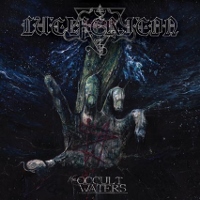
cover (200x200)As they have done successfully with Necrocurse, Blood Harvest are aiding another cavalcade of underground icons in an ongoing oldster quest bent on instructing black/death kiddies on the proper way to construct worthy anti-tunes of extreme Metal. Originally self-released in 2012, the vinyl release The Occult Waters by Lucifericon (comprised of ‘unnamed’ members of Malicious Dream, Excision, Destroyer 666, and Pentacle) contains all the expected varieties of early ’80s black/death meat and potatoes boiling together in a fetid stew of human and electrified sounds. And while little has been done toward reconstructing the approaches undertaken by the black and death grandfathers (Possessed/Sodom/early Death/early Bathory, et al), the sheer attention to songcraft over pugilism lends each track a memorable, nigh-hummable character exceedingly rare in albums this dark. Stirred in a mossy cauldron with an eye toward might-filled melodicism, bringing to mind Covenant/Domination Morbid Angel (present in conspicuous passages amongst the eighteen minutes of The Occult Waters), a tapestry belying the sum of Lucifericon’s woven parts begs further study.

I won’t go as far as to suggest Lucifericon bypass the efforts of the hell squadrons from which each member have sprung, but the blitz of these wizened warmen cannot be disregarded by the underground. A sharpness of performance, fueled by Lucifericon’s cumulative years of stage command, has given The Occult Waters the feel of composition by instinct – a tenet of musicianship that, truly, only experience can evoke. If a full-length is forthcoming, black/death fans will then find Lucifericon comfortably razing lands fiercely once defended by younger peers, they whom are also intent upon reviving the riffery of a beloved and ancient scene. -Jim

Blood Harvest

Black Sabbath – 13

•July 3, 2013 • 3 Comments

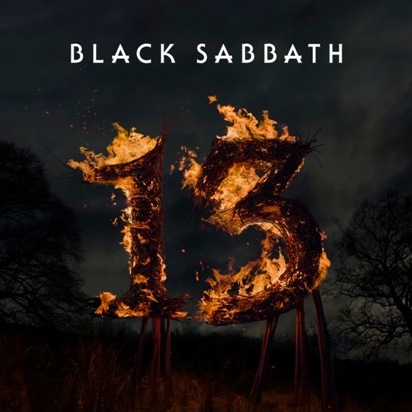
sabbathTime is the enemy of us all. That sneaking and quiet specter that ushers life along at an alarming rate sure does have a way of descending upon us when we least realize or suspect it. For me, having a child is one way to really comprehend time and how quickly it flies by. The other is music. I tend to hold on to albums I love and cherish them as dearly as the day they were released (or the day I discovered them). I’m sure this could be even more alarming to those that are creating the music. Correction… to those who have inspired an entire genre and movement of music. Heavy metal. Black Sabbath. The 2 descriptive terms speak volumes, are synonymous with each other and mean so much to all of us who willingly sway within the hammering purification of sound. I’m sure the 3 original members of Black Sabbath who gathered to create their latest opus, 13, all had a nervous laugh or 2 over the fact that it had been 35 years since their last proper full-length release together (Never Say Die), 13 years since their last attempt to tour and record together, and a staggering 44 years since the madness all began. Deep down, I’m sure that realization of the passage of time had to be terrifying and a wake up call/great motivator. In spite of what you have read from waves of music journalists eager to tear this album and the players behind it apart for personal reasons, from the opening moments of “End of the Beginning”, carrying through all 53 minutes of this album, I hear the rekindling of a spark that defies the fact that Black Sabbath members are into their 60’s. Also an encircling joy can be witnessed in the room for Sabbath to complete the circle and play together again in spite of all that has happened over the years. I don’t hear this album as an obvious “cash in”, though we all know that element is there, rather a youthful gleam of longstanding brothers connecting in a familiar comfort zone that we all can relate to as lifelong fans of their efforts. Regardless of what you’ve heard, 13 to this writers ears anyway, sounds like Black Sabbath. Granted, it nowhere near reaches the apex of life changing albums that empower this bands lifespan, but it is an enjoyable effort that holds up over repeated listens and grows even stronger.

As I endlessly spin 13, it is obvious the band has loosely modeled this album after their eponymous debut and Paranoid. You have the track that gives a nod to “Black Sabbath” in End of the Beginning, “Planet Caravan” in the beautiful spacey trip of Zeitgeist, and not to mention “The Wizard” found in the great bluesy jam of Damaged Soul where Ozzy once again brandishes the harmonica (and quite masterfully I may add). There are other instances of stylistic modeling, but the good news is, the similarities struck me as a fond reminder and not a blatant foul like so many others have endlessly bitched about. If anything, it allows this material to embrace that warm 70’s era of Sabbath effortlessly, while focusing on a subdued doomy crawl throughout the whole of 13. Would I liked to hear more of Sab’s creative and experimental side? Sure. But they have already done that. This album needed to be a good collection of riffs and most importantly, “songs”. Granted a lot of the riffs on here are pretty laid back, but still rock solid as obvious creations from the mind and fingers of Iommi. Where the riffs themselves may leave some of you cold, Tony should win you back on the fact that his solos are all amazing on here. Such mind blowing and inspired playing can be found in these solos. The man still has it and knows what to do with every note. Such a confidence in ones instrument is rarely enjoyed to such a lofty level. Geezer remains the rock solid foundation in Black Sabbath with his creative flourishes and passionate fills empowering and offsetting every movement in Tony’s riffs with ease and amazement. The real surprise for me on 13, has been Ozzy’s performance. This is easily the best he’s sounded since the 80’s. Perhaps he knew what was at stake, but I feel this is simply the best material he’s had to sing over since No More Tears and the fact that he’s back in a band he belongs in. The missing puzzle piece fits in perfectly in this formula. I say this as a devout Ronnie James Dio in Sabbath fan. Ozzy may not be able to hit those high notes anymore and some have said that he sounds old here…. well…. he is, but the pipes sound strong and his vocal muscle memory knows exactly what to do with Iommi’s impenetrable melody lines. There is a youthful fire in his performance that isn’t trying to emulate that over the top “prince of darkness” persona the fans stupidly hold him to, rather he’s digging into the soul of this material and offering very tasteful harmonies and lyrical twists that span a chasm of modern topics. Again… it all fits and works well together. He isn’t overly processed. It’s an in your face vocal production where he isn’t hiding anything or behind a wall of effects. Ozzy is such a strong and charismatic singer and his performance on 13 should be applauded.

Of course one cannot review 13 without mentioning the drama surrounding the lack of Bill Ward’s involvement. The media jabs between the 2 parties were well documented. It is sad he isn’t a part of this, but the reality is, watch “The Last Supper” DVD from the last Sabbath reunion and tell me it doesn’t look like Bill was dying trying to play those old songs and hold on for the entire set. A youthful Bill is one of the best drummers ever. Time and abuse hasn’t been kind to him physically. Skills needs to be maintained over the years to be in album and touring shape. I get the feeling he couldn’t do it and needed to save face, blaming a poor contract. Do I doubt it was a bad contract? No. But I do think it was his easy out. In his place enters Rage Against the Machine/Audioslave skinsman Brad Wilk as a “Special studio musician”. A talented drummer in his own right, I feel in a lot of ways his playing on 13 feels pretty Bill Ward influenced, though extremely subdued. One wonders if Sabbath had him hold back in case Bill enters into the picture at some point and be able to pick up and actually/hopefully play the new songs. It is all speculation. The truth is, the feud between all the members of Sabbath really isn’t any of our business. I know the media hounds and the PR companies alike have made it our business. They have been friends and brothers longer than many of us have been alive. There is a weird dynamic at play here that isn’t meant for us to understand or really have a lot of say in. as humans, we fantasize that our idols are one big happy family, but that rarely is the case when reality is at the helm. What is important here is that Iommi and Geezer have soldiered on after the death of Dio, mended fences with Ozzy, and made a damn fine album worth listening to. And it is.

Again, 13 is in no way in league with Sabbath’s classic era, but I have connected with this album enough for it to be in daily rotation since I have bought it which says a lot. I purchased the 2 CD digipak which has 3 bonus tracks of varying quality (none are quite as good a the album proper, but still enjoyable) so the investment was worthwhile. If anything it has inspired deep obsessing over the impressive Sabbath catalog once again which always unlocks hours of endless enjoyment and wonder. 13 strikes me as the rebirth… I hope they can keep it rolling, further connect with one another again, and follow this up with something even better. -Marty
Vertigo/Republic Records

Sivyj Yar – The Dawns Were Drifting As Before

•July 3, 2013 • Leave a Comment

a4219715245_10Hey! Glad you could make it. I hope the rain wasn’t too bad on the drive over. Could I get you some coffee? No? How about some obscure one-man slavonic heathen meta- Wait! Come back! It’s better than it sounds, and the doors are locked anyway. Sit down, have a jar of kvass and we can talk it over. I think you’ll be pleasantly surprised by this one.

Sivyj Yar is, as I was saying, a little known one man band from Russia. Vladimir, the individual behind the project, started it back in 2006 as a more traditional exploration of cold, far northern black metal. It was fairly solid but unremarkable stuff, but since then Vladimir has been slowly shifting to a more introspective, melancholy, folksy sound. I realize that sounds like a description for about every other band east of Poland, but this isn’t a meandering (completely lost) Drudkh clone or a raucous (drunk and stupid) Temnozor hanger on. Sivyj Yar has more to it than that, and his latest album, The Dawns Were Drifting As Before, is an extremely fresh take on slavic metal.

Vladimir seems to have channeled his more wrathful tendencies into Jassa, his other band, allowing The Dawns Were Drifting As Before to focus on more sorrowful emotions and atmospheres.  If you’ll allow me a tired metaphor: it’s cold in the sense of a bone chilling rain, rather than a blast of a frigid blizzard. That’s not to say the album is lacking in dynamics, in fact, it’s quite active and even aggressive at times. Drudkh/Primordial style folksy riffs (sometimes clean, sometimes distorted) interweave and trade space with soaring tremolo harmonies, heavy metal-tinged hooks, and even solos that find a good balance between manic shredding and chest swelling soulfulness. Almost every riff and melody feels well thought out, original, and almost guaranteed to plant itself in your brain immediately. The vocals are a distinctive throaty howl, though there are a few moments of clean singing covered with a bizarrely distant and echoed production. And the bass. You have to hear the bass. It’s gloriously loud but clean, always providing a compelling counterpoint to the guitars and adding just one more layer of depth to this already rich album.

Everything is put together so lavishly well that it’s more than a little ridiculous that hardly anyone has noticed this yet. The songs constantly turn and evolve, never growing tiresome or repetitive, and the atmosphere is grandly mournful and rain soaked, with just enough uplifting moments to prevent it from getting stale or waterlogged. All I could really ask for at this point is for the next Sivyj Yar album to be twice as long, because half of an hour really isn’t enough for material this strong. -Jake

Those Opposed Records

Cursed to be walking in the shadows of death for a lifetime…

•June 27, 2013 • 4 Comments

Sorry Patrick! Your prophecy in your birthday greeting has become reality. Too many things going on this week as we race along with birthday celebrations and the Clifton Family’s impending move this weekend… this weeks update has been derailed. But, we shall return next week with a new batch of reviews for all of you to sift through. Thanks for your patience and support! How about some playlists shall we?

Marty Rytkonen – Playlist
Ceremonial Oath – The Book of Truth
Brutal Truth – The Birth of Ignorance Demo
Aeternus – Beyond the Wandering Moon
Cobalt – Gin
Taake – All
Dark Messiah – Rise of the Black Dawn
The Abyss – The Other Side
Summoning – Old Mornings Dawn
Symphony X – The Odyssey
Edge of Sanity – Crimson

Jim Clifton – Playlist
Aeternus – Beyond the Wandering Moon
Aeternus – Shadows of Old
Helcaraxe – Broadsword
Sombres Forets – La Mort du Soleil
Disma – Towards the Megalith
Bölzer – Aura
Mötörhead – Iron Fist
Burzum – Hvis Lyset Tar Oss
Burzum – Belus
Sacriphyx – The Western Front

Jake Moran Playlist
Angel Olsen – Strange Cacti
Belial – Wisdom of Darkness
Lee Noble – Ruiner
Kinit Her – The Poet & The Blue Flower
ZENИTH – Ritual
Saåad – Στερεά Σύννεφα
Sigur Rós – Takk…
Echtra – Sky Burial
Bonnie ‘Prince’ Billy – I See a Darkness
Raate – Halki Kuolleen Maan…

Born in a graveyard …

•June 19, 2013 • 15 Comments

The new Black sabbath is great. Let all the “music journalists” toot their rusty horns on their digital soapboxes and try to get their insignificant jabs in… Sabbath did what they had to do and made an album worth listening to… repeatedly. But… I’ll save my longwinded praise for next weeks review of 13. Actually looking forward to writing about it for a change of pace.

Regarding the matter at hand, 6 new reviews have surfaced from the Wormy ones spinning throughout the diverse musical appreciation that is our lives. Some interviews are in the works, but summer and family stuff is keeping us all busy and distracted enough to fully commit to exhuming questions. In due time. Until then, enjoy the reviews and feel free to tell us what you’re listening to, or your favorite Sabbath album. Mine is hands down Mob Rules! Eternally amazing album. Unleash the hounds….

Marty Rytkonen Playlist
Black Sabbath – 13
Black Sabbath – All the Ozzy albums in chronological order
Black Sabbath – Heaven and Hell
Dan Swano – Moontower
Ereb Altor – Gastrike
The Exploited – Troops of Doom
Forefather – Ours is the Kingdom
Hypocrisy – Penetralia
Opthalamia – Via Dolorosa
Samael – Ceremony of Opposites

Jim Clifton Playlist
Black Sabbath – 13
Bölzer – Aura
Cadaveric Fumes – Macabre Exaltation
Beyond – Fatal Power of Death
Iron Maiden – Piece of Mind
Bathory – The Return …
Sodom – Persecution Mania
Blood of the Black Owl – A Banishing Ritual
Ludicra – Hollow Psalms
Grand Belial’s Key – Judeobeast Assassination

Jake Moran Playlist
Of – The Sun And Earth Together
Skogen – Vittra
Endvra – Great Pan Is Dead 7”
Burial Hex – Eschatology II
Sadhaka – Terma
Emit – Spectre Music of an Antiquary
Hammemit – The Ghastliere Morrowe
The Magickal Folk Of The Faraway Tree – The Soup & The Shilling
Sangre de Muerdago – Sangre de Muerdago
Raising Holy Sparks – Four Sacred Mountains

Fearthainne – Knowing

•June 19, 2013 • Leave a Comment

coverKnowing is one of those albums that feels more than slightly inane to describe by its basic elements. Fearthainne has, with the most uncomplicated techniques, created an album so intensely charged with passion that it is far, far more than the sum of its parts. However, I really want people to hear this album, and since I doubt any of you are going to simply take my word for it when I say “it’s one of the best pieces of music I’ve heard all year, buy it,” I’ll endeavor to explain this whole by its fragments.

“Anamnesis” introduces the album with a trance-inducing oscillation of non-identifiable noises. It’s not a particularly interesting track on it’s own, but it’s stoic tone and a sampled voice speaking of memory and the relation between the body, intellect, and the world, establish a ritual space and introduce the themes of the album proper quite well. The heart of Knowing is this second, and last, song of the same title. It’s a nearly 45 minute sprawling journey, driven mostly by strummed acoustic guitars and the trade-offs between the male and female vocals. Less commonly, but just as vitally, a somberly bowed violin, dulcimer, and pounding, skin drums fill in the soundscape. The drumming, courtesy of Chet Scott from Blood of the Black Owl and Cycle of the Raven Talons, has an especially satisfyingly deep and hollow tone that resounds in the mind and heart long after the album has closed. The male vocals alternate between a plain singing and a deep, gravelly spoken voice. The female vocals have an airy, but not especially high voice that occasionally breaks from the lyrics to lift into wordless melody. The lyrics hold the same level of restraint and and candor as the compositions; composed almost entirely of plainly spoken questions that are absolutely heartbreaking in their honesty and sorrow over our loss of place in the same world we inhabit.  All of these elements are drawn together with a profound simplicity into this immense, mournful song, ever evolving and moving, running with quiet strength and certainty like the elk conjured in the first of the lyrics. This is no triumphant voyage however; the mood is solemn and funereal, fitting of questions like: “Can we live again after what’s been done?”
Composing a 40 minute song that remains not only interesting, but thoroughly engrossing through its entirety is an achievement in the first place, but when the musicians forgo electronic sorcery to entirely rely upon sung vocals and acoustic instrumentation, heavy with the scent of black earth and saturated moss, it becomes more impressive still. There’s a fundamental, primal beauty to this music that is remarkably unaffected. It needs to be heard to understand, though if you’ve heard any release from Glass Throat, you’ll know something of that feeling I’m referring to. Knowing is an intensely moving lament for our disconnection and homelessness in the modern world, everything we have lost, and everything we are still losing. But there’s something else in there too; buried deep below the wreckage and hidden below the desecrated soil, something small, but silently, cautiously spreading slender roots. -Jake

Glass Throat Recordings

Fir Bolg – Towards Ancestral Lands

•June 19, 2013 • Leave a Comment

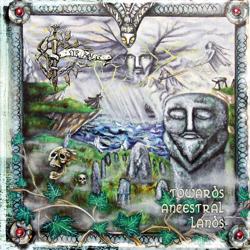
firbolg5 years in the making, Fir Bolg has built upon the excellent “Paganism” demo (reviewed here: https://wormgearzine.com/2010/11/23/fir-bolg-–-paganism/) with an even sharper production and more noticeable Scandinavian quality in the songwriting on this, sole creator Dagoth’s debut full-length, Towards Ancestral Lands. Fir Bolg is the well considered union where old Norwegian styled black and pure folk/pagan metal unite for a classic and emotive atmosphere.

Even though the aforementioned description is still on display for this full-length, I was surprised at how far Dagoth would tread unnecessarily into other peoples territories stylistically, for tracks like “Blood Heritage” sound vocally, tonally, and note for note in the riff work like Immortal. The similarity on this track is uncanny, as if it was a forgotten song from the Battles in the North era of Immortal’s catalog, only for Fir Bolg to step out of that characteristic and back into their own realm on the following track “Banshees”. This song in particular is a well written journey that embraces a fully realized style closer to their own. Interesting guitar lines, tempo shifts and furious vocals create a vivid mindscape. The peeling away of the metal elements allow a stripped down drum and acoustic guitar line to embrace light hearted celtic melodies for that ancient times glimpse into Fir Bolg’s wider arsenal of song crafting elements. Dagoth’s vocals are pure in their mid-ranged BM screams/croak and suit this music perfectly. I really like the fact that he doesn’t stray from this delivery, sticking to what he’s good at and allowing the folk moments of music residing on this album to breath on their own, sans pitch/harmonious singing. As King of Wallachia passes by, I am reminded sonically of Taake as Dagoth once again gives a stylistic nod of appreciation to old Norwegian Black Metal. Even though this is one of my favorite musical movements in all of metal’s years of stylistic development, the inclusion strikes me as a crutch that he leans on when maybe he’s a bit lost in cultivating his own way. Having said that, such a loss of the muse doesn’t take anything away from “Towards Ancestral Lands”, for this album is rich with interesting riffs full of life and spirit. The range of intense dynamics is also something worth mentioning on this album. Dagoth doesn’t fixate on all mid-paced or fast material, rather demonstrating deftly skilled songwriting that benefits the forward motion on each track comprising this album.

I really enjoyed Towards Ancestral Lands. From the overall production, further enraged by a sharp guitar tone to the actual style of the “band”. The folk moments that peek out of the mix further add color to a world where there usually isn’t any. Even though Fir Bolg may lose sight of their destiny when it comes from falling back on others stylistic nuances, this solo project possesses a fire worth nurturing. It’s also nice to hear a French band striving to be something other than violently suicidal black, or dreary shoe gaze gloom. -Marty

Schwarzdorn Production


Gris – À l’Âme Enflammée, l’Äme Constellée…

•June 19, 2013 • 4 Comments

Gris (200x177)We all know Black Metal in the modern era can be elegant, but the more difficult task is construction of that elegance in a singular way. Though it has taken them five and a half years since their last album, the cultivation of skill for Gris during that time has indeed born fruit of their own divination. Now, we, as listeners, harvest À l’Âme Enflammée, l’Äme Constellée... , a work of art that, frankly, lays waste to most other melody-infused BM albums I’ve heard thus far this year. Many before Gris have utilized classical guitar playing, cello and violin within their compositions, but few have the talent or emotional spectrum necessary to construct such a towering monolith of sorrow and ecstasy as this Quebecois duo have. Through the high-level use of their own stringed instrumentation and playing (no guest musicians needed here), along with measured post-metal sonics, each passage of dissonance and harmony flows in and out from one another, like freezing waves, receding, again and again, toward and away from walls of ice, where each interconnected song achieves a kind of immortality, without beginning, without end. This effect, of course, is not incidental; the album is packaged as an 80-minute opus broken into ten parts. But don’t let this despair you. Unlike ‘concept’ albums that bore (which this is not), the depth and emotive dichotomy of À l’Âme Enflammée, l’Äme Constellée… has a quiet, meditative power inspiring you to listen on. The very word ‘album’ itself relative to the record feels diminutive to me; what Gris instead have given us are audial windows into their souls, and in doing so, have allowed us to peer into our own spiritual fragility, doomed and beautiful as it is. With its ambience and gracefulness, you will often forget that this is ‘Metal’ at all, with only the constant, slightly-distorted bass guitar (and Icare’s appropriately tortured wails) reminding you of its core. But any forgetfulness will be due to this: you haven’t encountered anything quite like this before, and, Metal’s boundaries (as we know them) have been pushed outward – just a little further – with this magnificent assemblage of sound. -Jim

Sepulchral Productions

Slumber Room – Slumber Room Cassette EP

•June 19, 2013 • 1 Comment

slumberroomArising from the creative endeavors of M. Krutsinger (ex In Memorium) and M. Nihilist (Ex In Memorium, Lord Gore, and Abazagorath) is the new project Slumber Room. Mid paced and plodding black metal with a mechanical flair steers this duo into suicidal realms with their bleak riffs and droning style of misery embodied by a full production and emotive atmosphere.

Even though this material does achieve a mild industrial flair due to synthetic drums, the way in which this was recorded, the fully clinical sterility that can infect projects that use keyboards/drum machines for their rhythm section, isn’t present here, being replaced by a raw layer of fuzz over the drums, further accented by the caustic screams of Nihilist who shares a similar wave of audial disturbance. As the band strives to embrace that Filosofem quagmire of pleasingly nasty distorted dismay, perhaps their guitar production stands a bit too clean above the wreckage here for total hypnotic absorption. This allows the inconsistency in timing to befall the clean melody lines in the song Under the Dying Moon as Krutsinger seemingly falls behind the beat when plucking out those lonely notes. Perhaps this was the intention as it does inspire an uneasy/not quite right feeling, but a bit odd in this instance regardless. Another element that keeps SR from coming off as a too synthetic is their choice to avoid using speed as a weapon, rather keeping their songs on the brink of blackened doom, with more up-tempo tracks like the leadoff song “Slumber Room” which possessed a well written movement in the riffs and benefitted from the bands affinity for simplicity.

This opening statement from Slumber Room just kind of creeps in under the radar with its minimalist approach to blackened doom, but the patience this duo displays for allowing their songs to unfold and depress with cold dissonance was enough to keep me interested and to keep this cassette in the deck throughout the week. Having such a poisonous vocalist at your disposal doesn’t hurt either! Certainly nothing mind blowing here, but solid enough to make me want to hear how they develop on future releases. Follow the youtube link below for a preview… -Marty

NoVisible Scars


Sombres Forêts – La Mort du Soleil

•June 19, 2013 • Leave a Comment

SP035I’m of the firm belief that in the coming decades this current period of time will be seen as something of a golden age for the evolution and flourishing of metal music, on par with the explosive rise of black metal in the 90s. What separates this time period from that is the decentralized nature of the expansion; the established borders of black, death, and doom metal are being breached on all sides, and many individual bands are creating new and singular territory for the genre to expand into. At the same time, for those who prefer more traditional approaches, the “old school” revival has seen bands old and new upholding the well established styles with a fierce dedication to style and quality. On La Mort du Soleil, Quebec’s Sombres Forêts sail fearlessly into the former category, facing the deluge of unknown seas.

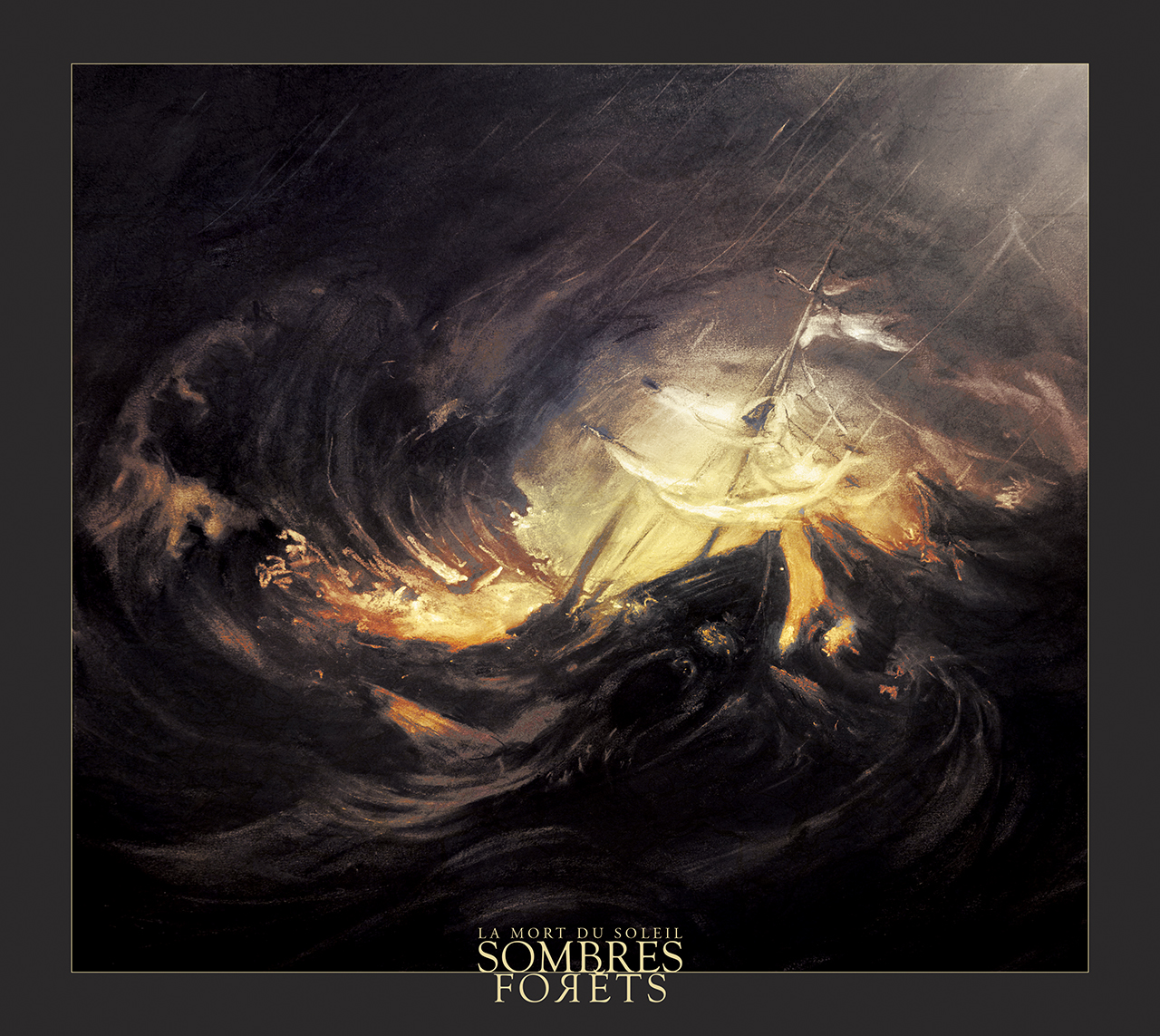
The bleak, classical acoustic, ocean wave samples, and subtly undulating bass that opens “Des Épaves” suggest that La Mort du Soleil might be more of a customary descent into melancholic black metal, but when the mournful wail of the clean vocals unfold over distant, warped and twisted screams it becomes fast apparent that something different is approaching. From here the album unveils it’s tempestuous character with chaotic mid-paced riffs, often reverse delayed or stretched out into turbulent swells of noise, agonized screams, and powerful, bombastic drumming. These volatile elements roll and crash violently into fragile piano and clean guitar arrangements. It’s as if someone took the depressive black metal genre, a style which does little for myself, disassembled it into its elemental parts, and then wove all the threads back together into something entirely new. Careless reconstitution of an established style of music often leads to frankenstein miscreations of poorly fitted parts, or a bland gruel of so many competing ingredients that they drown one another out, but thankfully Sombres Forêts composed a very deliberate restructuring in La Mort du Soleil. The overall effect is highly impressionistic and evocative of the same feelings brought out in the cover art. There’s a natural flow to it, but it’s as violent as waves in a storm, while the softer moments framed between are like the dying light refracted below the storm clouds.

While that atmosphere is beautifully created, it begins to feel rather limiting to the album’s potential as it goes on. The mood, tumultuous and desperate as it is, is rather static, and this feeling is increased by a lack of memorable riffs. Oddly enough, the most enduring moments of music throughout the album are the piano compositions, while the rest of the album tends to flow together all too smoothly. That’s not to say that their is a lack of movement here, the album is filled with dramatic build ups, fades into calmer, introspective moments, and other such transitions, but the musical content of any given moment just isn’t especially remarkable. The unique texture and atmosphere that Annatar has so carefully created is haunting and brilliantly crafted, and I’ll certainly be returning to it often in the future, but it’s a setting in need of a plot: the presence of distinctive riffs and hooks to really focus that harrowing atmosphere into something with more emotional weight and immediacy. -Jake

Sepulchral Productions

 
Design a site like this with WordPress.com
Get started