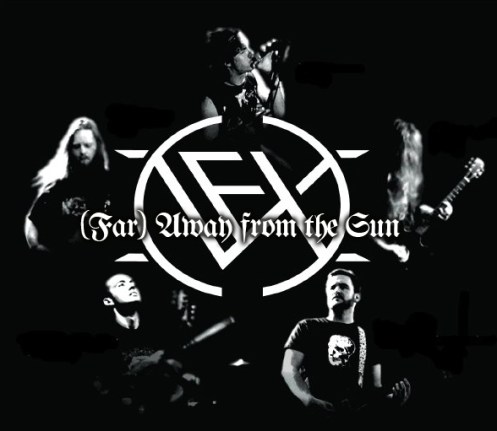
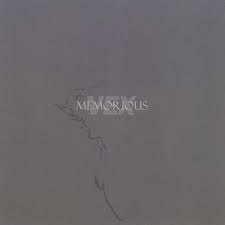
 “Quality in music.” Sometimes it’s a lost art form due to over-saturation, but when it arises from the heap, it is something to get truly excited about. The music of Vex is an inspired and moving experience that embraces a melodic death metal current that has seemingly and sadly burnt out years ago. With their latest opus Memorious, infinitely layered and memorable material is at the forefront of their attack. Vex corrals the staples of decades of extreme metal, bending them into a creative sound truly all their own. The riffage, the vocal style/lyrical placement, and technically colorful though tasteful bass and drum work swirl beneath the advanced musical scope of these creative Texans who have rekindled, along with fellow sojourners Obsequiae, a potent and meaningful sub-genre of death/thrash/black inspired metal. It’s all in there, swimming below the surface, though all the styles become faceless in light of the signature touch unleashed by the artists. You hear this album once an you want to hear it repeatedly. It doesn’t get old. If anything, familiarity unlocks even more gifts to ponder as one becomes fully consumed by Vex’s spell.
With the excitement for melodic death metal and Memorious still fresh in my mind, I had to fire off a set of questions to one of the founding members and key songwriter for Vex, Ciaran McCloskey, to give us all a wider view into the endeavors of this hard working band. -Marty
Worm Gear: Vex has been in existence for 15 years, but just recently came to my full awareness. What a truly passionate and inspired find! Your music is empowered by melody, which effortlessly places the style you guys create in a lofty realm all your own in regards to American melodic death metal. For a modern band to resonate on such a frequency… how did the concept for Vex’s music come together and over the years, do you see it as changing or evolving within or away from your initial intentions?
Ciaran McCloskey: Thank you for the kind words – I’m glad that you found us. The concept of Vex has definitely evolved over the years. Like a lot of teenagers who grew up in the 90s, we originally started playing as a sort of exuberant response to the American death metal bands that were peaking throughout the decade; stuff like Death, Obituary, Morbid Angel, Suffocation, Deicide, etc. The first serious effort I put into writing a song was basically a mishmash of these groups with lyrics about how I wanted to slaughter all of the bubble-gum punk bands that were so popular at our school at the time. I was probably 16.
Everything changed when I came across mid-period Carcass and the more melodic Scandinavian bands that were also peaking at the time. Dark Tranquility, Hades, In Flames, Amorphis, At the Gates, Dissection, Gardenian, Dawn, Eucharist, Edge of Sanity, etc. all hit me on a much deeper level than the more brutal American stuff. The melodies reminded me of the Celtic folk music that I was essentially raised on. I not only loved this sound but I began to feel like something I could use to assert my own voice.
Since then our inspirations have spiraled into all sorts of different directions, from 60s jazz to 70s fusion to old Krautrock to post-punk, but I think that our sound will always be rooted in the desire to create aggressive death metal with powerful arrangements and a very particular melodic sensibility. It’s also crucial to us that our albums are interesting to listen to; we want our records to have the ebb and flow of all the classic works by Black Sabbath, Rush, Thin Lizzy, Yes, Blue Oyester Cult, Gentle Giant, etc.
 WG: While obsessing over both Thanatopsis and your latest full-length, Memorious, the obvious driving influence is the early 90’s Swedish melodic death metal style. I too was at one point enamored by this sound, still am, but when I was living through it with a fanzine at the time, over saturation and lack of vision eventually turned it sour. What level of reverence do you hold for this lost era? What was wrong with it? Do you think it was more than the rise of black metal and too many bands that eventually killed it?
CM: I remember exactly what you’re talking about because I used to read a lot of your reviews from this period. I think that your increasing frustration seemed to echo that of everyone else as the decade went on. You’re exactly right that it became oversaturated; the Gothenburg sound had lost its edge and devolved into a kind of predictable Baroquian gallop. At the Gates got out just in time while In Flames seemed to devolve into a parody of themselves.
The over-saturation was bad enough, but to me the death knell was when American metalcore groups began to incorporate Gothenburg-style riffing into their hybrid formula. This was a pretty humiliating association that caused a lot of us to shrink away in shame. I agree that the meteoric rise of black metal probably contributed as well. That’s all kind of died down now, and it seems like the hipster vibe is what everyone’s latching onto. I don’t think that melodic death metal has any place in that, which is certainly fine by me. There are a few bands still around but they’re all fairly established practitioners; the idea of a young band playing melodic death metal that isn’t overtly technical seems like a sort of relic. I could be way off here but that’s how it looks from my end. I like Insomnium but I think they’re starting to get a bit too comfortable with their own sound. Dark Tranquility is still making good music but their records aren’t vital or energetic anymore. The ultra-tech bands really don’t do it for me either.
It’s odd and sort of tragic I think that it happened this way because the subgenre died before it had a chance to creatively flourish. If you think about the kind of records that Edge of Sanity were putting out, for example, it’s like they were laying the groundwork for a new set of groups to explore a new kind of melodic death metal that was free of the ole Gothenburg trappings, but it just never happened. There was some hope in the early 2000s with Garden of Shadows and Vehemence, two very different death metal bands who were both very forward thinking, but all went quiet very quickly after that. No idea why, but yes, I definitely hold a great deal of reverence for the early to mid 90s when this sound was fresh and vibrant before the over-saturation became rampant.
WG: Would you agree that Vex could be the spearhead to inject new life into this genre? I’m endlessly impressed how you have taken the blueprints of this musical style and so effortlessly crossed it with an original sound all your own. The riffs just come to life…
CM: Man, your words are very flattering – I would certainly like to think so! It was really never our intention to play this role. It was only about a year and a half ago that we looked around and noticed that the room was empty, so to speak, and that there really weren’t any bands left playing in this style. It seems that death metal has been reduced to a sort of tug of war between the denim-clad revivalists and the more technical shred types. There is plenty of quality on both sides, I don’t mean to badmouth anybody; I just think it’s a shame that there aren’t more death metal groups who try to look beyond this divide and try to create something that is both melodic and distinctive. Whether we succeed or fail to do so is not for me to decide, but we are happy to be known as a group that at least makes an effort. I think with the new album especially we feel like we’ve stumbled into something that is uniquely our own and it’s helped us feel very confident about what we have to offer.
WG: Texas has maintained an aura of independence, or separation if you will, from the cultural (and in the past, political) aspects of any other state, and done so proudly. Has that spirit manifested itself in your choice of styles, as you’ve bravely chosen to bring back a balance of melody to the death metal genre? Do you feel connected in anyway with the sense of self-reliance and pride that permeates many Texans, or does location have little to do with your outlook, musically or personally?
CM: Great question – we are often cited as a sort of European sounding band, and that’s certainly the case with many of our influences, but we also draw inspiration from several Texas innovators such as Absu, Solitude Aeternus, Divine Eve and Dead Horse – the latter was one of the first death metal groups that I ever heard and I was completely floored. The landscape of the Texas Hill Country is also very inspirational. Most of my arrangements are compiled while driving or walking through fairly remote areas near where I live.
Beyond that I don’t think we feel any sort of palpable connection with groups in this area. There are a lot of death metal groups in Texas but many of them are sort of in the Devourment vein, which is of course very different from what we do. There are a few notable exceptions with groups such as Batcastle, Entropist and Feral Rex but beyond that, we really don’t feel like we’re a part of a scene or a family of groups or anything. You can definitely read an element of “Texas” into that sort of isolationism; there’s a fierce sense of independence around here that can lead to a fun but perhaps unwarranted sense of pride when traveling abroad. I’m glad that I talked myself out of draping a Texas flag over my guitar cabinet on our last tour.
WG: Vex’s creative core remains a solid foundation, but vocalists have been more of a challenge for you over the years. Often times a band can lose its singer and this ends up being a deadly blow to the character of the material. Between Thanatopsis and Memorious, Joe Jackson has stepped in and taken the reins and made this band his own by mixing up a solid death style with fleeting moments of pitch singing for a nice effect. What qualities led you to choosing him, and was the band that concerned in trying to find a suitable replacement? It’s not like the main songwriter had left the fold after all…
CM: You’ve hit upon a significant factor in what I would call our creative revival in 2010. Orlando Perez is a great vocalist and very dedicated musician, but his time in the band was weighed down with conflict and stagnation. There was a lot of fighting in the studio based on how substantially different his vision for the band was from ours; this was partially why it took three and a half years to release “Thanatopsis.” There were several days worth of vocal sessions that were completely scrapped, some of which were clean [vocal takes] delivered in an almost Geoff Tate style. We just couldn’t hang with that sort of thing no matter how badly we wanted to just to keep everything moving with the album.
Joe was in a progressive black metal band called Sakrefix that was gigging around Austin quite a bit around that time so he knew a lot of the same people that we did. When the rumor mill started cranking out stories about all the studio in-fighting, Joe offered to help us out with some session vocals. We decided to just work with what we had for the album, but after a few troubling live incidents throughout the next year, we finally decided that we couldn’t go any further with Orlando. Mike engineered the last Sakrefix album and had a lot of great things to say about working with Joe in the studio, so we decided to invite him down to our rehearsal space. This was around spring of 2011, and it’s been smooth sailing ever since then. Joe’s delivery, tone and precision are exactly along the lines of what we’ve been searching for all of these years. I would tell you that he also takes criticism very well but we’ve never had the occasion to deliver any – his artistic instinct is exactly in line with ours. I was completely floored the first time I heard the clean vocal passage in “Spectral Nation” – the harmony and delivery was all him. It was as if it had been written into the song since the beginning, and it took another pair of ears to find it. We’ve always been very of clean vocals because of how clichéd and cheesy they can be in a death metal context, but none of us even hesitated for a second to go along with Joe had come up with.
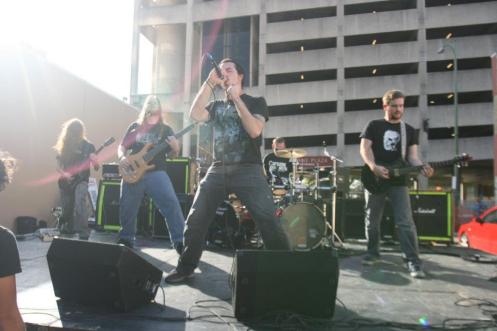 WG: Ciaran, looking over the credits on Thanatopsis (I don’t have the liner notes for the new one yet), you are responsible for a majority of the music and lyrics. So Vex could be considered your overall vision…. do you feel more comfortable composing for this band on your own as not to have outside influence change the feel of the material? Or have you all been together long enough at this point where the other guys can come in with ideas, or full songs and contribute to the workload?
CM: You’ve asked a question that is directly relevant to where we are right now creatively. For better or for worse, my default compositional mode has always been close to that of Jim Matheos or Robert Fripp; when I’m writing a song, I often hear all of the other instruments, and would be perfectly comfortable dictating everyone else’s parts. Thankfully I’ve developed enough trust in my bandmates to completely – well, mostly anyway — refrain from doing that; however I still harbor this inexcusable tendency to shoot down a bass line, drum beat or guitar harmony that is drastically different from what I had imagined.
While we were finalizing the arrangements for Memorious, I made a conscious effort to stop being such an egotistical moron and just let the other lads play what they think the arrangements call for. This was honestly pretty difficult for me, but I can happily report that it resulted in an album that was far superior to what it would have come up with on my own. There’s just no replacement for the added dimension you get on an album that is the result of several different creative minds at work.
We’ve all felt pretty inspired by this process so we’re going to be taking the democratic approach to a much larger extent with the next album. It won’t be a concept in the King Diamond sense, but there will be a loose narrative tying the whole thing together. I’m going to write about half of the album, then I’m going to turn over the rest of the narrative and a few song titles to Mike and see what he can come up with. He was the principle songwriter for Ruins of Honor, a brilliant death metal band that gigged around Austin for about five years, so he certainly has enough drive and experience to make something happen. Should be interesting to see how it turns out.
WG: What inspires you lyrically? I found what lyrics I have access to (Thanatopsis only thus far), to be somewhat personal, yet cloaked in poetic ambiguous imagery to keep the reader/listener wondering…
CM: I think that’s an excellent summary of what I try to do lyrically; probably the most accurate that I’ve seen. All of the lyrics I write come from a very personal place, but I don’t think that the minute details of my personal life would really be of interest to anyone, so I try to locate the larger, more general aspects of why things tend to affect me in the way that they do. I’ve found this to be a very cathartic learning process, and I think it allows the listener to locate aspects of their own personal story in our songs. I experienced this growing up with groups like Solitude Aeternus and Katatonia, and it was of immeasurable psychological benefit. I’ve heard from a few people that “Memorious” has helped them through a few rough patches, and from my perspective, there’s no greater compliment that a songwriter can receive. I am chiefly inspired by my own misery, but I also receive a great deal of inspiration from world literature – especially writers such as Samuel Beckett, Vladimir Nabokov, Jorge Luis Borges, etc. — solitary drunken nights, Texas landscapes and sometimes a bit of folklore.
WG: Is this part of Vex just as vital to you as the music the words are highlighting? Do they come before or after the songs take shape, and how do they impact the overall mood of such atmospheric tracks like “No Such Thing”?
CM: Yes it absolutely is. I read an interview with a death metal band a few years ago in which the songwriter stated that he doesn’t put much time or thought into the lyrics because he knows that most death metal fans won’t read them. I couldn’t possibly disagree with this view any more – I firmly believe in the sanctity of the product itself. It really doesn’t matter to me if anyone will ever read what I have to say, I will always be of the opinion that the songs deserve as much lyrical effort as I can possibly give them.
I’m one of those lunatics that us constantly jotting down nonsensical phrases on napkins, notepad documents, text messages to myself, etc. – once I finish an arrangement, I began looking through this scrawled mess to find anything salvageable. I will then piece the phrases together with any other sort of imagery that comes to mind when listening to the riffs, and finally attempt to unify the whole thing into some kind of coherent subject matter. This was how “No Such Thing” came together. The music had a sort of stone sculpture feel to me, so I tried to write about the process of confronting a physical representation of the ideal, and forcing yourself to accept how different it is from the way things actually turned out. Pretty bleak number that was very difficult to write. The final stanza was the last part of the song that I wrote:
navigate through an ocean of grief
engulfed in contemptuous waves
Your safe haven was never here
and it will never return
I was studying a lot of medieval Irish poetry at the time, particularly lamentations that widows would write for their sons or husbands who had been lost at sea. These powerful verses would often follow the meter of ocean waves, particularly when heard through the Irish language in which they were written. I heard this same kind of rhythm with the beat that Eoghan came up with for the last riff in “No Such Thing,” so I wanted to tie in this notion of the cruel inevitably of the sea to the overall vibe of hopelessness that drives the song. So yeah, this is partially why songs tend to take me so long, ha ha…
WG: I feel a lot of musicians miss the point when creating new music. Placing ego and a desire to showcase ability in front of what the song truly needs to make an impact can make or break an album… What is the most important element to you when it comes to composing a song? Structure? Feel? Simplicity verses technicality? I know they all play a part, but what is the driving force behind what you could consider as your own personal writing style? When did you finally realize that you were on the right track?
CM: This question is a crucial one for any metal band that wishes to take on a more progressive style. The expectation is that they will simply beat you over the head with superfluous time changes, arbitrary scale exercises and other mechanisms that are simply there to blow your mind with how much they are capable of. I have absolutely no interest in this sort of thing myself – I’d rather listen to an adolescent Tom G. Warrior struggle to keep his disgusting riffs in time than drool in front of some automaton at a guitar clinic. Plus I wouldn’t really have the chops to pull off tech metal anyway, ha ha….to be fair, we do have our more elaborate moments, but it has all comes down to balance, which is crucial. Gentle Giant has had a huge impact on us because of their penchant for short songs with concise arrangements and an almost impossible level of intricacy that you almost don’t notice because of how well everything flows! The same can be said for early to mid-period Fates Warning, which has been a huge point of obsession for me lately. The technicality isn’t fore-grounded; it naturally extends from the arrangements. Fugazi has also been a major inspiration in this sense – I’ve always loved how they are able to seamlessly merge the primal energy of old hardcore with more sophisticated instrumentation. That’s more or less what we try to do with extreme metal.
So to answer your question — after a full paragraph of fluff – I would define structure as the single most important element of my writing. Leonardo Da Vinci believed that all of his sculptures were already contained in the marble, and that hammering away was just a matter of finding them. I firmly believe this to be case with arrangements; there is only one version of each song that already exists in the universe, and I just have to find it. “Carve My Eyes” honestly took about 8 years to find, so to speak – I probably threw out about a full song’s worth of riffs trying to get that one right. There’s really no other way to do it. I would say that this is probably the driving force to my writing, the genuine belief that each song can only be one way.
As far as when we had the sense that we were on the right track, I would probably say around the 2007-2008 – we were all completely obsessed with Gentle Giant; their albums changed the way that we perceived our own music. We just had this intense desire to explore within our form, and most of the songs on “Memorious” just started pouring out – “Terra Soar,” “Wasteland,” “No Such Thing” all flew pretty quickly out of the gate.
WG: Memorious maintains the colorful style that Vex has nurtured over the years, but there has been more of a noticeable evolution in this material. The dynamics feel a bit more substantial, allowing more of an atmosphere to enter the songs. Was this subtle change planned, or are you striving to shape this band into something a bit more independent from your older material?
CM: It was really only planned in the sense that we wanted to make a much better album. The recording of “Thanatopsis” was a very frustrating experience for us; not just because of what was going on in the studio, but also because it was already in the past tense once it was finally released. Most of those songs had been in our lives and in our set list for about 4 or 5 years, and were beginning to feel very stale to us. We were very anxious to move on.
There really wasn’t a conscious decision to make any sort of stylistic changes, but I think that all those years of playing live gave us a much better understanding of our own identity, and of what works versus what doesn’t. “No Such Thing” and “Wasteland” were the first songs we worked on as group; they were both very difficult for us; the fact that we had to really push ourselves both individually and as a band gave us a renewed sense of confidence and purpose that drove the rest of the new material. We were determined to avoid the mistakes of not just the first album but several EPs before it, in which we were bogged down for far too long in the studio. We went through an entire pre-production for the first time, we set firm deadlines and we made every effort to be as prepared as possible before tracking.
Stepping back a bit and viewing the first two albums as a listener – assuming it’s even possible to do that – gives me the impression that “Memorious” is a bit less stereotypically black/death/thrash than the debut, and perhaps a bit closer to our own version of extreme metal. So far it seems like this progression is continuing with the new material. You mention the term substantial – I think that’s a good way to describe what I try to do as a songwriter. It’s crucial that each song I write is more intense and riveting than the one before it.
WG: Having said that, the sound production on Memorious seems like it was a lot more DIY, if not personal than Thanatopsis. Even though it possesses more of an underground/unpolished edge, all the instruments are present and the sound actually works for the band, allowing that atmosphere we discussed earlier to rise from the material. What have been the challenges of recording your own material and what do you hope to achieve for the new album?
CM: The production of “Memorious” has been a source of great controversy – it’s often the main sticking point of critics who stop short of fully embracing the album. We anticipated that this would happen, because we wanted to produce something very different from what people are used to hearing on metal albums these days. I like that you use the world “personal” here — we wanted the sound of the album to be part of what helps it stand out amidst everything else out there.
We recorded the debut at Noise Farm with Tim Bartlett, an excellent engineer who has also produced albums by Inquisition, Teratism and Viral Load, so I think the sound may been a bit closer to what people would expect from an extreme metal album. The experience of working there was a great one, we just wanted to try our hands at doing everything ourselves, and working a bit closer to home at Mike’s studio in South Austin. Eoghan and Mike had earned a good deal of recording experience at that point so it seemed a logical choice. The main challenge of working this way is that we have only our own ears to go by; the mix went through a drafting stage of several weeks as we all noticed more and more revisions that needed to be made. There are always things that you would’ve done differently in the end, but overall I’m content with the sound.
As far as the next recording, we really just want to keep moving forward with bigger and better sounds. I’ve learned a lot since the last go round, and I know that Mike and Eoghan have as well. Once the material takes shape, we’ll get a better idea of what kind of direction we want with the production, but right now I’m thinking that more depth and texture is what we’ll be after. I’ve been listening to a lot of stuff like The Chameleons, Echo and the Bunnymen, Cocteau Twins, etc. — I’d love to incorporate those kind of icy textures into what we do.
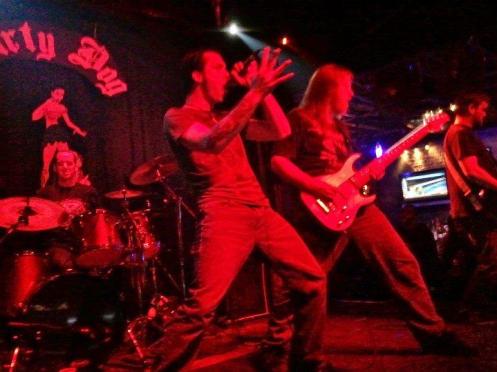
WG: As an actively touring band, you have gone out of your way to bring your music to the fans and have hopefully turned some heads as well. With this technological era driving people back into their homes, how important do you feel it is to tour in 2013? Are the crowds consistent at your shows? With so many promotional tools at a bands disposal, isn’t touring kind of the last/most expensive option? Is it more of a personal release and primal need for the band than an actual necessity?
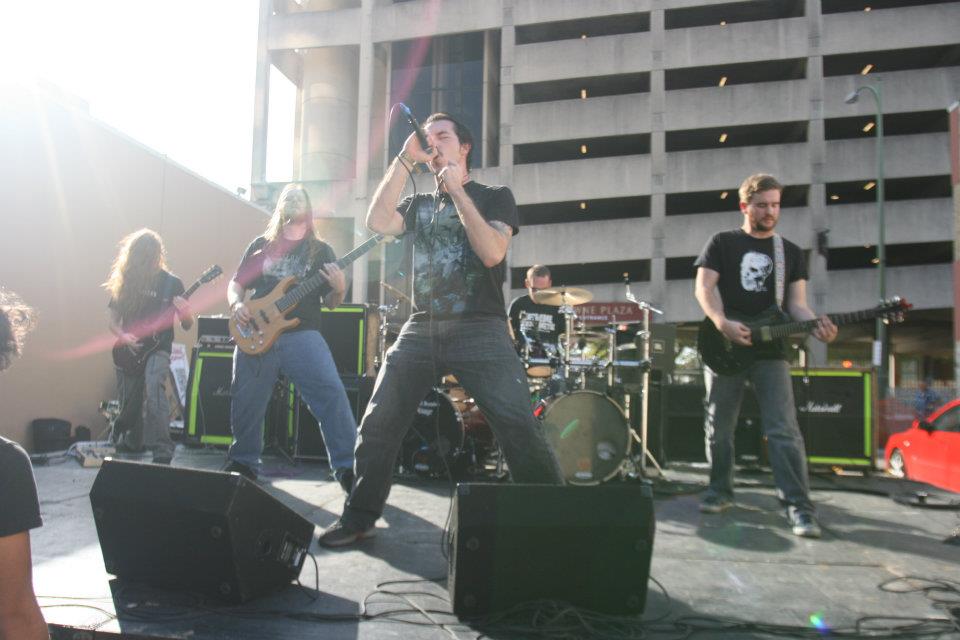
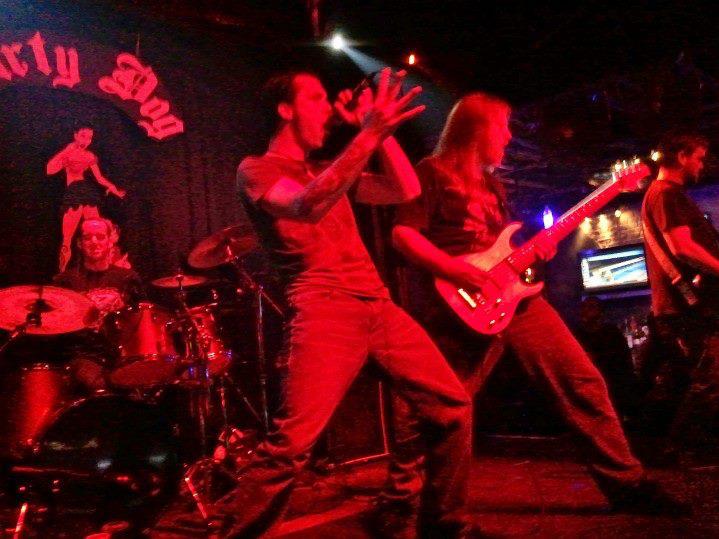
CM: Damn good question. Perhaps I’m being a bit idealistic here, but touring is one of the areas that I don’t think has been too drastically affected by the overall downfall of the music industry. It’s definitely more expensive than it used to be, but so is everything else really. What you mention here about people seeking music at home is certainly true, but I still think most of us would agree that there’s still no replacement for a good night of live music. Perhaps we’re biased because we live in what is often called the live music capitol of the world, but from what we’ve seen, there’s still plenty of support and interest for live gigs throughout the country, even for an unknown like us. With a few unfortunate exceptions, our crowds have actually been fairly consistent, but I think this can be mainly attributed to the efforts of the booking agents and the local bands who work hard to promote the shows.
The argument could certainly be made that touring is not at all a viable option for a band these days, but for us, it just feels right in the sense that you mention in the last question. It just feels like it’s what I should be doing as a musician. It’s a lot of fun to travel with good friends, to meet new people, and to become engaged with little pockets of local culture all over the country. There’s certainly plenty of misery to go around with questionable food options, scarce access to showers and the occasional sparsely attended gigs, but if you’re smart about the whole thing and come into it with reasonable expectations, these negatives will be little more than fodder for fun road stories. Our next goal is find some way to tack ourselves onto some kind of package tour with a few big names. This can be very tricky without the clout of a huge label, but we’ll see what happens.
WG: How is this style of music received these days in the live arena since the underground metal listening crowd has been so inundated with and shifted towards black metal since the mid 90’s? Are you noticing a renewed vigor in melodically charged death metal again?
CM: I wish I could report to you that I’ve noticed an upsurge of melodic death metal, but this has most certainly not been the case. It seems scarcer now than ever before, with atmospheric black metal and down-tuned sludge riffs occupying everyone’s attention. We’ve been turned down by Relapse and Earache, both of whom flat out told us that this is the wrong time for this type of metal. This is a bit discouraging to be sure, but what are we going to do, get a bunch of shaggy beards and Orange full stacks? Not likely, ha ha…these setbacks really just inspire us to keep making the best possible metal that we can make, and perhaps to prove to the world that there is plenty of room for creative exploration in melodic death metal. It shouldn’t be left to die just because it isn’t as cool as Krallice or Liturgy. Obsequiae proved this in a monumental way with “Suspended in the Brume of Eos,” and it seemed to be very well-received, so perhaps there is hope!
To answer your first question there, I suppose there is also hope in the fact that, generally speaking, we tend to go over pretty well live. We put a lot of effort into delivering the best and most intense show that we are capable of, plus I think it tends to work to our advantage that there usually aren’t any other bands on the bill who sound even remotely like us. We tend to play with a lot of brutal death metal bands here in Texas; I think that with the nature of that type of music, people are often pleased to come across some sort of relief from all of gurgling and slam riffs, ha ha…..
 WG: With the sounds of Vex resounding off the walls of the Worm Gear bunker, we wish you guys continued success and greatly appreciate you taking the time to answer this interview. The final say is yours…
CM: I can’t thank you enough for giving me the opportunity to incessantly ramble here. This is by the most thorough and in-depth interview I’ve ever done, and the fact that it’s tied to the Worm Gear name is far above an honor. I used to seek out the old print versions of the ‘zine and order albums based exclusively on the reviews, many of which were yours. A few of these albums ended up being pretty foundational for me, so perhaps you can claim some credit for the way that Vex turned out! Cheers – thanks to everyone for reading. Sorry to take up so much of your surfing time.
https://www.facebook.com/vexhomepage?ref=ts&fref=ts
Posted in ALL REVIEWS, INTERVIEWS
Tags: Ciaran McCloskey, Horror Pain Gore Death Productions, Marty Rytkonen, melodic death metal, Memorious, Thanatopsis, Vex

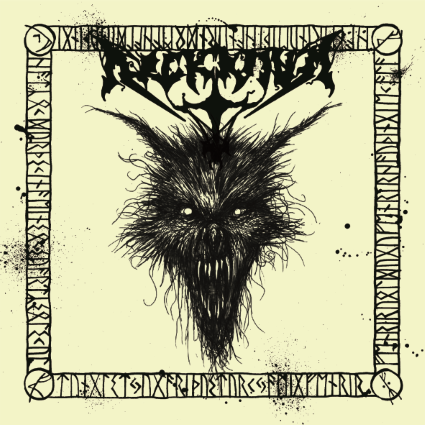 I will cling to the statement that Arckanum have never released a bad album, but leading up to the mighty/organic 8th full-length trip into gnostic, anti-cosmic woodland mysticism, Fenris Kindir, sole Arckanum proprietor, Shamaatae, sounded like he was beginning to hit a wall with his own brand of earthen black metal. Though enjoyable in their own right, Sviga Lae and Helvitismyrkr just felt like the overall formula was beginning to stretch thin as a modern (ie: synthetic) drum tone (on the later album in particular) destroyed a lot of the intensity that material struggled to achieve. With Fenris Kindir, Shamaatae has come back seemingly revitalized and reveling in more of an authentic production worthy of the unique tone so effortlessly employed by Arckanum.







 Worm Gear
Is nothing Sacred? Ruminations on the musical catalog of Sacred Reich by Marty Rytkonen
•April 10, 2013 • 9 CommentsIt all started in 1986 for Sacred Reich upon birthing a much sought after and really ambitious demo called “Draining you of Life”. 4 songs and a sharp attack/production set the tone for this bands hungry and youthful years. Unencumbered riffage with a minor hardcore edge and a damn good drummer to hurl them at the listener was the formula that Sacred Reich performed well. They were tight and serious due to a thrashed out pseudo political slant lyrically. They possessed a sound all their own which seemed so much easier to achieve back then due to there being less bands. The mounting popularity found them recording the track “Ignorance” for Metal Massacre VIII, which in turn led to a deal with Metal Blade Records and greatly elevated worldwide distribution. The stage was set for what I feel is the peak achievement in their catalog….. Ignorance!
Death Squad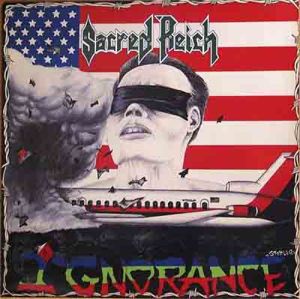
Putting to death those who oppose you
Will take control, no matter the cost
Bodies are mounting the carnage around you
At the last count, 10.000 have died
Taken by force
Controlled by fear
Death squad police of the right
Must stamp out subversion
Dissension, unrest
Those who oppose will meet death
Automatic weapons in hand
You say you’re what the people want
Why must you kill them to secure their vote
Death squad escort them to the polls
Puppet regime with you at the head
You’ve rid them of a communist threat
Your brand of “democracy” is now in control
And all of your people lie dead
Taken by force
Controlled by fear
Death squad police of the right
Must stamp out subversion
Dissention, unrest
Those who oppose will meet death
“Democracy” at any cost
The methods of freedom unclear
Right-wing radicals, abusing control
The choice will be democracy or death
Ignorance demonstrated how wicked a quartet could be as Sacred Reich sounded ravenous and ready to level the competition on this album. Wiley Arnett’s solos executed a technical proficiency while never losing an ear for melodious sub harmonies that became integral elements to every song. Sure he could lean on that whammy bar for a Kerry King styled noise attack, but he thankfully never went too overboard with this technic. His and Jason Rainey’s musical ideas were full of a furious energy with riffs that felt intimidating thanks to Greg Hall’s superior drum work (and precision double bass dexterity), but songs like “Sacred Reich” adopted more of a mid-paced movement so full of fluid guitar work and heavy hooks, that they were instantly identifiable and destined to stick with the listener. Sacred Reich paced this album for maximum effect. The fast and slower tracks effortlessly flow into each other with a deadly impact that has stood the test of time and so has the hardcore influence lurking just beneath the surface of such a fighting metal monster. Should you have somehow missed this band through the years and you want to set that right, Ignorance is by far Sacred Reich’s crowning jewel and in spite of a quarter Century passing by since it’s release, the sound and style still holds up remarkably well. In fact, this annoying thrash revival that is still going on could stand to learn a few things from Ignorance.
When The American Way arrived on the scene, I was ready and hungry for it, scoring it the day it hit the shelves. Even though an obvious change was taking place stylistically in the band, I nearly wore the 1’s and 0’s off this disc, as the clinically clean yet heavy production presented the catchy riffs with a grooved out style. My excitement was often blinding at that age, allowing me to overlook, or simply not accept an admired band’s departure from a path that I thought they needed to stay on. I still consider The American Way to be a good album, once again benefiting from a spot on drum performance and punchy song crafting that was streamlined/simplistic and damn catchy. The downside: the songs relied on a trash 101 formula and after longer exposure revealed predictable tricks in the transitions and that burnt out E note palm muted thrash gallop. Phil’s vocals really started to get even more melodious on this album and since they were way out front in the mix, they became a focal point, love the untrained pitch style or hate it. It is a sound all his own, I’ll give him that, but it is a limited niche fan base I think when it comes to powerhouse thrash vocalists and I have to be in the mood for it these days. This slicker style unveiled even more socially and politically aware commentaries lyrically that were border lining on the preachy side of expression. An example of this lies in the “diversify yourself when it comes to music” closing track “31 Flavors” with its strict funk/metal-less presentation and light hearted call to try something different. Here’s an excerpt:
“I love the Chilis freaky, Uplift, Mother’s Milk
Faith No More Mike Patton’s voice is smooth as silk
Metallica’s music makes me want to rage
Sting’s lyrics have something to say
Jimi Hendrix plays guitar like a no one else
Black Sabbath Ozzy’s voice is sick as hell
Prince, Fishbone, NWA these are the things that I like to play
Mr. Bungle is so very cool so don’t be an ignorant fool there’s so much
music for you to choose so don’t just be a metal dude it’s cool fool”
Perhaps this is indeed COULD HAVE been a worthwhile message in it’s own skewed way, but in this case, comes off as a band trying to thinly veil their own musical complacency. Who really needs or wants to withstand someone essentially telling them they are lame for not liking the popular bands listed in their little tirade? Sorry, but “I’m cooler than you because I like Sting and NWA” makes little constructive sense in the context of what Sacred Reich had achieved leading up to this point. Perhaps more complex metal felt too restrictive to their writing process? It appears so, for The American Way was only a hint at the rounded off direction they would travel in their quest to achieve more of a lifeless groove which in turn would virtually neuter the 2 albums that preceded this, Sacred Reich’s last “good” album. And funk? Really? Let’s check in with Mordred and Mindfunk and see how well that turned out for them…
Sacred Reich fight back in ’96 with Heal, their last ditch effort to reclaim a bit of the intensity and conviction that has been haunting them for a better part of the 90’s. Again, the leadoff track is the most spirited of the bunch, finding Blue Shirt, Brown Shirt to possess a needed boost of speed and energy. It suits them well, but after 2:27, they fall back into that mid-paced power groove rut that might as well be a bottomless pit. Even though the band does work with a quicker register of speed on other tracks like “Break Through”, “Don’t”, and “The Power of the Written Word”, the low point for me is the predictability of it all. Even though Heal is a definite step back up, it feels like too little, way too late. Add the slightly augmented Pantera riffs to this equation and you hear a desperate band trying to reclaim a lost gleam of creativity to no avail.
The frustrating thing here is that Sacred Reich still maintain the chops to pull off something much better, but are one of those bands that lost their way in every aspect of their music creation process. After a lengthy hiatus, they have returned as a live unit to step onto the stages of some of the metal world’s biggest festivals/events as they shall again be doing for the upcoming Maryland Metal Fest. Perhaps this return to the lime light will appeal to people’s nostalgia when it comes to this band, but I for one hope that Sacred Reich choose to avoid this fleeting feeling of appreciation and NOT return to the studio. Their catalog is evidence enough that what they wanted to achieve musically was a departure from their formative years and a mutation that didn’t sit well even with their sonically battered and bruised fans. We wanted to keep on liking them, but they made us pay for our lack of vision. Is nothing Sacred?
Share this:
Posted in ALL REVIEWS, COMMENTARY
Tags: Draining you of Life Demo, Heal, Ignorance, Independent, Marty Rytkonen, Sacred Reich, The American Way, Thrash Metal