Necrophobic – Womb of Lilithu

•October 30, 2013 • Leave a Comment

necrophobicThere is a slick underlying strand of commercialism that Necrophobic hints at with Womb of Lilithu in the form of songs like Splendour of Nigri Solis that tinker with catchier riffs and movement within the song. The result is less malevolent and dare I say more “upbeat”, which as a long time follower and fan of this band, this doesn’t sit well.

Astaroth is a better representation of older Necrophobic with fluid d-beat speed and harmony bloated tremolo riffs that unlock the ancient feeling of Swedish blackened death. My main problem with this album is the overall production. There is no bite in the guitars, giving Womb of Lilithu a very rounded off and non-threatening presence. Even longtime vocalist Tobias Sidegard (now out of the band due to domestic abuse charges…. good riddance) sounds less rattled and just as dry as the tone trying to rise from this album. His performance is busy and complex as he litters the riffs with vocabulary, following the guitar parts too closely which in turn highlights the more accessible flow of this material. Perhaps they’re gleaning a bit of influence off from the success earned by Watain and trying to meld their style to embrace more of an open minded and catchy delivery? Whatever the case, I see Womb of Lilithu as a departure for Necrophobic even though there are still some great riffs and powerful songwriting as on tracks like Black Night Raven and Asmodee on display here. Perhaps this is the case of a neutered production bringing down the whole house of cards. Even though it is good to have every instrument audible and in your face, I find myself not being engaged by the loss of nostalgic aggression and the too clinical manner in which it is all presented. Then tracks like The Necromancer opt for more of an expansive attempt at epic songwriting with symphonic arrangements and choral background vocals that brings to mind Dimmu Borgir and are simply out of place on a Necrophobic album.

I have to give the band a nod of appreciation for trying something new and perhaps repeated listens here will unlock more of their intention and win me over, but as it stands, Womb of Lilithu feels like an awkward transitional stage for Necrophobic. Death to All was so much better than this and I hope once all the negative media buzz settles down and the band can secure a new vocalist, they will return stronger and get back to the business of being Necrophobic. -Marty
Season of Mist

Obliteration – Black Death Horizon

•October 30, 2013 • 5 Comments

blackdeathhorizon_1500 (200x200)Leave it to Norway to aid in Death Metal’s perpetuation with an imminently worthy black (in concept) /death (in execution) release. Thank you, Obliteration, for gifting us all with Black Death Horizon, an album that takes Autopsy doom and meatgrinds it with ’80s crossover thrash and that period of proto-Death Metal before that resultant genre devolved into widespread use. Taking the Darkthrone production approach of a well-conceived demo, yet absolutely clear and punishing, Obliteration nail that delicate balance between polish and grit-power in sound that I’m always searching for yet rarely stumble across. Things kick off deliberately with the marshy doom of ‘The Distant Sun (They are the Key)’, dripping with hammer-on Sabbathness beckoning the rotting to rise up and be counted, with the voice-cracking, frustrated roar of Sindre Solem commanding his forces like a mortally wounded yet determined squad leader, urging us all to listen on with fear and trembling. And unlike many of their peers, Obliteration’s use of doom here isn’t as a brief intro to their death metal, for – like their aforementioned Reifert-fronted influence – the doom remains integral throughout their conflagration of sound, so that a full three and a half minutes pass before the speed and attack take the reins. By the time the pure-crack polka and d-beats arrive to violate your eardrums, accompanied by tremolo-picking imparted with punky open-chords, you’ve been properly prepared for the Metal euphoria that awaits you on the other side.

Amongst all the badassery are Arlid Myren Torp’s amazing leads, another side of Obliteration which may be overlooked. His layerings run the full gamut from dissonant and haunting to melodic and inspiring (in that grab-your-sword-and-slaughter kind of way). Unlike many black/death practitioners that allow riffs alone to recall the age of Reeboks, Torp’s solos deliver a Kill ‘Em All Hammett-heart, a Scream Bloody Schuldiner-soul, and even a Seven Churches LaLonde-liver right to your now-bloody doorstep. Pay special attention to his achievements when you listen for yourself; his arrangements help elevate the tracks above the putrid pile of lesser early death sycophants.

Obliteration’s latest will be remembered as an homage to the past that heralds the coming of an exciting extreme metal future. Listen, weep, and gaze in fear at what’s to come in our Black Death Horizon. -Jim

Relapse Records

Pandemonium – Misanthropy

•October 30, 2013 • Leave a Comment

Pand_Misanth (200x200)In 2012, Poland’s Pandemonium produced Misanthropy, an album sitting squarely at the point where black, death, doom, and just plain ol’ Metal converge. It is a record of shifting sonics best described (as they themselves do) as being ‘dark metal’, coming across as a labor-love of all nefariously distorted heavy hues. Misanthropy’s collection of tracks continuously turn corners each time you think you’ve got a single descriptor for it pinned down. First song ‘Black Forest’ opens with nightmarish throat-singing, foreshadowing the repeating, open-chord occult atmosphere to follow courtesy Pawel Mazur, singer/guitarist/sole original member since Pandemonium’s first appearance in the ’90s. Pawel sews the varying veins of his wide-ranging Metal riffs together with a bile-spewing, sufficiently demonic voice comprised of shrieks, howls, moans and wails all dripping with a sense of power, vengeance and loss. The multiple techniques as one aid and abet his Satanic disposition on ‘Necro Judas’, and drive his message home still further on the plodding doom of ‘Stones Are Eternal’, where the vibrato of Androniki Skoula of Chaostar dances above the bonesaw riff barrage. Next, the cut-and-run punk chords of ‘Avante Garde Underground’ further mystify any record store clerks attempts to file the album, and even if the Misanthropy’s dirt-free/modern mix threatens to turn you off you will still forge ahead, compelled to continue the journey, unsure of where Pandemonium intends on transporting you next. Somehow, the hodgepodge of this record’s styles coalesce into something not easily dismissed, and the Iommi-esque riff energy underlying the aforementioned song (and several others) remains pleasing. Even when, as on ‘Everlasting Opposition’, the band employs chugging triplets and open-chord palm-mutes that these days threaten to bore this writer, the twin-guitar overlay of minor key counter-melodies and tremolo-picking prevent thoughts of the more knuckle-dragging strains of Metal coming to mind. As a result, by the time Skoula returns with great Middle-Eastern effect on the closing title-track, the lava-death metal guitars no longer need help carrying you back down the dark mountain of Metal.

Though Misanthropy’s sound may have benefited from a chillier production, cooling it’s concoction into a spectrum more suited to a frozen Luciferian intent, nevertheless Pandemonium have proven on their first full-length in five years that one can maneuver dissimilar types of Metal into something capable of displaying a passion for the whole of this music’s pallette. -Jim

Pagan Records

The Crevices Below / Tempestuous Fall / Midnight Odyssey – Converge, Rivers of Hell

•October 30, 2013 • 1 Comment

coverHad I reviewed this album a week ago, I would be writing to you now with different things to say, in a wearier tone, with a harsher analysis. Converge, Rivers of Hell didn’t feel as massive as Funerals From The Astral Sphere, as wildly adventurous as Firmament, as fresh as Below The Crevices, as crushing as The Stars Would Not Awake You. I was disappointed, but I kept my ear to Hades’ subterranean currents, and the longer I listened the deeper their spell crept into me.

Something you should know about this album:

Converge, Rivers of Hell is a carefully woven together concept album, not exactly a split. While Tempestuous Fall, Midnight Odyssey, and The Crevices Below are all distinct musical entities, they spring from the same source: Dis Pater, the enigmatic Australian behind all three. Converge, Rivers of Hell brings all of Dis Pater’s voices together on the same album, focused around the tributaries that run through the land of the dead in classical thought.

Some things you should know about Dis Pater:

He’s a production wizard. Lush, gorgeous synth lines spill out of his sleeves; organs, sonorous horns, shimmering glimmers of aural light, mysterious pitches and nebulous waves of flowing, washing, ebbing electronics. He keeps a digital drum-kit hidden in his boots, and he makes it work. A treasury of guitar tones hide in his pocket; deadweight heavy or astrally light whenever the situation calls for it. A host of voices await conjuration in his vocal chords: growls, howls, laments, and hymns awaiting their moment to speak. Converge, Rivers of Hell is no different, other than it’s nature allowing this to be Dis Pater’s most diverse work as of yet.

He’s an excellent craftsman of song and weaver of sounds. The Crevices Below tracks are perhaps the best example of this on Converge, Rivers of Hell. They fluctuate from subtle dark ambience to Katatonia-esque melodies, from eerie doom drags-into-the-grave to glinting electronics, from depressive cold-wave to sinuous tremolo melodies that would fit right into a less aggressive In The Nightside Eclipse. That he puts all these things into his songs wouldn’t count for much if it wasn’t for a brilliant sense of songwriting; these tracks wend their ways through calm waters, choking rapids and neck-breaking waterfalls of progressions in all the right ways.

He doesn’t repeat himself. From Midnight Odyssey‘s The Forest Mourners demo onto Tempestuous Fall‘s The Stars Would Not Awake You, Dis Pater has yet to release a single album that sounds quite like any other. Even within Midnight Odyssey, his project that’s seen the most releases, changes both radical and low-key separate each album from the next in style and character. Converge, Rivers of Hell bears the tradition still. The Midnight Odyssey songs incorporate sinister Death in June acoustic strumming, some heavier riffing, and a generally more dynamic and to-the-point approach to the vivid, synth-heavy black metal visions of the cosmos codified on Funerals From The Astral Sphere. Tempestuous Fall has seen some of the biggest changes; “Pyriphlegethon”, rich with synthesized horns and organs, swelling with chorale vocals and depth-scraping growls, bearing the listener into the deep with solemn synthesizer dirges and, for lack of a better term, epic melodies; carries a Summoning gone death-doom vibe in its tired heart. The Crevices Below tracks change less dramatically; they’re mostly just better.

He has an impeccable sense for aesthetics. Could you throw together 3 bands; one astral black metal, another funereal death-doom, and finally one black-metal-post-punk-doom-depressive-rock-electronic mad tangle of a band and create a coherent album with them? An album that manages a cohesive production across the different styles? An album that manages to subtly intermarry elements of all 3 bands with each other while still maintaining their distinct character on their separate tracks? An album that flows so naturally you couldn’t imagine it any other way? Dis Pater can, and he did with Converge, Rivers of Hell. Joy for our ears. Woe to our wallets. -Jake

I, Voidhanger

Live and breathe, only cease, old and grey

•October 23, 2013 • 7 Comments

The reviews keep coming and so do the new releases! It’s hard to believe that 2013 is creeping into it’s coffin, for there is no sign of the labels letting up on their assault of our senses. This is a good thing. Even though the metal world ebbs and flows, it seems the overall outlook is strong with many great releases happening this year. As I spun the latest Entrails CD on the way home from work, I got to thinking about the passing of time and oddly enough, the thrash explosion, overpopulation and eventual death of the genre during the early 90’s as death metal arrived to finish it off. In 2013, death metal has endured the distraction fans have had with black metal and seems to be reaching a level of popularity and boiling point akin to the rise and fall of thrash. Thankfully I still enjoy the sound and style, but am beginning to hear cracks in artists wells of creativity. Do you think death metal, no matter how redundant or rehashed it can or will turn out to be, can survive another 20 years with so many of the classic bands either retiring, or being unable to deliver material as strong as their timeless classics? Hmm…

As you ponder the life expectancy of a beloved genre, don’t hesitate to offer your playlists and by all means… share with the class! -Marty

Marty Rytkonen Playlist
Burzum – Umskiptar
Vex – Memorious 2LP Test Pressing
Seidr – Ginnungagap
Ashes of Ares – S/T
Tempestuous Fall – The Stars Would Not Awake You
Subhumans – EPLP
Summoning – Old Mournings Dawn
Entrails – Raging Death
Clandestine Blaze – Harmony of Struggle
General Surgery – Corpus in Extremis

Jim Clifton Playlist
Inquisition – Obscure Verses for the Multiverse
Vex – Memorious 2LP Test Pressing
Seidr – Ginnungagap
Long Distance Calling – Avoid the Light
Wolves In The Throne Room – Celestial Lineage
Darkthrone – Hate Them
Drudkh – Autumn Aurora
Jakob – Solace
Decrepit Soul – The Summoning
Latitudes – Individuation
Weapon – From the Devil’s Tomb

Jake Moran Playlist
Sangre de Muerdago – Sangre de Muerdago
Plinth – Music for Small’s Lighthouse
Heathen Harvest – Samhain Work I (I’m anticipating this year’s Samhain compilation with gleaming eyes and ghostly gratitudes)
The Glorious Dead – The Burdensome Ceremony Of Interment
Richard Moult – Aonoran
Richard Moult – Yclpt
Richard Moult – Rodorlihtung
Biosphere – Substrata
Dark Britannica III – Hail Be You Sovereigns, Lief And Dear
The Cloisters – The Cloisters


Cult of Fire – मृत्यु का तापसी अनुध्यान

•October 23, 2013 • Leave a Comment

CultOfFire (200x200)Have a hankering for sitars? Ancient Vedic chants? An album with title and tracks written in Sanskrit? Curious what sounds evoke worship of the Goddess of Death? Then embark on an (English translation follows) Ascetic Meditation of Death with Cult of Fire. Regard मृत्यु का तापसी अनुध्यानa powerful black metal blitzkrieg of sight, sound, and mind fired with furor from the Czech Republic. The approach taken conceptually is, of course, a fresh (hell of) one, drawing you in firstly with simply fantastic cover art, a presentation of Kali in all her terror-inspiring majesty courtesy of David Glomba. And that word – ‘majesty’ – defines the whole of this album, for the music of मृत्यु का तापसी अनुध्यान conveys a certain cosmic regality and grandeur. While listening to the album’s eight occult offerings, replete as they are with the aforementioned dark mantras and Hindustani instrumentation (note: neither bury the black metal assault), I could easily imagine the praises accompanying the Destructress on her world-ending tasks. Cult of Fire do not, however, rely solely on Southern Asian influence and means of expression – organ plays a prominent role on the album, adding a progressive rock feel in dabs and dollops succeeding far better than its employ on other recent black metal albums (such as God Seed’s debut last year). I prefer clean piano myself, and here again Cult of Fire do not disappoint: on fourth track . काली मां (Black Mother), the sorrow and longing already firmly established with guitar and atmospheric synth earlier in the track is sculpted further with an expert scamper across the ivory and ebony that will leave you wistful for whatever lurks in your own dark hollows.

But what of the traditional black metal armaments? Vocalist Devilish, along with Infernal Vlad (also of Maniac Butcher and Death Karma) expectorate black metal screams and gargles that blend surprisingly well with the monastic/monotone chants of Ascetic Meditation of Death. The tremolo guitars remain steadfast throughout all the outward ancient meanderings, and in truth are the fiery heart of each composition. The production can be best be described as resolute and sharp. The drums hammer and rock in equal measure. What else is needed?

Among the other significant black metal releases this Fall (Inquisition!), do not let मृत्यु का तापसी अनुध्यान escape your heretical sight. That rarity of rarities – a black metal album with its own musical voice, visual statement, and lyrical focus – awaits your ritual pleasure this November. -Jim

Iron Bonehead Productions

Harm – Cadaver Christi

•October 23, 2013 • 1 Comment

harmSwedish influenced death metal with a pension for the classic era of the sound certainly isn’t a fresh cadaver exhumed from Berlin holy ground, but Germany’s Harm are trying their damnedest to reanimate this tattered and dusty corpse and make it walk again.

Cadaver Christi for all intensive purposes, is enjoyable in it’s ruptured sickness thanks to the detuned and thick as a mausoleum guitar tone along with well written, if not completely safe riffs/songs eating up the 10 tracks on this album. Many of these riffs we have heard before, in slightly different arrangements and notes that make up the guitar parts, but even that doesn’t deter me from getting into the bulk of this album. 2 things that set Harm apart from their peers is more of a focus on mid-ranged/plodding tracks, but they do also employ that pleasingly sloppy old-styled blast of speed as found on the title track. Also Blitzkrieg Barkley’s drunken screams can put me in mind of Don Cochino from Pungent Stench on occasion, which trickles into the messy punk simplicity of tracks like Blood for God. Cadaver Christi is good, if not a bit on the average side, but it all works as Harm revels in the old spirit of the death metal genre to wallow in the filthy nostalgia boiling out of this mash of rancid offal.

Perhaps Harm are in the wrong era for trying to make a bloody splash with Cadaver Christi, but I’m also from that glorious moment in time that modern death metal would seemingly like to forget, so I say more power to them. There may be nothing here on display that demands you forsake the classics of the genre, but it’s obvious this quartet are following their musical passion and having a blast while doing it. Where’s the “Harm” in that? Jeesh… I told myself I wasn’t going to do that… -Marty
FDA Rekotz

Lorn – Subconscious Metamorphosis

•October 23, 2013 • 1 Comment

lorn_subconscious_metamorphosisSubconscious Metamorphosis, the second full-length offering from Italy’s Lorn, initially struck me as the type of black metal that paints a mental picture of staring out upon the majestic vastness of space from a safe vantage point of course. This potent power trio achieves such a feat by sticking to the ice cold foundation of the genre which may come as a surprise to all of you as it did me. It is rare to come across a band that utilizes often dissonant riffing that “hints” at melody, but is content to toil in a fervent wash of controlled noise, along with other tried and true elements to somehow come out the other side of a listening experience that is something highly enjoyable and even a bit unique. So how can this be?

Definitive Conjunction launches off this album with a cosmic sea of atmosphere/reverb emitting from that slick guitar tone, only for the mid-tempo delivery to really allow the simplistic, though very passionate and moving riffage to swirl off into the aether, along with our own wonder for what lies among the stars. The vocals are equally as reverb drenched and quite effective in matching the emotive pull of the music. Harsh mid-ranged screams are buried within the mix, sticking out just enough to have their presence felt. It adds to the eerie vibe spinning at the core of this material. Strident Orbits follows up the impressive voyage witnessed on the leadoff track with it’s own equally interesting mission. I tend to lose track of instrumental chunks of music, but this song possesses just enough rhythmic variation and grandiose riff wanderings that it felt more like swirling around the perimeter of a black hole with the chaotic dissonance meets ever flowing atmosphere enchanting my thoughts. A very well considered piece of music that benefits from synth and experimental elements to heighten the feeling of blackened space madness.

As the album progresses, Lorn issues more of a hypnotic decree that holds fast to a meandering, dare I say “jam” band aura of exploration. Not since the first song have we witnessed vocals (though several lines are barely audible in Aeons Fears III) and I found the lack of otherworldly demonic vocalizations to be a hinderance to the overall interest of Subconscious Metamorphosis. Even though I still enjoyed the headspace Lorn have placed me in, the songs seem to lose their gripping appeal since many of the tracks remaining on the album are reduced to a 2 riff maximum, being carried along by the synth textures and other sounds to stir the mood.

In the end, I still find myself drawn to Subconscious Metamorphosis, for there is a definite quality to Lorn’s expansive writing style that is engaging and seemingly otherworldly. It just seems like they started off strong with a fresh spin on a tired genre, trading up a heady/powerful statement, for drifting through empty space with little life or voice to cry out for help. Sorry, but all the sounds, electronic trickery and yes…. drugs at ones disposal will have a hard time making that sound interesting. Having said that, Lorn are onto something bigger with Subconscious Metamorphosis. Have they fully arrived yet? Not quite, but their tattered vessel will be returning to space dock soon for repairs and to be made ready for what will hopefully be a more focused mission in years to come. -Marty
I, Voidhanger

Sangre de Muerdago – Deixademe Morrer no Bosque

•October 23, 2013 • 2 Comments

GD30OBH5.pdfHailing from Galicia and active since at least 2007, Sangre de Muerdago first stepped out of the blackberry brambles and honeysuckle tangles and into my awareness when Wisconsin’s Brave Mysteries reissued their self-titled debut on cassette last year. Enraptured by their grounded, feral, and passionate take on the dark folk established by Ulver‘s Kveldssanger and Empyrium‘s Where At Night The Wood Grouse Plays, Sangre de Muerdago became a permanent fixture in my car’s cassette player for months at a time. To illustrate how much I loved this album: It’s difficult to imagine myself journeying through the rain, solitude, and despondency of last autumn and winter without being wrapped in the warm, beautiful, and utterly human songs of this album. Sangre de Muerdago is one of those rare bands with the ability to sift through and abandon everything non-essential in music until what’s left is a fragile nest of hair, feathers, and dried twigs, holding something vital and bright and precious that can’t be explained.

Released at the end of last year, and more recently this year as a DLP and cassette, Deixademe Morrer no Bosque (translated as: Let Me Die In The Forest) is Sangre de Muerdago‘s second offering to the wilderness within and without, and I feel gratitude to say that it still carries that glowing ember against the rain.

At the surface, things haven’t greatly changed from the self-titled album; simple yet powerful songs woven together by finger-picked arpeggios, violin and flute melodies, rare and tasteful samples, and passionately sung vocals. There is some more experimentation with whispered and hissed vocals, a hurdy-gurdy, and some sparse percussion here and there, but they’ve been folded so naturally into Sangre de Muerdago‘s sound that it’s hard to imagine the self-titled was instrumentally more spare. Similar moods are explored as well, meandering through melancholy, triumph, loss, and youthful excitement, sometimes all in the same song. Sangre de Muerdago aren’t perfect musicians, and this is readily apparent with an overall rough and imperfect approach to everything they do. This isn’t an instance of merely sloppy playing or a contrived atmosphere though; trust me when I say that there’s something so tangibly (but indescribably) genuine about their songs that listening to Deixademe Morrer no Bosque gives me a sense of almost knowing the individuals behind it.

The process of reviewing Deixademe Morrer no Bosque has taken me a long time, long enough that it’s likely to be old news for many by now, but I’m glad that I spent the time necessary with it. More so than Sangre de Muerdago, Deixademe Morrer no Bosque is an album that welcomes the listener to sink deeply into the soundworld it offers, simple though it is. It can’t really be known by the lense of analysis, this is music to be felt.

Deixademe Morrer no Bosque is wrapped in a certain melancholy and sadness, but it’s neither dramatic nor despairing. Rather, it comes across as a sullen but couraeous acknowledgement of those feelings. And an acknowledgement is more than an admission; it’s an expression of gratitude; a healing experience. It’s the sound of a band with dirt under their fingernails, mud between their toes, fallen leaves tangled in their rainsoaked hair, both a lamentation and defiant celebration of the experience of life in a time of ruin and contraction. It’s a secret whispered between lovers huddled around a fire, a solitary walk through abandoned fields overrun with gnarled apple trees and deer-bed depressions in the grass, the smell of a cedar swamp, a myth spoken in the trills of winter wrens flitting between verdant ferns and rotten logs. -Jake

Pesanta Urfolk / Heathen Harvest / Self-released / Wohrt Records

WAN – Enjoy The Filth

•October 23, 2013 • 1 Comment

WAN (200x197)Those of you that read my reviews know I’m a sucker for early Celtic Frost/Hellhammer-influenced malevolence. The Swedish freaks comprising WAN bring that exact type of black metal to your earhole’s doorstep, with sounds from the first couple o’ Bathory records on the side, and if you’re okay with a self-awareness similar to latter-day Darkthrone I’ve got some murky Metal for you. Enjoy The Filth slings thirteen cups of salacious Satanism your way using the recipes of old – as in ice-cold production, clangy, distorted bass, and those ever-banging Morbid Tales drums that, when done with sincerity, never tire with this gray-haired rager, especially since Mr. Warrior long ago left punk-infused dirt Metal behind for Doomier pastures. No electronics, no textures, just visceral d-Beat/blast-beat destruct-o-grams killing brain cells like piss-bad corporate America beer. WAN’s flavor is best described as WYSIWYG Metal – all serrated-surface – and well, I love ’em for it. What’s that you ask? Why yes, there is indeed a song called ‘Pentagram Rockers’ and, as the title suggests, it fucking rocks, thank you very much. So only two questions remain: Will you join your ‘Northern Brothers’? Will you obey their admonition to ‘Swing the Hammer’? If you punctuate happy sentences with a Tom G. ‘Ugh!’, you most likely will. Now you may be asking yourself: do song titles and lyrics such as these take much thought at all? No, of course not, but that isn’t the point. That non-elusive mystery, dear reader, reveals itself within the course of each three-minutes-or-less track (fuck the filler) – the point that this is the pure expression of blue-collar black metal. And while WAN check originality at the door (attempts at such probably interfered with acts of drunken, sacrilegious mayhem), if the raw, First Wave style is your cup of tea you won’t mind much; this is simple music made to motivate, not innovate. Besides, you’ll be too busy yelling ‘Storm! Attack! Charge!’ with a middle-finger in the air and a belch rising from your gut to care. -Jim

Carnal Records

The title track can be heard here.

My will, be your will … My words, speak your words …

•October 16, 2013 • 6 Comments

What promised to be a quiet week for the wormsters erupted somewhat anyway with Marty’s coverage of Marco Banco’s post-Blasphemy band Tyrant’s Blood and the latest from Falkenbach. Though working life delayed Jim’s and Jake’s entries this week, rest assured there will be some interesting reads in place in seven days from both. Satiate yourselves for now with what follows here, as we stress-out trying to decide which vinyl pre-order will empty our bank accounts this week … ah, those pesky ‘first world’ problems … post your playlists and comments puh-lease!

Marty Rytkonen Playlist
New Order – Movement (Such an emotional and completely great album!)
Infera Bruo – Desolate Unknown
Mercyful Fate – Melissa
Mercyful Fate – Don’t Break the Oath (The perfect fall time albums!)
Mayhem – De Mysteriis Dom Sathanas
Mayhem – Ordo ad Chao
Mayhem – A Grand Declaration of War
Nick Cave & the Bad Seeds – The Lyre of Orpheus
Feast Eternal – Forward Through Blood
Gorguts – Obscura and Colored Sands

Jim Clifton Playlist
Venom – Black Metal
Panopticon/Vestiges – (split)
Panopticon – Kentucky
Vàli – Skoglandskap
Vàli – Forlatt
Inferno – Omniabsence Filled By His Greatness
Summoning – Lugburz
Summoning – Nightshade Forests
Ludicra – …Another Great Love Song
Gorguts – Colored Sands

Jake Moran Playlist
Stitched Vision – Headland
Fearthainne – Knowing
Astral & Shit + Sádon – Imitation of Meditation
United Bible Studies – The Shore That Fears The Sea
The National – Trouble Will Find Me
:Of The Wand & The Moon: – Nighttime Nightrhymes
Raising Holy Sparks – Four Sacred Mountains
Panopticon / Vestiges – Split
Hypothermia – Skogens Hjärta
Plinth – Victorian Machine Music

Falkenbach – Asa

•October 16, 2013 • Leave a Comment

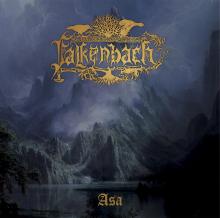
Falkenbach-AsaAsa is the first Falkenbach release (their 6th) that I have sat down and listened to in years. Not saying the musical pursuit of sole member Vratyas Vakyas isn’t worth the time or effort, rather the few older titles that I do own, …En Their Medh Riki Fara… (first album) and …Magni Blandinn Ok Megintiri… (2nd) are both enjoyable, just a bit too unintentionally predictable as Vratyas’ audial long ship rolls through triumphant, though well navigated pagan metal seas. In fact, it is apparent that the 15 year gap in my Falkenbach collection hasn’t lost stride with what I know. For fans of this style of plodding and largely in key/melodic metal with traditional instrumentation and vocals that rely both on clean singing and harsh heaven scaring screams, the lack of variation between albums is probably a welcomed and familiar path that you want Vratyas to uphold. So have I missed anything? Asa is good, just nothing earth shattering enough here to tare me away from Blood on Ice or the Nordland albums.

Asa is all about a mid-paced ever moving flow. No matter if the vocals turn black, or stay on pitch, the music maintains that 4/4 push. The unencumbered delivery allows the power chord dominant music to effortlessly sink in for that instant understanding, but this doesn’t bode well for extended time spent and desire to want to spin this album repeatedly. The acoustic guitar is used effectively on Asa, though sparingly, giving tracks like Bluot Fuer Bluot, Eweroun, and Mijn Laezt Wourd a pleasing folk dimension where the German dialect just seems the perfect form when the clean singing rules the songs. Flute and synth creep into the equation as well and add a subtle atmosphere and build upon the rudimentary folk aesthetic driving Falkenback. This does periodically make the traditional black metal feel more aggressive when Mjolnir finally falls, but there is no shaking that you know where the songs are going to go as you’re listening.

With a full production and excellent imagery tying up the loose ends, Asa is a fine Viking/pagan metal album for those of you eager to pick up everything the genre has to offer. My problem with this album… it feels too predictable or safe to fully get lost in the journey. Even though the vocals are perfectly in key and sound really pure, the vocal rhythms themselves follow the heavy dirge too closely. Vocal/musical separation and feeling would have unlocked so much more excitement. Perhaps if those harmonies were just a bit more triumphant, and Vratyas worked with more layers/depth to unlock ancient worlds and atmosphere mentally, Asa would have been far more impressive. As it stands, he knows what this project is and how to arrive at a style that works. You’ve established a sound, now do something special with it. Perhaps I’ve been listening to too much Summoning the past 6 months to take anything in this style remotely seriously. -Marty
Prophecy Productions

Tyrant’s Blood – Into the Kingdom of Graves

•October 16, 2013 • 1 Comment

tyrants bloodFeaturing Marco Banco who once crushed the 6 strings of hell in the legendary Blasphemy, Vancouver, BC’s Tyrant’s Blood do their country’s long heritage of waring death metal proud with their 3rd full-length, Into the Kingdom of Graves.

Intensity teetering on the brink of chaos, Tyrant’s Blood erupt with fury on the leadoff track, Spiral Sea. Time changes and a hammering attack fein the passing thought of scattered recklessness musically, but after 3 listens to this song in a row, the band is so in synch with each other, the performance is quite remarkable. This is what I noticed first… a destructive and busy sound with an audible bass grit, and then the songs began to rise from the firestorm as something to be behold. Orthodox song structure isn’t a concern in the world of Tyrant’s Blood which does make this material a bit difficult to hang onto, but the orchestration is so ravenous, it’s hard to turn away from the carnage. That and the fact that the riffs themselves are technically interesting, if not completely insane. Devoid of melody and light, Disowned and Defiled is a perfect example of intricate sonic butchery. Where bands like Revenge and Blasphemy possess a simplistic foundation musically, but gnaw and blitzkrieg with insane blasts sonically, they have established a style where many have blindly followed. Tyrants Blood are definitely within that war metal bunker stylistically, but their songs are far too complex to be lumped in with the knuckle dragging hammer attack of their fellow countrymen. Plus Tyrants Blood offer moments of reprieve as on Revelation in Damnation where slower riffs creep in to keep the motion forward thinking and bleak before detonating with a crippling riff assault. The fact that each of the songs on this release are longer and structures largely linear, it is impressive to comprehend that there could be at least 400 riffs on this album. Perhaps this is an elevated guess, but you will indeed feel winded after listening to Into the Kingdom of Graves. Bassist/vocalist Vinnie Borden’s vocals fit perfectly with this band for he possesses a demented barking style (there’s no other way to describe it) that centers on a low to mid-ranged register, but he so effortlessly reaches up through the carnage with sharper screams for variation. There is a lot going on here and because of this I found myself completely entertained and trained on the music as my brain attempted to process the method to Tryrant’s Blood’s obvious madness.

I tend to avoid overly complex for the sake of it metal such as this, for I often feel a busy song is typically not a good song. BUT, Tyrant’s Blood are simply too good not to give your full attention. After frequent submission to this album, the peaks and valleys begin to unveil themselves. There is a sensible amount of tempo variation and musical depth that will even dip into thrash worship to keep you open and accepting of your impending beating. I rarely care about or feel the need to listen to war metal, but Tyrant’s Blood are an exception to the rule. Perhaps they keep just enough death metal aesthetic to hold them together rather than the sloppy hateful mess musicality of their war brothers to show that this is thinking mans devilry. -Marty
Tridroid Records

Nightspirit embrace my soul…

•October 9, 2013 • 11 Comments

More like, Beer spirit embrace my liver….

Yes friends, the Worm contingent travels westward this evening for a gathering at Jake’s new residence in Elberta/Frankfort, MI right on the stunning Lake Michigan shoreline. Beers at the local brewery commenced and now upload night is nursing a simultaneous headache/mild drunk and the caustic catchiness of White Medal. Good work if you can get it right? Yes. And while the guys slave away feverishly getting their posts ready to entertain and inform you dear reader, yours truly hasn’t had the time this week to do anything, so I’m “intro slave” by default. Again… good work if you can get it I suppose.

Enjoy the Nhor interview. More are coming in time. But let us know what you’ve been spinning as of late. Let’s compare notes and meet back this time next week for another descent into the abyss of musical madness….. -Marty

Jake Moran Playlist
Circulation of Light – Winding/Winded
Circulation of Light – Acheriopoeita
Grouper – AIA Dream Loss
Grouper – AIA Alien Observer
Joyless – Without Support
Kinit Her – Storm of Radiance
The Ruins of Beverast – Blood Vaults – The Blazing Gospel of Heinrich Kramer (Cryptae Sanguinum – Evangelium Flagrans Henrici Institoris)
Richard Moult – Aonaran
White Medal – Guthmers Hahl
White Medal – Agbrigg Beast
Rose Croix – Rose Croix

Marty Rytkonen Playlist
Bathory – In Memory of Quorthon I, II, III
Vektor – Outer Isolation
Obsequiae – Suspended in the Brume of Eos
Emperor – In the Nightside Eclipse
Emperor – Anthems of the Welkin at Dusk
Emperor – Wrath of the Tyrant
Vestiges/Panopticon – Split 12″
Disma – Towards the Megalith
Summoning – Let Mortal Heroes Sing your Fame
Realmbuilder – Fortifications of the Pale Architect

Jim Clifton Playlist
White Medal – Guthmers Hahl
Pelican – City of Echoes
Danzig – s/t
Zemial – Nykta
Rosetta – A Determinism of Mortality
Mütiilation – Black Millenium (Grimly Reborn)
Toundra – I
Death – Scream Bloody Gore
Fyrnask – Eldir Nótt
MGLA – With Hearts Toward None

S. Craig Zahler Playlist
Goblin – Roller
Goblin – Zombi
Goblin – Profondo Rosso
Goblin – Tenebrae
Goblin – Nonhosonno
Cherry Five – Cherry Five
King Kobra – King Kobra
Necrovile – Engorging the Devourmental Void
Perverse Dependence – The Pattern of Depravity
Darkthrone – Ravishing Grimness
Necrambulant – Infernal Infectious Necro-Ambulatory Pandemic
In Concert: Goblin (in Williamsburg) and Goblin (in Manhattan)

Nhor – Eclipsed in Perfect Night

•October 9, 2013 • 2 Comments

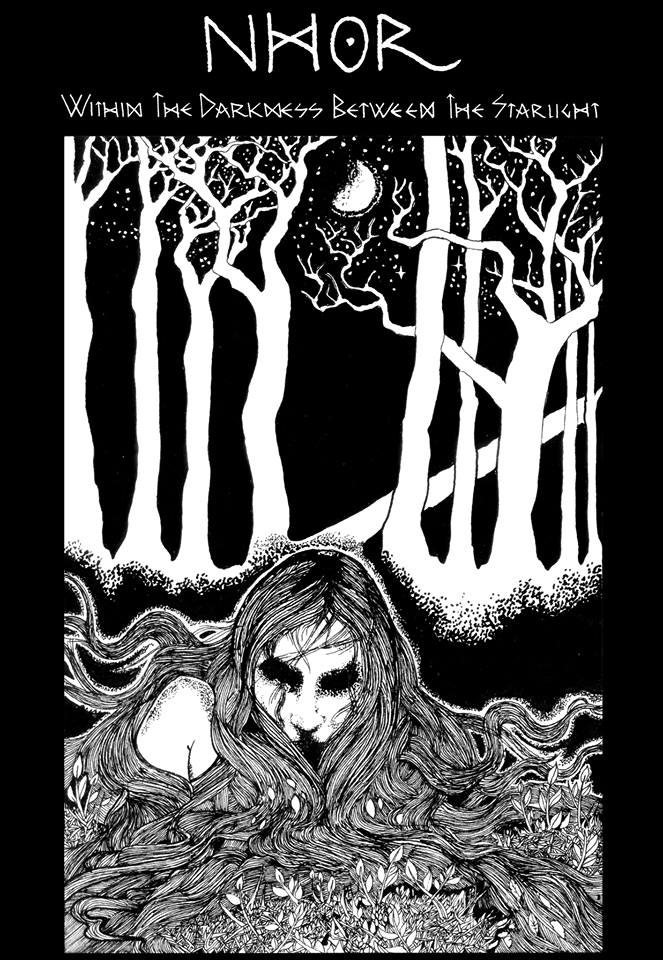
nhor1Greetings and welcome, Nhor. We’re speaking at what seems to be an important moment for you. Those that have been following your releases know what a beautiful and genuine expression of music they are, but Within The Darkness Between The Starlight far exceeded my high expectations. It’s a massive, intricate, heartfelt work of art, and easily one of the best things I’ve heard in some time. Was there a certain impetus or significance behind the creation of this album, or was it a more instinctual culmination of your early works?

“Within The Darkness Between The Starlight” was definitely an instinctual progression for me. As I hope you will come to realize, Nhor is a project of discovery for myself. It is an onward journey. The album was of a perspective that I had come to find at the time; a perspective on who and where I was. This isn’t something I can describe in a single sitting. It is enough to say that the contemplations that gave rise to this album changed the way I view my existence.

Nhor’s sound merges elements of earthen black and doom metal with ethereal ambient and neoclassical melancholy. It’s not an uncommon mixture, but you’ve always managed to make each aspect distinct to your own sound. What is it about these styles of music that fulfills your vision for Nhor?


There are many aspects within those musical styles that appeal to me and fit in with what I am trying to portray. Blast beats to me summon vastness. As if to stand on a mountains edge and overlook all of the valleys below. Slower, doomier parts are a nod to time. Consider how many ages a tree takes to grow, consider the time span of a forest and all that it has seen. The ambience refers to that unexplainable energy that I feel if enough time is spent within a forest or looking up into the heavens. Piano pieces may at times be simplistic but they mirror the elegance of nature.

Within The Darkness Between The Starlight seems to me an almost perfect integration of those aforementioned poles of your sound; the “glimmer” of the piano and the “growth” of the metal. How do you view your older material, especially your last album, Whisperers To This Archaic Growth, in retrospect of the new album? Do you see yourself separating those aspects of your music again in the future?

Whisperers To This Archaic Growth was actually meant to be my second release. It was partly written and recorded during the process of gathering the songs for my first self-release. I unfortunately lost all of the drum tracks, which postponed its release date. “Upon Which Was Written Within The Stars” was the true path forward so “Within The Darkness Between The Starlight” is following on from that.
My next album is in fact already written and almost completely recorded. I have definitely taken one path this time, but I will not be the one to reveal which yet.

“Rohmet Etarnu” revisits the theme of “Giantess” from the self-titled album. It makes for a pleasing connection to the project’s beginnings, but I get the sense that there’s something more there. Could you share the significance of this recollection? Are there other instances of past songs interweaved into Within the Darkness Between the Starlight I haven’t spotted yet?

They do share the same subject, which can be found within the words “Rohmet Etarnu” if you haven’t figured it out already. After reflecting on the subject of Giantess I came to realize that my initial thoughts were somewhat misguided and only reflected one side. “Rohmet Etarnu” encompasses the incredible force that I had overlooked by only viewing the forests through a human perspective of time.

You take a many layered approach to Nhor that incorporates the music, stories, and visual arts to a degree that is highly uncommon for most bands. Do you view Nhor primarily as a musical project, or do the other elements have just as prominent of a role? Do you think those that download but don’t buy the physical releases are missing a significant part of your albums? Have you or would you ever publish literature totally separate from your music?

Nhor is more than a musical project to me. It is a way of living for myself. It’s my outlet for expression. I understand that people connect at different levels and respond to different mediums of expression better. All of the elements are important, for myself it is the music, although I understand that for another that may not be the case. Which then leads me to downloads. It is obviously not how I intended the release to be received, but if that is how people choose to connect to my project then I will not fight it. It is better than them never doing so.

I have in fact already published literature without music. It was entitled “A Pale Glimmer” and was released in a very limited A2 print edition. One side of the print was an essay covering the general theme of the stars and our place among them. The other was a hand drawn illustration undertaken by Sin-Eater.

The songs on Within The Darkness Between The Starlight have a very satisfying, narrative structure to them that far surpasses what’s possible in more traditional verse-chorus approaches. Were there any particular influences that helped you develop your method of shaping songs? 


I am a self-taught musician and I suppose artist. I do not see the need to follow other people’s paths of creation. Music to me is more often than not a journey, or the result of contemplating a subject for some time. Therefore verse-chorus styles of song rarely appear in my work.

I suppose my influences are anyone who has created art on their own terms. Nhor is my creation; created by an outward reflection of myself, which is mirrored in the waters of an overgrown forest, bringing the stars and trees together in it’s rippling reflection.

The British Isles, despite being the homeland of some hugely influential bands, have always had a relatively sparse history of extreme metal outside of doom. That seems to have changed in the past few years, with bands like Wodensthrone, Primordial, Fen, Altar of Plagues, and others drawing a lot of attention. How do you feel Nhor fits, or doesn’t fit, into the heritage and present-day community of metal in the British Isles?

I honestly have no idea and it isn’t something that interests me. I have read gushing reviews of albums, and had friends also rave about them but I have found no connection to them. Music is subjective. There are many well known bands that I do not have much time for and yet many that I see criticized whom I appreciate. I have never felt part of a “community” in that respect and don’t suppose I ever will. This is my project, for myself. I have received no support and do not look for any. In fact, I believe I am creating from a different perspective to all of the bands mentioned previously.

nhor2You’ve created a somewhat enigmatic and secluded atmosphere around Nhor, even going as far to simply refer to yourself by the same name. This has the effect of not only focusing the attention on the art over the artist, but in a sense it severs the divide between the two. Why does this approach to the relationship between artist and listener work best for Nhor?


I have no need to make my name, face or any information about myself public. That isn’t to say that I am actively trying to hide it; I just don’t see how it adds anything to the project? If anything it would only serve to take away from it. It is Nhor that I want people to focus themselves on. My name is indeed not Nhor, but I am Nhor. There is a name I was given at birth, and that is the name of my body. Nhor is who I truly am, in some sense it is the name of my soul. I would rather speak of Nhor than of a name given to me.

All of Nhor’s previous albums have been self-released affairs before now, but you still seem to have gathered quite a dedicated following. How has working with Prophecy changed things for you so far?

Prophecy had been in contact with me almost from the very beginning. Signing with them was the natural outcome really and wasn’t rushed for either party. I had time to grow into the project I wanted to create and now Prophecy themselves have a more refined artist also. I decided to sign with them in the end because I felt as if I had taken Nhor as far as I could by myself and did not want to stunt the project. I realized it was time to let go of doing absolutely everything myself and time to let the project grow. It seems to be working well so far! I do indeed have some dedicated fans, many which own every single release from the very beginning and I appreciate their support very much.

Towards A Light That Dwells Within The Trees is a very special compilation, featuring all of your released works along with the accompanying stories and a book of illustrated art. Not many bands would have the opportunity, or even the desire, to honor their music with such lavish attention. How did this release come about? Did you see a necessity for it considering the limited nature of your physical music beforehand?

It is something I have always had in mind. I frequently receive messages from people asking if I have any remaining copies of sold out releases, or where they can find them now. Prophecy have also opened my project up to a whole new set of listeners, and this is a great way to bring them up to speed on the project and how I came to be “Within The Darkness Between The Starlight”. I don’t think I felt it a necessity, as this project is an onward progression, so I have no desire to go backwards. But the artbook has definitely been a good way for me to solidify where I am now.

The artist Sin Eater seems to me to be an integral component of Nhor at this point. His gray-scale art has considerable effect on the specific aura that Nhor has. Is his work more of a collaborative or dictated contribution to Nhor? Do you see yourself continuing to work with him in the foreseeable future?


I suppose it is a dictated contribution. But I cannot dictate his style or talent. As all of my artwork is part of a bigger picture and story it’s important that I dictate certain aspects. I tend to have an image in my head that I then sketch as best I can. I give this image to Sin Eater with many notes and let him get to work. He then updates me frequently with the progression of the piece. It’s a relationship that has worked very well so far.

Would you consider playing live if the right opportunity came about? Maybe as something more rare and special like Syven and Vemod have been doing? Do you think there’s any room for growth in terms of Nhor having more of a communal rather than solitary outlet in this sense?


I have been asked on quite a few occasions to play live but I don’t think my project is ready for it yet. If I ever were to play live, it would be when the time is right and when I have put enough thought and energy into it. I believe that my music is best listened to alone and on the terms of the listener. Mic stands, cables, sweaty venues are not what inspired the music and so have no place in my eyes to appear in a Nhor performance.

What’s your process for creating your art? Where do you draw from or stumble into that initial spark of inspiration? Does the creative process begin with the stories, the music, or something else entirely?


As I have mentioned this is a project of discovery. The creative process starts long before the stories and music. At times I have been urged to create by omens. Ever since that first night where an animal caused me to rediscover the piano I have taken note of any such occurrences and made time to focus on Nhor. I’m sure it is no secret that my main inspirations are the natural world. Mainly the forests and stars. They are the places where I go to think and consider. They are where I go to let my mind wander and wonder freely. They are the back-drop to which my own thoughts and feelings are set.

While Nhor is clearly far above anything as shallow as a political band, I do get the sense that there is a very definite intention and vision at work behind these powerful compositions. You seem in certain ways to share a similar philosophy with other bands working from a black metal foundation like Fauna, Woman Is The Earth, Blood Of The Black Owl, and many others. Do you feel any kinship between yourself and others working in this somewhat new realm of music?


nhor3
Unfortunately not, I do not feel kinship with any other musicians if I am honest. If they are on the same journey of discovery as myself then I wish them luck. Music is an art form. It should be unique for each and every artist. I understand that we may rest beneath the same tree, but what branches do we look upon? What stars hide behind the leaves we see and which ones shine brightest to them?

There’s a heavy sensibility of wonder and reverence for the greater-than-human world in your works, but it’s tightly bound to a feeling of profound grief; particularly on Whispers To This Archaic Growth. It’s appropriate to the time and place we find ourselves in: people are starved for a sense of belonging in this world, but to open oneself to it means also facing the despair of the violence and loss that’s been inflicted on it. What do you think the value of exploring these feelings is?


Donny Miller said “In the age of information, ignorance is a choice.” And as Carl Sagan once said, “It is far better to grasp the universe as it really is than to persist in delusion, however satisfying and reassuring.” Nhor is the outward expression of my revelations in discovery. I have seriously asked myself who and what I am. Where do I exist? When have I existed? I have grown to be much more than I ever was before.

There is a certain sadness that I have always carried with me and still do to this day. When I started to discover some of the darker sides of our existence this only seemed to sympathize with my own feelings. But since then I have learnt far more and my once blinkered view has opened up to the incredible nature of existence. Unfortunately this unknown sadness still clings to my back, but it has become somewhat of my companion.

You clearly have a strong relationship with the Earth and the wider universe that encompasses it, and this seems to be the driving force behind your works. Do you think music has the capability to promote or stimulate a connection to or wonder for nature in some way?


I hope so. The Earth is the only home we’ve ever known. It is important that we feel connected to it. We are of the Earth and it too is of ourselves. Humans have the ability to shape this world, for better or for worse. Human kind cannot afford to be as self obsessed as it currently is. If my music is able to light an unconscious spark in someone to venture out from the towns and cities and to develop some kind of connection with the true Earth then I would be happy.

“Beneath The Burial Leaves Of A Dying Earth” ended Whispers to this Archaic Growth on an ominous note. Within The Darkness Between The Starlight closes with “Alnilam”, which,  relative to the rest of your discography, is a surprisingly warm and quietly joyful song. “Beneath the Burial…” feels to me like a door closing, while “Alnilam” is more like a gentle opening, in a way that is very moving to me. Why end on this note for this album? Could you articulate what it is you saw there?


That is very observant. “Alnilam” was infact the first song written for “Within The Darkness Between The Starlight”. It was also originally entitled “Return”. As the theme and ideas for the album had progressed in my mind I came to the point where I needed to find the end. This was one of the first times I had sat at the piano since my previous releases. It felt very much like the return of Nhor, but also all I had running through my head was the culmination of the “Within The Darkness Between The Darkness” story and ideas behind it. The song is somewhat of a door opening, in one respect to Nhor’s return, and another to the new stand point in which I found myself after my revelations during that period.

Imagine that music is a spell. It has the capability to affect and alter the relationship of the human listener to the world. Beyond this, imagine that the non-human world is a perceptive entity; every stone attuned to every insect, every drop of water attuned to every tree, every creature attuned to every star. They listen and are influenced as well. How would you hope for Nhor to change the people? What sort of song would you sing for the animals and the mountains and the distant stars?


Music is a spell, there is nothing to imagine. It is made of vibrations. Vibrations that can cause you to experience all kinds of emotions and thoughts regardless of your wishes or current state. Don’t under appreciate where we find ourselves. Try to imagine nothingness. Imagine somehow that you have never experienced existence. Not a single colour or shape has ever entered your mind. No emotions have ever arisen. No sounds have ever broken pure silence. No weight has ever pressed against you. You are formless, you are zero. From nothingness, and nowhere the sound of wind passing through trees appears. Is this not magical? Is this not incredibly beautiful? Every single moment is a gift, every single experience that your mind is able to gather a great treasure. There is no song I could sing that is not already being sung. And it is being sung so loudly that our ears have overlooked it’s great span as background noise.

I’d like to end by expressing my gratitude. I deeply appreciate the gift of your time and feelings in answering the questions, and I congratulate you on what you’ve accomplished with Nhor so far. I’ll leave you with the last words on this interview.

Thank you for taking the time to explore my project and for this interview.

I will end with one of my favourite quotes:

“By watching, I know that the stars are not going to last. I have seen some of the best ones melt and run down the sky. Since one can melt, they can all melt; since they can all melt, they can all melt the same night. That sorrow will come—I know it. I mean to sit up every night and look at them as long as I can keep awake; and I will impress those sparkling fields on my memory, so that by and by when they are taken away I can by my fancy restore those lovely myriads to the black sky and make them sparkle again, and double them by the blur of my tears.” – Mark Twain

The Sunken Funeral: An Exploration of Undiscovered Oceanic Doom with Shades of Deep Water and Estrangement

•October 9, 2013 • 3 Comments

Although it may have been overshadowed by an expanding knowledge of the outer universe and the coming of air travel and internet alike, the sea is still a potent symbol of the faraway, the unknown, even the unknowable. It’s vast, dark, and as tempestuous and fickle as often as it is boon bringing. It also happens to be an appropriate place for funeral doom to lay it’s sullen eyes on. After all, where would the Great Old Ones be without the unfathomable sea? Where would Thergothon be without the Great Old Ones? Where would funeral doom be without Thergothon? With this in mind, I steeled myself for insanity in search of further esoteric beings lurking in the deep, returning to you now with tales of two obscure but highly worthy practitioners of the oceanic funeral arts: Shades of Deep Water, representing the straight-forward and solid side of the genre, and Estrangement, bringing out the atmospheric and experimental tones of the the strangest of doom.

Shades of Deep Water – Waterways
cover
Waterways doesn’t hesitate to immerse the listener into it’s cold and dismal waters with the grave-trudging riff and brooding melody of “Lifeless Surroundings”. The approach is barebones, with no vocals, uncomplicated drum-work, and thick but plain distortion coating the riffs. Several moments of clean, reverb drenched guitars add some color, even if it’s only more tones of dreary gray, to ensure it’s misty pallor doesn’t loosen it’s grip with too much repetition. With the tone set, Shades of Deep Water proceeds to soak you to the bones with little relent. Their preferred attack is crushing the listener into submission with waves of lumbering riffs and despondent growls before dragging them into the depths with dolorous melodies. It’s a simple but effective approach, helped immensely by the band’s good sense of when to vary things up and when to stick with a good riff.

The tracks have an average of around five and a half minutes; a testament to Shades of Deep Water’s controlled sense of restraint, and while they are all aesthetically cohesive, each song is memorable in it’s own right. The slowed-down heavy metal of “Coast to Coast”, the disheartened singing of “Constant Pressure”, and the anxious, fragile clean-guitar outro of “Stay Shadows” add a near perfect level of diversity to Waterways; interesting yet never flashy and always consistent in tone.

That specific mood and aesthetic does a lot to make Waterways itself stand out. Underground metal has changed a lot since the early 90’s, and whether you’re examining the “dark germanic heathenism” of the Scythes of Death label, the esoteric occultism of Blus Aus Nord or Deathspell Omega, the deep ecology of the Cascadian bands, or one of countless other explorations, it’s a genre that has greatly expanded both the breadth and complexity of themes it’s willing to tackle. It’s a healthy and necessary maturation of the subculture, but there are times when it can start to feel ridiculously complex at best and awkwardly pompous at worst. Shades of Deep Water forgoes the academics, politics, and pontifications and offer up something that’s satisfyingly direct and uncomplicated. The music speaks for itself, while the maritime aesthetic provides a shallow but suitable canvas for the riffs to unfold over.  A healthy dose of Engrish adds a certain charm to the simplistic but serviceable lyrics; usually decipherable in the growls.

I’m tempted to call this a solid album, but the more I listen and consider it, the more apparent it becomes that it’s on a higher level than that. It’s straightforward composition is very simple relative to what more ambitious bands like Esoteric or Mournful Congregation have been up to for the last few years, but there’s something to be said for a concise approach to a genre that’s often characterized by an excessive, some might even say pretentious, attitude towards songwriting.  Waterways is drowning in tangible atmosphere and a dramatically sullen mood without relying on electronic ambiance, complex themes, or epic track lengths, and there’s something incredibly refreshing about a funeral doom album that can stand on it’s riffs alone. Don’t hesitate at the docks for this harrowing journey into the north seas.

Self-released

Estrangement – Belong Beneath
a2273851008_2
Hailing from Australia, Estrangement was doomed (The only pun you’ll hear from me ever again, I promise) from the beginning to be judged in the shadow of diSEMBOWELMENT. It doesn’t help that this new act is clearly drinking deep from the well of their experimental, funereal ancestors, but it’s not a bad well to be drinking from in the first place. Fortunately for this reviewer’s tired ears, Estrangement aren’t mere imitators. Instead, I found quite an mysterious and enthralling, but rough around the edges world to sink into on this demo.

If Waterways was a dismal journey across the sea, Belong Beneath is where the seafarer’s might end up after rounding the horn of Africa, passing into the warmer climes of the southeast Pacific, crashing their vessel into a coral reef, and probably taking a lot of mushrooms while they’re at it. Are you still with me? Okay here’s something more tangible for you: “Disentanglement (of sound from mind)” opens the demo with spacy, almost prog-rock guitar noodling and a crooning cello. It has a light and airy feel to it that has more of a relation to Tangerine Dream esque Kozmische meanderings than it does to funeral doom lulls before the storm. The storm is coming though; the peace is broken by a comatose (in the right way) funereal riff blasting out from nowhere. It’s joined by appropriately minimalistic drumming and a droning synth line. At this point I’m well prepared for DOOM, but Estrangement lets this moment fade away into another psychedelic, even jazzy section before the real descent begins with blaring organs, a howling scream, and pure despair-driven funeral riffs, heavy as the bottom of the ocean and as slow as the ticking minutes of your life.

The riffs during these doomier moments aren’t exceptional or particularly memorable, but they get the job done, and before the listener knows it they’ve carried them to a folksy, rather beautiful section of acoustic guitars, ghostly vocals, and sorrowful cello. It’s merely another moment of false calm though, rising up into an explosive, almost black metal feeling tremolo riff replete with soaring melodies carried by both the guitars and the cello. Two surprisingly epic solos with a somewhat uneasy balance between shredding and emotive phrasing ascend out of this moment before the song breaks again into another underwater ambient section and then finally concludes in the traditional funeral doom sound.

Estrangement manages to work all of that into an eight-and-a-half minute song, and to be honest it’s on the knife-edge between ‘gorgeous kaleidoscopic aural vision’ and ‘bit of a mess, eh?’. It isn’t helped that the production feels uneven, so that the crackly and crunchy distortion and horror-movie organs feel out of place in close proximity to the smooth as mermaid-hair sound of the calmer and more ambient parts, but that’s forgivable in the context of a demo. I’m not convinced it’s a textural thing alone though. Estrangement are clearly highly talented musicians and composers; they not only comfortably handle several different styles on this demo, they excel at them, and Belong Beneath comes across as a band that is perhaps a bit too self-conscious of it. That is to say: there are moments, especially in the blazing fast solos, that come off as considerably more flashy than they are actually necessary for the compositions. This leads to a sense of things being crammed together in a way; a host of brilliant ideas that don’t necessarily have the space necessary for them to fully develop.

The other primary track, “Infinitesimal Spark” does feel more together. It sticks closer to the doom side of Estrangement’s sound, and I love the diSEMBOWELMENT style contrast between crawling doom and grinding death riffs. It still has it’s share of over-extravagance in it’s solos, but, here and in “Disentanglement…” that flashiness is only ever a blemish, not a derailing factor for the demo. If you can look past those flaws, you should find Belong Beneath to be an excellent release, submerged in as much potential as already-present creativity, tangible emotion, and distinguishing atmosphere. It’s an exciting introduction to this band, and I’ll be eagerly anticipating hearing how Estrangement grows and refines their sound into the future. -Jake

Aurora Australis

Arnaut Pavle – Arnaut Pavle

•October 9, 2013 • Leave a Comment

Arnaut Pavle - Arnaut Pavle - coverSkeletonized by Demon.

Eat the Soil from This Grave.

Drop the Coffin.

Read those again.

Are you ready for some black fucking metal yet? And yes, the ‘fucking’ is necessary, because this isn’t your weeping vampire or $300 occult tome variety black metal, this is pure fucking evil in the old ways, raw as the flames of hell biting at your heels, pure as the antarctic wastes black fucking metal. Arnaut Pavle is the pure hatred-driven union of Ildjarn’s concrete block production and punk sensibility with mid-period Darkthrone’s obscurely misanthropic atmosphere and thrash-based destructiveness. Poison that with Old Wainds-esque croaking vocals, brooding doom riffs to really hammer home the venomous contempt, and razor-sharp, tetanus-rotten solos, and you have one mean demo.

These 7 tracks of relentless evil never screw around for a second in spreading their doctrine of destruction. The madness never stops, but that doesn’t mean the execration of all that is sacred is one-sided; far from it. Arnaut Pavle conjure up fire with savage but creative (or is it destructive?) punk riffs, cryptic Under A Funeral Moon possessed arpeggios, hammer-on-to-hell thrash attacks, ominous doom dirges, untamed solos, and militant tremolo eruptions. The tortured skins are primitive but viciously active, and the bass churns and rumbles in the jaws of the abyss underneath it all. There’s a hint that Arnaut Pavle has more ambitions in their quest for total death in the last track, “Answer”, opening with alienated and eerie electronics, like an extremely quick and to the point take on the ambient sections of Strength & Anger, and concluding with a bitterly melancholy tremolo melody. It’s not these vile elements alone that make this essential; it’s the way they’ve been obsessively forced together into a compacted diamond of sonic hate. Arnaut Pavle is the work of an elite warband, already making their mark and standing alone with a firestorm of riffs, ruthlessly locked into terse expressions of unbound contempt.

Nothing else needs to be said. Get your claws on this tape. Worship. -Jake

Fallen Empire

Code – Augur Nox

•October 9, 2013 • 2 Comments

Code_Aug (200x200)Augur Nox bewilders me.

On this album, I hear Operation: Mindcrime riffs with gurgling black metal vocals one moment, Warrel Dane/lower-register Geoff Tate vocals waxing operadic over melodic black metal arrangements the next. Very-familiar 4/4 drum beats preface very-bizarre odd-time rhythmic patterns, and become the backbone of the record’s momentum. Haunting, minor-key synths back melody-laden, classic metal-era solos, further defying easy categorization . Placed together on this, Code’s third full-length, these elements give rise to the progressive tag, a descriptor that may either a) have you running for the hills if you prefer your extreme music straightforward and/or filthy or b) have you clicking on the link below if you are intrigued by complicated (avante-garde?) cleanliness. Most of us are probably c), fans that enjoy some combination or all of the artists/albums/styles mentioned above in differing amounts. For myself, the more grim and grittier sounds always take precedence, but Augur Nox exudes such a wide variety of genres I have difficulty deciding on where I land with it as a whole. Multi-faceted instrumentalist Aort, whose other projects (Binah, Indesinence, etc) I enjoy immensely, proffers his awe-inspiring abilities for all to behold, pushing the tracks’ meticulous structures to the brink of mere exhibition but stopping just short enough for each song to breathe a life all its own. For one talented as he, it has to feel liberating to let go of restraint and explore all areas of the electric guitar without deference to any one of metal’s gods, as it must be also for Wacian, who can screech with the best of them and yet still explore dense harmonies and layered, choral performances all within the span of a single song. But while Augur Nox deftly avoids the ‘we nail-gunned all these compositions together’ approach of, say, Dream Theater (excluding DT’s excellent track ‘Pull Me Under’), I must wonder if the overall emotional punch will diminish on repeated plays (as often happens for me when experiencing ‘progressive’ albums) or if Code’s latest will mesh as a singular accomplishment, belying its amalgam-feel on initial spins. Luckily, Augur Nox truly exhibits so much that by the time you’ll come to your own conclusions, the album will have earned every penny of your hard-earned dollar/euro/etc – on a per-hour basis at the very least. -Jim

Agonia Records

http://www.youtube.com/watch?v=Wu8PIyrcriQ

Inferno (Czech) – Omniabsence Filled By His Greatness

•October 9, 2013 • 1 Comment

Obl_OmniOften, when looking for new Black Metal to get lost in, I search for sounds that disturb and soothe in equal measure. When dark content and hurricane speeds coalesce effectively, and the mind drifts in a drone that, nevertheless, remains comprised of actual music, one’s soul can more easily expunge its weight of daily upheaval. The sixth release by Czech old-schoolers Inferno, achieves this equilibrium I gravitate toward. Omniabsence Filled By His Greatness arrives as an album fit for any mood, no matter if you are busily ignoring vapid colleagues surrounding you at work, seeking a moment’s solitude while mowing the lawn, or creating an atmosphere inside your home, candles lit, chilled glass in hand brimming with your favorite beverage. Inferno’s latest makes use of techniques that a few others also do, with a clean, Inquisition-like production, layers of early ’80s post-punk, and imprints of psychedelia to aid in your spiritual transport, but none of these are overbearing to the point of being over-processed or over-utilized. In so doing, one could consider the band more successful than like-peers in the final product, for Inferno’s glittering and distant chordings, repeatedly surfacing and diving amidst the BM maelstrom, are sewn in with obvious care, never feeling like blunt stabs at non-acid-loving ears, or coming off as more Pink Floyd-ish Black Metal writ large. On Omniabsence…, the dreamweaving delivered alongside an artisanal Black Metal performance (chalk that up to Inferno’s 17 year-long scene presence) is imbued with a relevance and necessity; indeed, the lack of these elements would greatly diminish the impact of the album, perhaps leaving the rest of the instrumentation to languish in longing.

Sometimes we need raw Black Metal to white-out the world with aural hate, but at others, we need the appearance of a sonic star-gate to escape the man-made doldrums threatening to consume us. With Omniabsence Filled By His Greatness nestled safely within your collection, you will relish summoning your own multidimensional escape at the effortless drop of a needle. -Jim

Agonia Records

http://www.youtube.com/watch?v=sNYazg-GK0w

Perverse Dependence – The Pattern of Depravity

•October 9, 2013 • 6 Comments

perverseThe Pattern of Depravity is a very different album of brutal death metal.  It is a nonstop riff and syncopation showcase that demands your attention for it’s twenty-five minute duration.  It’s an album comprised of short, approximately one and a half minutes songs, each of which features wildly twisting additive meter hooks in exotic modes—like the best hooks Dallas Toler-Wade contributes to Nile.

For the most part, a Perverse Dependence “song” sounds like one long and bewildering riff, albeit one that has a few moments of repetition.  A lot of the drumming precisely mirrors these (approximately) ninety second riffs note for note—chiseling every chug with a snare hit/ride hit combination and accenting syncopated chords with crashes, so there is never a moment when something other than the riff takes the stage.  And although there are lots of blastbeats on this album, these are interspersed throughout the riffsongs at moderate and rockin’ speeds, and most of the music—even the parts with blastbeats—seems mid-paced, albeit very detailed.

To be clear, the description of this album does not sound like something I would actually like—seventeen short tracks of brutal death metal with odd time signatures, occasional hardcore riffs, and very technical drumming—and that is part of my fascination with this release: It somehow works.

The short duration and ongoing intensity of each song brings to mind grindcore, but Perverse Dependence achieves the same thing in a brutal death metal context on The Pattern of Depravity. I’d prefer a bit more repetitions to break up the non-stop fretboard and drum gymnastics, but it works as is.  Fans of short Nile tunes like Smashing the Antiu and The Howling of The Jinn are advised to get this one. -S Craig Zahler
Amputated Vein Records


Design a site like this with WordPress.com
Get started