Where titanic ruins dream their endless dreams…

•September 4, 2013 • 23 Comments

Cold winds are blowing. The breath of Boreas is sweeping the North as Summer descends deeper towards the long death of winter. What better way to embrace the coming of Autumn than a descent into the frigid intolerance of Triumph Genus,
the nightmarish hellscape of Temple Nightside, or the hedge-warlock obscurity of Hädanfärd?

Jake Moran
Grouper – Alien Observer
Grouper – Dream Loss
Agalloch – Pale Folklore
Melancolia – The Dark Reflections Of Your Soul
Branikald – Blikk Av Kald
Walknut – Graveforests And Their Shadows
Kinit Her – Gratitudes
Vemod – Venter Pa Stormene
Lee Noble – Ruiner
Dissection – Storm of the Light’s Bane

Marty Rytkonen
Ipod on Shuffle (Boring as that sounds, not having to decide on what to listen to has been rather enjoyable)
Dead Congregation – Graves of the Archangels
Manilla Road – Mysterium
Hellwell – Beyond the Boundaries of Sin
Deserted Fear – My Empire
Sulphur Aeon – Swallowed by the Oceans Tide
Triumph, Genus – Všehorovnost je porážkou převyšujících
Dead Can Dance – Anastasis
Public Image Limited – This is What you want… This is What you Get
Flame of War – Transcendence

Jim Clifton
Echtra – Sky Burial
Windhand – Soma
Vasaeleth – All Uproarious Darkness
Order From Chaos – Stillbirth Machine/Crushed Infamy
Nhor – Within the Darkness Between the Starlight
Craven Idol – Towards Eschaton
Fyrnask – Bluostar
Summoning – Stronghold / Old Morning’s Dawn
Judas Priest – Priest … Live!
Burzum – Filosefem

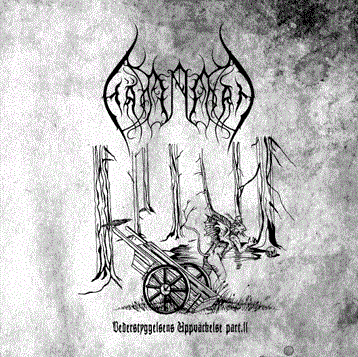
Hädanfärd – Vederstyggelsens uppväckelse part.II

•September 4, 2013 • 4 Comments

379969If you’re unfamiliar with the obscure and hermetically cloistered community of black metal artists associated with Ancient Records in Sweden, it’s an oversight you’ll want to correct soon. The two driving forces of the label, Swartadathuz and Sir. N, have unleashed an incredible volume of music in the past 3 or 4 years. “An incredible volume”, as in at least 16 bands between the two of them, some of which have multiple releases a year. In spite of this highly unusual level of productivity, I’ve yet to be disappointed by anything I’ve heard from the Ancient Records camp. Rather than bedroom warriors with no sense of quality control, Sir. N and Swartadathuz seem to be studious craftsmen dedicated to their less-than-holy work, and Vederstyggelsens uppväckelse part.II, a full-length EP and one of two Hädanfärd releases this year, is no exception to the rule.

Sir. N is the primary conjurer behind Hädanfärd, though he is joined here by a session drummer and a session violinist. Though Vederstyggelsens uppväckelse part.II is an EP, it’s actually about 10 minutes longer than Smutsiga Sinnen, the Hädanfärd album that was released at the same time. Stylistically, this EP draws from the sparse tradition of combining the harsh vocals, tremolo riffing, and eerie atmosphere of black metal with the depressive, bass-driven sound of post-punk. From here, an obvious comparison to LIK is necessary, but relative to their sound, Hädanfärd is differentiated by an overall approach that is faster, and less eerie and misanthropic than it is oddly triumphant; even cheery in a warped sort of way. Things usually move along at a fairly brisk pace, even blast-beat driven in songs like “Predikarens Svarta Urafbild”, with upbeat drumming, active and clear bass playing, and Sir. N’s strange and unique style of riffing that focuses on long, flowing tremolo melodies interspersed with almost folksy sounding staccato riffs and arpeggiated chords. The occasional violin passage appears on a few songs, and while it isn’t frequent enough to have a strong effect on the album, it does provide some welcome variation when it does.

Some (appropriately) hazy comparisons can also be drawn to Reverorum ib Malacht‘s full-length, Urkaos. Sir. N collaborated with Emil Lundin on the final Dödfödd demo, so it’s not a far-fetched connection to make. Like Urkaos, Vederstyggelsens uppväckelse part.II has an airy, slightly blurred guitar tone; sometimes taking on a cold, reverb-drenched psychedelic sound, and vocals that fluctuate between a throaty bark and frenzied shouts. This guitar tone and vocal style are uncommon in the genre, and it does a lot to define the overall sound of this EP. It’s not nearly as strange as recent works by Circle of Ouroborus, and it isn’t nearly as alienating as a result.

The peculiar style of riffing and song structure is the underlying thread between all of Sir. N’s music that I’ve heard. Although it is filtered through the particular aura of Vederstyggelsens uppväckelse part.II, I can still clearly hear traces of Grifteskymfning, Grav, and Sir. N’s other projects in this EP. It’s undeniably impressive how well-composed each individual riff he produces are, but, having become more acquainted with his work overall, it can start to feel formulaic at times. This is probably an inevitability for someone who writes as much music as he does. Despite this limitation, it seems that every time things start to feel predictable or overly familiar, Hädanfärd unexpectedly conjures a melody so brilliant I’m instantly drawn right back into the windswept woodlands of Vederstyggelsens uppväckelse part.II. Sir. N has a highly refined sound, and though I’m not convinced he’ll be able to hold my attention in the future without structurally expanding it, I’m still significantly engrossed for now. -Jake

Ancient Records

Temple Nightside – Condemnation

•September 4, 2013 • 14 Comments

TempNight (196x200)So just when is it the right time for, as described in this album’s accompanying marketing piece, “blackened DEATH-fucking-METAL”? In my case, as always, it’s after enduring the little things. After that ’70’s perm-wearing dickchin doesn’t bother to at least nod a silent ‘thanks’ when you hold the door open for him (Porno King! Allow me to part the entrance into yon Local Liquor Store for thee; I would be honored). After reading that letter from your mortgage company saying your payment’s going up (Aw shucks, [insert name here]! We’re bummed we got your property tax estimate wrong. Now go financially fuck yourself, it’s on us!). After opening the fridge and seeing there’s nothing left to eat (I was indeed craving this solitary piece of processed sliced cheese. Yes! That’s what I needed. Mmm-hmm).

Now, when the minor annoyances of the world conspire as one to sap your peaceful outlook, now the moment for Temple Nightside’s latest release, Condemnation, has arrived. Press play and you’ll descend into hell faster than a modern-day Syrian dictator. But know this, Temple Nightside do not bring forth burning flames – this Australian band, as mentioned beforehand, are “blackened”, so expect instead sub-zero temperatures transmogrifying your fleshly lobes into brittle ice-sculptures. TN’s riff muzzle-flares emit freezing, sharpened stakes rapidly spitting from a nitrogen machine-gun, piercing the hearts and minds of all that dare tempt the unrelenting unholiness this tyrannical twosome of Basilysk (drums) and IV (everything else) propagate. The lofi-produced sound (adeptly mastered by VK of Vassafor) remains enjoyable throughout, immersing you as it does in a cold created for curing one of whatever minor transgressions the worthless fools you must contend with on a normal day may toss your way. IV’s howls, moans, and whispers are the aftermath of a rage gone rogue, an anger carried past death into the darkness of the next world, only to increase in potency once there. And when the instant emerges for that anger to evolve into a worshipful malevolence, Temple Nightside push past the expected tremolos and locomotion and employ tasteful keyboards/dark ambient passages amongst their swollen torrent, ensuring that a constricting atmosphere takes precedence – start to finish on this album – over and above the typical tired musical violence that, yes, we all love, but are witnessing too much of these days. That richness to Temple Nightside’s hypothermic horror comprises the whole of standout track “Ascension of Decaying Forms”, securing it’s place in that frustrated part of yourself longing to be a hermit when the crush of humanity threatens to overwhelm you. But that’s only one reason of many – only one track of eight – to spend that cash you don’t have on yet another crushing Dark Descent release.

…All that, *and* ‘Condemnation’ sports killer artwork & layout by Haasiophis of Antediluvian? Fuck yes, this is what I needed. Mmm-hmm. -Jim

Dark Descent Records

nothing from this album on youtube yet, so enjoy this oldie but goodie:

Triumph, Genus – Všehorovnost je porážkou převyšujících

•September 4, 2013 • 9 Comments

triumph genusCold and churning in the fringed early 90’s vein of blackness that gripped the worldwide metal movement in a shroud of mystical enchantment, the Czech Republic has unleashed a fervent and unrelenting beast in the form of Triumph, Genus.
This punishing 2 man unit have perfectly embraced that ancient atmosphere of crisp riffing and blazing, yet clinically clean speed to infect the listener with ice drifts of occultic madness. The standard tuning and non-polluted production really gives Všehorovnost je porážkou převyšujících a bleak yet refreshing vibe by way of Transylvanian Hunger, but with actual production values and songs that possess more than 3 riffs. Add a croaking, bordering on spoken vocal style which brings to mind the evil invocations of Russia’s Old Wainds (the old stuff), and you have Triumph, Genus arriving at a style that certainly isn’t new, but rings out as a breath of fresh air to me as it feels so much more like a hypnotic journey into the twisted realms of another dimension than it does a new band trying to be excessively harsh, or fashionably modern. Triumph, Genus “get it” and they have emerged from a 3 way split CD with Vindorn and Sator Marte with 6 tracks that strike as an all consuming wave of abyssic dread as their first full-length statement of intent.
With such stirring and inventive variations of music, from interesting guitar lines that present a hook within layers of painful tremolo melodies, to perfectly placed breaks in the speed attack to embrace double bass grooves and mood sculpting shifts in intensity, Triumph, Genus have re-tagged the Czech Republic high on the list of countries that have contributed to damn impressive and malevolent in its own way black metal. Všehorovnost je porážkou převyšujících is really enjoyable and I look forward to falling ever deeper within its spell. -Marty
W.T.C. Productions

But stranger ways that froze on highs, our vision touched the skies

•August 28, 2013 • 24 Comments

As the trees begin to welcome a rusty hue it is easy to slip back in retrospect of 2013 and think about what we have tried to accomplish with Worm Gear and what we have already obtained. In this respect, this year has been a success, for we have added the talents of Jake Moran to our small roster of writers, people are starting to take notice of our efforts. Readers are beginning to take the time to participate/comment on posts and your numbers are increasing. This week has been our 2nd busiest week in terms of views and we’d like to take a minute to say thanks and hope you stick around. As the weather gets colder, we will become more active in contributing new writings…

Grinding through another week finds a fresh crop of reviews for you to digest. A Sacriphyx interview has been sent out to the band. A Feast Eternal interview is in the works and some others are lurking in the shadows.

So keep us abreast of your playlists, tell your friends and destroy your life for Satan… -Marty

Marty Rytkonen Playlist
Hateful Abandon – Famine (Or Into the Bellies of Worms) Really like this album for their Joy Division meets post black metal style feels so legitimate.
Alcest – Souvenirs d’un Autre Monde
Joy Division – Heart and Soul Box set disc 2 (Featuring Closer and singles)
Ancestor’s Blood – Return of the Ancient Ones
Bauhaus – Vol 1
Arghoslent – Hornets of the Pogrom
King Diamond – Conspiracy
Nirvana – In Utero
Deathrow – Deception Ignored
Denouncement Pyre – Almighty Arcanum

Here’s a little dreariness to tuck you in tonight…

Jim Clifton Playlist
Seidr – Ginnungagap
Obsequiae – Suspended in the Brume of Eos
Autumnal Winds – Embraced by the Ancient / Reflections of Astral Light (evolved into Obsequiae – worth checking out!)
Svarti Loghin – Luft
Fyrnask – Eldir Nott
Gevurah – Necheshirion
Drudkh – Autumn Aurora
Skogen – Vittra
Nhor – Within the Darkness Between the Starlight
Bathory – The Return …
Burzum – Belus
Agalloch – Marrow of the Spirit

Jake Moran Playlist
Branikald – Blikk Av Kald
Slow Walkers – Slow Walkers
Midnight Odyssey – The Forest Mourners
Tempestuous Fall – The Stars Would Not Awake You
Skepticism – Stormcrowfleet
Mount Eerie – Wind’s Poem
Walknut – Graveforests and Their Shadows
Beherit – Drawing Down the Moon
Obsequiae – Suspended in the Brume of Eos
Sivyj Yar – The Dawns Were Drifting As Before

Lost Life – The Cur(s) e of Karma

•August 28, 2013 • Leave a Comment

lost_life_cureIn the midst of this ‘in one ear and out the other’ age of Too Much Music, its the small things that can make all the difference for a black metal band. Germany’s Lost Life sharpens the finer, more minute points of BM’s tenets to, well, a ‘brighter’ sound that doesn’t annoy ears typically prefering a filthier production. On The Cur(s) e of Karma, Lost Life begin this process by fully utilizing the substantial prowess of drummer Grond, employing tempos ranging from slow to grindcore-fast that move the music along without ever leaving the compositions feeling contrived. In conjunction with the rhythyms set down by an actual flesh-and-blood BM drummer (!), the guitars of Nephesus run the gamut as well; slow and ethereal, even defiantly melodic at times, then old-school punk string-scraping the next. But what stands out the most to me are Grond and Nephesus’ employment of classic metal/Viking-era Bathory marches, complemented with riffs that are only slightly dissonant. This writing choice not only ensures the album’s movements remain ever ‘black’, but also that its obvious nods to the old gods will be recognized and appreciated. Of course, melody, punk, and Bathory are prerequisites for much of black metal, but Lost Life impart a German-engineered precision to their songcraft that lifts the bulk of The Cur(s) e of Karma above the promo pile.

The best moments of the album come midway. On ‘Ethereal Revelation’, an Telecaster-ish guitar tone rings out and welcomes you to a majestic stomp that defies the typical black metal posturing. The staccato feel of the performance grants the song a very brief, warped, classic-country character, threatening to transcend the band’s chosen genre tag. ‘Erratic Soul’ arrives with the aforementioned latter-era Quorthon in tow, but again, the bite of that Telecaster-like tone elevates the track beyond homage. We even get a good dose of Nephesus’ pitch-singing, which, while far from world-building, succeeds in assigning The Cur(s) e of Karma yet another shade of originality, recalling post-punk vocalists of the past just before returning to his adroitly executed shrill alongside a gigantic, octave-chord riff exploding at the track’s climax.

The throwback-titled Celtic Frost-fest ‘Unleash the Beast’ closes the album, with a truckload of smile-inducing familiarity, and now I realize that, oddly-enough, The Cur(s) e of Karma has left me in a fine mood. I’m sure that wasn’t Lost Life’s intent, but doing so, to this writer, remains an accomplishment over potentially boring the listener to death. Let’s just say my ungrim-grin says more about myself than it does The Cur(s) e of Karma, and that this band’s punk feel mixed with classic metal pacings and glossy, cleanly-picked riffage will likely win the non-kvlt BM-ers over. -Jim

Funeral Industries

Nhor – Within The Darkness Between The Starlight

•August 28, 2013 • 2 Comments

coverI’ve been following the limited and previously self-released works of Nhor since he (assuming it is a he) appeared on the magnificent compilation Whom the Moon a Nightsong Sings in 2010. A multi-talented artist, Nhor’s works bring together his own music, visual artwork, and writings. On his eponymous debut and the following EP, Upon Which Was Written Within The Stars, Nhor played wandering and luminous piano-centered hymns to the night. I love these early works and still listen to them regularly, but they are slightly marred by their static tone and nature. The ponderous and sad sense of wonder they evoke is so unutterably beautiful that it’s a critique I almost hate to make, but it seems to have been a limiting factor that Nhor himself was aware of, as the second album, Whisperers To This Archaic Growth, delved deeply into the rooted and earthen heritage of black and doom metal. This change enriched the project with a new sense of dynamics, allowing a more living, breathing, emotionally visceral soundscape for Nhor to explore. It had its flaws as well; to a certain extent it seemed like Nhor had yet to fully integrate the metal grit with his old piano glow, but it was still a strong album in its own right, and it boded well for future releases.

Two years have passed since then, and Nhor has returned again with a (very much deserved) signing to Prophecy Records and a third album titled Within The Darkness Between The Starlight. “A Forest Draped in Moonlight” opens with a familiar sound for anyone who’s followed Nhor’s work: a solitary piano, shimmering like the first stars dripping light into the evening sky, followed by a forlorn and slow tread. It’s accentuated by a distant and sorrowful hum filling out the soundscape. It’s immediately apparent even from this relatively simple track just how much Nhor has matured since the beginning; both in production and the subtle, but powerful, progression of the track. This alluring intro does little to prepare the listener for the first track proper. It has an explosive opening; a howling scream, sweeping blast beats, and a tremolo riff that twists and turns like roots weaving their way deep into the black soil. It‘s all something thousands of bands have attempted before, but Nhor is one of those special artists with an uncanny ability to take the mundane and transfigure it into something utterly bewitching. This mythical air is helped immensely by the production and guitar tone; dense and appropriately rough, but still sharp enough to cut. Add to that the passionately throaty howls, occasional swelling leads, and clean vocals that chant or soar in all the right places, and what is left is an absolutely immense sound. And that’s without mentioning the bass, which almost deserves a paragraph of its own. It has a wild, rattling nature that’s always there if you’re listening for it, but never so prominent that it becomes obstructive to the songs as a whole.

Two minutes into the second song and this is already one of favorite albums of the year, but it’s only just beginning. The storm of the opening reaches a moment of calm where the guitar croons a slow and mournful riff that seems ready to collapse under its own smoldering tone, while a haunting wail of a women glides like a dying heron over the dark pool of sound. The eerie atmosphere of it strongly reminds me of Jean Sibelius’ Luonnotar. The song doesn’t wallow here though, as a clear tension churns and simmers under the false peace. Nhor slowly, masterfully draws this tension forth with almost imperceptible shifts in the riffing. The drums start pounding, signalling the vocals and tremolo melodies to rise in intensity, until a stomach-dropping descent carries you back to the raging tempest of crashing bass and fiery riffs. It slowly concludes with a mournful Ebowed melody, then finally the main theme of the song on piano, isolated like the last light at the end of the world. This is the sort of song that one in a thousand musicians, if that, ever write.

The next two songs are up to a similar level of intensity, beauty, and emotional impact. “Patient Hunter, Patient Night” initially hearkens back to Upon Which Was Written Within The Stars with its meditative ivory meanderings. It still luxuriates in the glimmer and glow of starlight, but its ecstasy in the sublime is more rooted and relatable thanks to a matured sense of songwriting and an expertly painted soundscape. It provides a welcome and necessary break from the tempestuous ferocity of the last song before it thunders into its own squall of climactic walls of doomy sound and furious blast beat driven charges, both of which are given an enriching counterpoint in the soaring clean vocals. “The Fall of Orion” follows with softer, lustrous clean guitar riff that briskly evolves into a feral, black metal version of itself. This beginning is a slower, far less bombastic display of Nhor’s grittier side, with an uneasy sense of wonder driven by complex, ever unfolding and metamorphosing riff-work. A little over halfway through the song fades into a murky haze of piano and forlorn guitar, then emerges again into a more active, intense exploration of the previous riffs. The overall impression is less immediately satisfying and moving than the previous two songs, but patient and attentive listening reveals a lot of intricately crafted riffing and a careful growing of tension throughout.

“An Awakening Earth” serves as an interlude between the substantial tracks. A humming drone lays a dark pallor that unsettling and strange tones eerily fade in and out of. This is the point where Within The Darkness Between The Starlight starts to lose me to an extent. There’s been nearly 40 minutes of brilliant music, covering enough depth to leave a listener not only drained, but satisfied, and I’m not sure it was a wise or necessary choice to keep the album going at this point. The longer “Rohmet Etarnu” comes first. The polestar of this song is a simple piano melody, around which the trudging drums and the ebb and flow of riffs and vocals make fairly constant textural changes, but the only structural alterations in the song are subtle evolutions in the centerpiece piano melody. It is quite beautiful, but mostly inert, feeling more like an interlude or epilogue rather than a full song in itself. “The Temple of Growth & Glimmer Ascends” is the shorter follow up to this track, and while it has quite a different character; scintillating waves of moonlit synth and keys married to thickly branching riffs and vigorous drum work, it also suffers some from its static nature. That petrified character works a lot better on this second song due to the shorter length, and the way the clever arrangement of earthen metal with celestial other-worldliness creates a clear, painting-esque image.

Don’t mistake my meaning; both of these songs are expertly crafted and vital with spirit, but their placement in the album doesn’t seem to serve the musical structure as a whole. The album itself is tied to a short story Nhor wrote that I won’t have access to until the physical album itself is in my hands, so I’m willing to give some leeway here in my suspicion that reading the story will give some insight into the structure of the album. But, based on only the listening experience, the content of this album does feel top-heavy in favor of the first 4 songs in a way that feels unnatural. Some trimming, or possibly even another energetic and dynamic song on the second half, could have relieved this I think.

Regardless of that complaint, Within The Darkness Between The Starlight is a gem of an album; a fragment of stardust buried in cold, black mud. It’s strengths far outweigh its flaws, and in many ways it seems to me the album that fulfills the promise of what Nhor could be as a band from the very beginning while suggesting so much more. I’ve listened to it nearly everyday, sometimes more than once, for 3 weeks, and I still feel like I’m ruminating its heady concoction, still eager for more. If you’re at all interested in the woodland and celestial strains of blackened metal, than Within The Darkness Between The Starlight is an essential purchase. -Jake

Prophecy Productions

Paria – Surrealist Satanist

•August 28, 2013 • 1 Comment

Paria11 years, 4 demos, a split, a compilation and 3 full-lengths beneath their bullet belts and Germany’s Paria are still hammering out the pure orthodox black metal to stoke those voracious fires of hell™. What I thankfully stumbled ignorantly into was a huge sound presented by an inventive power trio.

Having never heard this band before, I was instantly drawn to Paria’s northern tone, as the riff style and overall inner force of this material bares many favorable similarities to David “Blackmoon” Parland’s playing and writing style, but notably more adventurous. This finds Surrealist Satanist to be very reminiscent musically of early Dark Funeral, but thankfully, they break up the pulsing speed offensive with effective slower breaks and a vocalist that possesses his own unique screaming style. His higher register rasp is sharp and penetrating, but what adds to the depth in his delivery is the periodic chants and agonizing moans he offers to colorize the more mournful segments of music. Every track is stitched together expertly with interest and a skillful fury that lifts inspiration from those who came before, but Paria twist the elements into their own unholy subject and are a band worth listening to. Repeatedly. The layering within the music is also noteworthy and elevates Surrealist Satanist to a loftier level, for those dissonant and interesting guitar lines enchant with cavernous depth, only to be further glorified by independent bass lines that you can actually hear! Again, the bass guitar can be such a mighty force in death and black metal and it is always such a pleasant surprise to have it audible in a mix, AND a vibrant part of the music. Paria have all their bases covered and are worthy of so much more praise than they may or may not have received in the past.

I always find it odd when a band this good and solid has evaded my radar for all of these years. Time to do some backtracking and unearth the layers in their back catalog. -Marty

W.T.C. Productions

No studio tracks up on youtube yet, but here’s Wormlike Proselytism live:

Spectral Lore/Mare Cognitum – Sol (split)

•August 28, 2013 • 9 Comments

Spec_Mare (200x200)Evoke the Cosmos: a lofty goal, figuratively and literally, yet on this split, two ambient/Black Metal artists have given their all in order to accomplish it. In doing so, neither Jacob Buczarksi of the USBM project Mare Cognitum nor Ayloss of Greek BM project Spectral Lore rely solely upon themselves to embrace the terrible beauty of the universe; each musician takes full advantage of the other’s differing skillsets in the effort to succeed, and in so doing, create a 69 minute opus that outweighs their individual contributions upon it. For Sol exemplifies the height of collaborative effort as much as it celebrates the destructive and creative forces that make up all matter and anti-matter.

Mare Cognitum starts off the journey with ‘Sol Ouroboros’, an appropriately off-world sound invocation, taking the heart and mind of the listener away from his or her surroundings in the manner of an astral projection. And what we are doing here light years from home, the well-written lyrics inform us, is bearing witness to the birth of a star, compared in twisting parallel to the pain of a childbirth. As the ambiance gives way to a speedy but melodic Black Metal affront, we sense the incomprehensible forces at work, tearing and reforming again and again to bring forth starlight. As the fusion nears, a chaos increases in potency, heralded by a full-on (yet not fully unexpected) turn toward technical Death Metal, hinted at prior in a few three or four second measures amidst the Black structures, rounded out by partner Ayloss’ lead guitars. Though you may at first find yourself sinking back to reality when this midsection arises, the rightness of it all takes hold, for we all know that without devastation, no creation can result. And so we move on.

Spectral Lore transports us still farther away from the maelstrom so we can view the galactic sight in all its terrifying glory. ‘Sol Medius’ offers up the knowledge that, at the moment of birth, self-consumption begins, and ‘impermanence and transformation’ will reign, bringing the newly-born entity to death. This message is delivered much more directly than the previous composition, via a Black Metal strewn with a lower-range vocal (colored by partner Buczarski’s howled voicings) and frozen riffage that has a dissonant, perpetual devolution. As the tension mounts and finally breaks, a not-out-of-place Emperor influence rockets the listener deeper into the dark matter, just before despairing angrily into a frightening Doom passage humanizing the cold, bleak reality of space with excellently-phrased leadwork. As the pace continues to build back to that of the song’s origin, a disharmony arises, then begins to fade. The effect lulls the listener into a simmering disquietude, its vehicle a slow descent into an atonal and acoustic (dare I say epic?) jazz exit.

And then: the coup de grace. The instrumental closing track, ‘Red Giant’ is composed and recorded together by Buczarksi and Ayloss, and the talents of both coalesce into a singular, awe-filling presence that does honor to the final moments of the star whose birth and life have been transcribed during the first two tracks. More drone than song, more monument than monolith, nevertheless ‘Red Giant’ conveys that infinite, anguished sorrow that all life – sentient or no – shares as one; the unavoidable, unmistakable sorrow of death.

It is unclear to me whether Sol is meant to allegorically deal with our own light- and lifegiver’s end or not, but listening to this artwork I’m compelled to contemplate that impending occurrence that awaits our world. When the Sun burns red, all planets of our solar system will be consumed, including our own. Anything and everything that remains of us will become the fodder for that dying star, and the absurdity of our race will transmute to something less than obscurity … all of our triumphs and failures, minutiae and great moments alike will disperse into atoms. Pondering on this, I realize I am neither happy nor sad. I am instead grateful that something as arguably insignificant as a Black Metal record has brought me here: to a place of thoughtful, cosmic appraisal. -Jim

I, Voidhanger Records

In the Pool of Dreams the Water Darkens …

•August 21, 2013 • 77 Comments

Lightning flashes about the Worm Gear bunker tonight, a menacing preface to the 35-mph-wind-thunderstorm bearing down upon our locale, so we insulate ourselves with Running Wild’s ‘Gates to Purgatory’ and review-readying. A smackerel of heaviness awaits you all as we dissect the recent releases from tech-deathsters Ulcerate, symphonic-deathsters Deals Death (heh), and the foresty black-jam of Velnias. Also, as we did previously with our own Marty Rytkonen awhile back, Worm Gear presents the entirety of the Metal Maniacs-themed interviews Decibel mag conducted with S. Craig Zahler and Jeff Wagner, available heretofore only in abbreviated form on the printed page. Open your skulls and ears and prepare for the deluge! As always, participate with your own comments, playlists, or quiet introspection \m/
side note: if you’re into dark/revisionist Western fiction and haven’t read Zahler’s A Congregation of Jackals, do yourself a favor and grab a copy. -Jim

Jim Clifton Playlist
Nhor – Within the Darkness Between the Starlight
Helloween – Keeper of the Seven Keys Pt I
Fyrnask – Eldir_Nótt
Rotting Christ – Apokathilosis
Katechon – Man, God, Giant
Nuclear Assault – Survive / Handle With Care
Cadaveric Fumes – Macabre Exaltation 12″MLP
Winter – Into Darkness/Eternal Frost
Burzum – Burzum / Aske
Gorgoroth – Incipit Satan / Under the Sign of Hell
Iron Maiden – Iron Maiden / Killers

Jake Moran Playlist
Nhor – Within The Darkness Between The Starlight
Sangre de Muerdago – Deixademe Morrer no Bosque
Rudi Arapahoe – Double Bind EP
La Reverdie – Nox Lux
Agalloch – Ashes Against The Grain
Kinit Her – Storm of Radiance
Kinit Her – The Poet & The Blue Flower
Circulation of Light – Acheiropoieta
Rain Drinkers – Yesodic Helices
Skogen – Vittra

Marty Rytkonen playlist
Megadeth – Peace Sells/Killing is my Buisness… (it takes putting classics on the shelf for a while, to return to them with a new respect. Dave is nuts, but his old music was amazing.)
Iron Maiden – Piece of Mind
Metal Church – S/T
Mercyful Fate – Don’t Break the Oath
Agent Steel – Skeptics Apocalypse
The Accused – Martha Splatterheads Maddest Stories Ever Told
Anacrusis – Screams and Whispers
Anacrusis – Manic Impressions
Fates Warning – Night on Brocken
Running Wild – Gates to Purgatory

And I’ll leave you all with an amazingly mighty song. These guys were so ahead of their time…

Metal Maniacs alumni return…

•August 21, 2013 • 1 Comment

UnknownThe crater left by Metal Maniacs resonates to this day and after Decibel ran it’s massive history piece in their August 2013 #106 issue (http://tinyurl.com/klpthbd) , the memories returned and fans across the Internet clamored for more information. Both Jeff Wagner and S.Craig Zahler are names that still cross the lips of long time MM readers due to their journalistic impact on the magazine and metal world and hey, they are both still very active writers with vision and creativity that people can and want to relate to. Jeff remains a devout metal writer, contributing to Decibel, several blogs, and has authored his first book, Mean Deviation: Four Decades of Progressive Heavy Metal, with another book, a biography on the life of Peter Steele currently being created. Zahler has become an accomplished screenwriter, has penned 2 novels (A Congregation of Jackals and Wraiths of the Broken Land), is about to direct the screenplay Bone Tomahawk that he wrote, staring Kurt Russell, along with his band Realmbuilder and the occasional contribution to Worm Gear. The following 2 questionnaires are unedited and were conducted by Decibel’s Chris Dick. Our thanks again go out to Chris and Decibel for allowing us to share Jeff and Craig’s thoughts on their past lives in the MM bunker. Further links will be shared at the end of this piece. -Marty

Metal Maniacs / Jeff Wagner: Oral History Writer Questionnaire By Chris Dick

Timeline: When did you start? When did you stop?

Started January 1997, stopped March 2001.

Chris Dick: How were you chosen to be editor?

wagnerJeff Wagner: I heard about the opening in late 1996. I’d been a reader of the mag since the early ‘90s, and I thought it was at a low point, with things like Marilyn Manson and Korn making the cover. But I thought I’d be perfect for the job, especially if I could help swing it back to where it should be, so I got in touch with Mike G and scheduled an interview. I was working for Relapse at the time, in Pennsylvania, and took a train to New York. I sat and talked with Mike for 15 minutes and got the job on the spot. He’d already checked my credentials with other people and felt I was the perfect fit.

CD: Did you ever have doubts about telling non-metal people who you worked for? Any stigma associated with the name or brand?

JW: Not at all. I’ve never worried about any stigma attached to the name or genre when talking to non-metal people. In fact, I’ve always been proud to be associated with it. When people learn you make your living dealing with heavy metal, they’re usually impressed that it’s even possible.

CD: What do you remember about music at the time?

JW: To the mainstream, or people outside the metal stream, it seemed dead. The focus was very much on heavy alternative bands or the emerging “nu metal” thing. Other than Pantera or Slayer, you had very few big leaders keeping it real. But then I also remember a lot of amazing Scandinavian bands evolving and doing exciting things – Opeth, Arcturus, Katatonia, Dissection, At the Gates, Enslaved – and that’s a lot of what I tried to push Metal Maniacs toward when I started.

CD: And where did the name Metal Maniacs come from?

JW: No idea. Never asked. It wasn’t a great name, but it did the job.

CD: What do you remember about Metal Maniacs? A game-changer or typical outlet?

JW: A game-changer in that it was the first U.S. magazine of its type, at least with any real longevity, to feature that kind of music. It was very much defined by who the editors were at the time, so you have a lot of different eras. I think it was, at various times, both a game-changer and typical, and various levels of importance or redundancy in between. Just depended on the era. Even the content issue-to-issue would differ greatly; a couple issues I was involved with were ones I felt we could have done much better on, and then others were among the best of the magazine’s entire run. It depended on how all the pieces fell into place.

CD: Did you view Metal Maniacs as a genuine magazine or a very expensive fanzine?

JW: It sat nestled between those two poles. It was a genuine magazine in that it had glossy color pages and was sold on newsstands all over the place, and was a big advertising vehicle too. But it resembled a fanzine in that it also had its share of black and white pages on pulp paper (because the publisher wanted to cut corners) and we constantly kept things down to earth by printing tons of readers’ address (“Shorts”), pages of demo reviews, featured bands other newsstand publications wouldn’t ever touch, and during my time there, NEVER let advertising dictate editorial coverage or content.

CD: Where did the cover taglines come from and how did they play into the business of Metal Maniacs? The Superstar Special, Movie Mirror, etc.

JW: Movie Mirror was a magazine dating all the way back to the 1930s. The publishing company at the time, Sterling/Macfadden, had a long history that went back half a century, so you had all these established/copyrighted names of old magazines that were used to spin off other new magazines, and Metal Maniacs, as I understand, began as a one-off thing and flew under the banner, legally, of one of these older names. I never concerned myself very much with all that.

CD: Where did the titles come from? Street Screech, Brash Bits, Interrogations, etc.

JW: “Street Screech” wasn’t used during my time there (thank fuck, because it sounds retarded). They were just column names dubbed by different editors and each new editorial team either kept the old title or changed it to a new name. The only column I originated was Think Tank, but I don’t know if they carried that on after I left. It was a think piece, a conceptual column about a very particular subject or phenomenon. I thought it was cool, and it was warmly welcomed, but a few readers actually told me it was “too cerebral.” So much for thinking outside the box.

CD: Metal Maniacs had political leanings throughout its existence. How did politics play into the editorial and general outlook of the magazine?

JW: The Katherine Ludwig/Alicia Morgan era(s) pushed politics more than any MM era prior or since. When I was there, Mike G and I would talk politics sometimes on our lunch breaks, but we both felt it wasn’t our place to push politics in the magazine, so it would only creep in now and then. I can’t speak for the other editors, but we felt it was best to separate our personal, non-musical views from the music we were committed to covering. Of course, if a particular band we were covering were heavy into politics, then you get into it. Other than that, no. Having said that, I thought what Ludwig/Morgan brought to the magazine, in terms of their politics, was very cool; it made things a bit confrontational, and expanded the range a little bit. I just was never interested in using the magazine as a forum for my beliefs. Mike G certainly had strong political convictions but he voiced those rarely in the magazine. Each editorial team had their way of doing things and that helped define the different eras and keep things fresh.

CD: How did the magazine change over the course of your editorship?

JW: When I came in, it was catering to the trends that were happening at the time, you know, nu metal and Marilyn Manson and various barely-metal and even non-metal bands (Seaweed on the cover!?). It was partly a matter of Mike G trying to survive 1995/1996, a tough time to be a real-deal extreme metal magazine. When I came in, I felt MM had sidestepped its mission of being a newsstand magazine that covered bands no other newsstand publication would, so the biggest change I put into effect was swinging it back to covering real metal and digging underground more than they had in the year prior. The argument at the time was “do we gain more readers by going for mainstream appeal or do we lose more diehards by doing so?” The latter were the loyalists who would make or break a magazine of this kind, so I fought hard for that, and Mike gave in a little bit. I also expanded the range of bands we covered. If, in 1997, big magazines weren’t covering Iron Maiden, we stepped up. And of course, there was always the more obscure stuff that I loved and felt deserved coverage, and I pushed that agenda too. I also brought in power metal stuff like Helloween, Hammerfall, Iced Earth, Jag Panzer and Nocturnal Rites because, as the mag’s mantra went, we covered the bands other magazines refused to cover. And no other newsstand publication covered those bands. I grew up on England’s Metal Forces magazine, and their coverage span was incredibly wide, from super-melodic AOR-type metal to the sickest underground noise. I tried to bring that mentality in during my time at Maniacs, and it was successful, for the most part.

CD: How did you staff the magazine? What did you do to court the best writers?

JW: Some were already there when I started, and then I brought in new blood that I felt the magazine would benefit from having. Mike G always made a division – “my writers” and “your writers.” Not in a competitive sense, but he had his people and I had mine. At the time I was keeping up with fanzines and I wanted to bring aboard writers like Chris Maycock, Marty Rytkonen, Matt Johnsen, Stephen O’Malley and S. Craig Zahler, because I loved their work in their own ‘zines. I would approach them, offer them stories or reviews, and that’s that. And all those guys became close friends, so it had the feel of creating our own little army, and after a couple years we had an extremely strong stable of contributors. I reeled Sue Nolz (now Sue Verica) back in too, as I remember…I think she had “retired” from the magazine at some point before I got there, but I felt she had to be part of this new G/Wagner regime so I got her back on board too.

CD: Did you have your editorial “voice” before Metal Maniacs or was it curated during your tenure?

JW: I think I started to find it just before Maniacs, when I wrote practically all the features for the premier issue of Relapse’s Resound magazine. That was a great trial by fire, and great timing too. Before that I had been doing other freelance writing and also my own fanzine, but I was an over-excited mess at that time, trying to figure out my own voice and how best to get that across. So, I definitely found my “editorial voice” during Maniacs, yeah.

CD: What were some the best features or interviews, if you recall? And why?

JW: If you’re talking about my own? Probably the Think Tank column on bassists, the article on Opeth in my final issue, my reviews of the Celtic Frost reissues, and a review of some terrible album by Virus 7. That was a Hank Shermann project, and it sucked so bad; I gave it a terrible review and so many people mentioned how much they loved that review. As for others’ pieces, it’s tough, we had a lot of great writers who contributed a lot of amazing stuff. Chris Maycock’s Think Tank on bigotry/racism in metal was really good, and just about anything S. Craig Zahler wrote. He would get the widest array of reaction from readers, which is a very healthy thing. I loved his stuff. Ula Gehret’s demo column was the best – he’d make you laugh a lot, as both reader and writer suffered through yet another batch of mostly-shitty demos together. Good times.

CD: Any nightmare scenarios you had to deal with?

JW: We’d get what were called “blue lines,” the final proofs before the printing stage that could NOT be changed except in the case of an extreme fuck up. Despite being an extremely well-proofed magazine – Mike and I were anal about that stuff — I remember seeing little typos or factual errors at that stage and flipping out and letting it bother me all day. I hated typos of any sort, no matter how small. Like, “Ace to Spades,” which the eyes just fly over because you assume it’s “Ace of Spades,” right? And, not sure if it’s a “nightmare scenario,” but one of my favorite bands is Judas Priest, and one of my biggest heroes is Glenn Tipton. Well, the first or second issue of Maniacs that I was involved with, I gave a scathing review to Glenn’s first solo album. Shortly after the magazine hit the stands I got an out-of-the-blue call from Glenn. He was upset about the review, but never raised his voice or insulted me (and I’m pretty sure I was insulting and unfair to him in that review), and then we became friends of a sort. He’d call me up every now and then, and we finally met when they played in Manhattan a year or two later, and it was all cool. But man, I was pretty freaked out that he was going to be super-irate with me when I picked up the call. But I still stand by my feelings – it’s a shitty album.

CD: What was production like?

JW: Fun to do, but probably boring to read about. Basically: it was very old-school, and this from someone who’s not necessarily a technology geek (like Mudrian, I don’t own a smartphone). I mean, we’d have everything penciled in on the master sheet, an 11” x 17” sheet of paper that acted as a map for the layout of each issue. We’d have to erase and re-position stuff as ads came in, or stories went longer than anticipated, or whatever. Then eventually the edited content would get into the hands of the layout people. After about two years there I tried my damndest to tweak the tiniest thing to the layouts to make them look better. That was an uphill battle sometimes. The publishing company was so old-school that it would have been hilarious if it weren’t so fucking frustrating. But I tried. Content was most important to me anyway, and I had to let go of hoping that the magazine would ever look amazing.

CD: Did production change as the times and technology changed?

JW: Yes. When I started in January 1997, we were running up two flights of stairs to some other office where they took our 5” diskettes, printed the info on them into “galleys,” which we’d proof in red pen, then run that back up, where they’d manually type in our changes, back downstairs, then back up again to get the corrections, read those, etc. etc. Seems ridiculous now. But I probably needed all that exercise to work off the cream cheese bagels I was eating daily – I was new to New York, and this deli next door was killer. We eventually got email, but first only inter-office email. The nepotist cheapskate running the show was paranoid that we’d abuse the Internet, so instead of allowing us access at our individual computers he set up an Internet “station” which was shared by tons of editors from lots of different magazines. At one point you had to stand up to use it, it wasn’t even at a proper desk. RIDICULOUS. (He, of course, had a theater-size monitor in his humongous corner office, and super-fast Internet access). I was grateful for the job, which in so many ways is the best job I’ve ever had…but I went through my share of frustration about all this, especially with the head of the company. I did not hide my dissatisfaction about what seemed a totally necessary new tool (Internet) that we were being severely limited in access to. I even had a black and white monitor until 2000. When that monitor finally croaked, I knew the big cheese was too cheap to hire real tech support and that he’d be the one to deliver my new color monitor, so I wrote “THE DEMORALIZER” in big black marker on the old one. It amused my co-workers, I’m sure (another aside is that I found it surreal to be working in a cubicle area that had the editors of Tiger Beat and soap opera magazines all around me – great people though, we all had a blast and laughed at our minor plights together). All this dissatisfaction led to my leaving the magazine, in part. I just couldn’t tolerate their lack of ambition and extreme penny-pinching. I’m not talking about Mike G at all, but these higher-ups; they were a blessing on one hand, never interfering with content, but after 5 years it got to be extremely maddening. Having been there that long, I cannot even fathom how Mike Williams and the rest of the office co-existed there for even a month. Respect to both parties on that one…wow.

CD: Explain how writers submitted content: email, fax, used USPS/UPS to mail work, hand-written?

JW: In the last couple years it was pretty much all email, but before that they’d mail, messenger or deliver their stuff hand-written or on a disk of some sort.

CD: How much content freedom did you have?

JW: Total. Profanity? Fine. A whole page on some super-obscure Finnish avant-garde band that only 7 people in the world care about? No problem. Okay, maybe not total — we had to be careful to not show nudity, but that’s a pretty basic thing most newsstand publications have to avoid. But seriously, the sickest, most blasphemous ideas could be printed in the magazine, and Mike G would just laugh and go, “Great!” It helped that no one higher up than Mike G were looking at the words. We had total carte blanche. One thing I’d like to clear up is the accusation I would hear (and amazingly still hear every now and then) about how Metal Maniacs was driven by advertisers, in terms of coverage, positive reviews, etc. That’s total bullshit. That might have been the case before or after, I have no idea, and that’s definitely the case with a lot of other magazines, but never in my time there. No one EVER came to us and said “Hey, such and such label is advertising, can you put in a good review” or even “Can you put in a review?” We weren’t beholden to that. When we would feature a band that was also being advertised in the same issue, we put the advert far away from the feature in the magazine, because we didn’t want it to seem like payola. In the case that a label would owe us money for old unpaid ads, then yeah, we wouldn’t cover their stuff until they paid up, but that’s a different situation. Even then I remember slipping in a review or feature every now and then, because it was more important to me to push the music and not worry about what label it was on and all the stupid politics that can get involved.

CD: How many times did you have to “take one for the team,” so to speak? The coverage of artists with no real place in the magazine.

JW: I never did it. I got accused of doing it for a review I did on Burn It Down, but I legitimately was interested in that band. There weren’t many metalcore bands I was interested in, then or now — I can count them on one hand and have a couple fingers left over — but I liked what they were aiming for. But no, I would never do something that I didn’t believe in, or give a good review to a record I actually disliked, or vice versa. Never. I know that Mike G would sometimes do favors for friends, but you’d have to ask him about that. Some of the stuff he put in there I would grumble to him about, but I never fought against something unless I wasn’t going to be able to live with myself. A couple times I fought against putting yet another nu metal band in and won. But I have tremendous respect for Mike G, I owe him a lot of gratitude. He taught me a lot, and he was always the first to admit he wasn’t a metal “lifer,” and referred to me as his “expert.” Because of that, rather than despite it, we made a great team. Tremendous respect for that guy.

CD: Do you remember how covers were decided?

JW: No big strategy there, other than going with the bigger, more sell-able bands. Obviously you’re gonna sink if you put Xysma on the cover.

CD: Any fun stories about photo shoots for the covers?

JW: Not really. Unlike Decibel, we didn’t budget for exclusive cover shoots. Which is unfortunate, but that’s the reality of what we were dealing with. We’d sometimes take from publicity photos, trying to secure that particular shot as exclusive to Maniacs, or from slides submitted by the various freelance photographers we bought photos from.

CD: The reviews had a “No Ratings” system. Why was that?

JW: They never had it, since day one, and I’m glad about that. I’m not a fan of number ratings, although will do it if a magazine I’m writing for does it that way. But it’s too easy to look at a “2” or a “10” and judge an album before having read a single substantive word about it. I think it makes people lazy. You tell me the new Tribulation is a 9. Great! But what should I expect when sitting down and listening to it? I expect a great album, but what else am I in for? You hope people actually read the words below the number review, but a lot of people skim through the review section just looking at numbers. A “No Ratings” system forces people to read further.

CD: What was your favorite feature of all time? And why, of course?

JW: There were many, but since a particular one doesn’t come to mind right away, I’ll go for Ula’s caption on a picture of some demo band where one of the guys was crossed-eyed. If you took the first letter of each word in the caption, it spelled “Optigrab,” and if you know the movie The Jerk, you’ll understand why that’s fucking hilarious. Absolutely nobody got it. And speaking of something nobody “got”: My favorite review of all time was Chris Maycock’s review of Ulver’s Nattens Madrigal. If you read it carefully, you’ll see everything he writes is true, it was just how he said it and what angle he was coming in at that a lot of people couldn’t wrap their heads around. The review was very much in the spirit of the album itself. But there were a ton of really good features — picking one favorite is something I can’t do.

CD: What’d you think of the layout? Obviously you didn’t have a hand in it, but I’m sure there are opinions either way.

JW: Shitty, usually. Sometimes they’d come up with something cool, but the people doing the layout not only did Maniacs, but country music magazines, wrestling magazines, soap opera magazines, teen magazines…there was a cookie-cutter mentality in place. I tried to offer suggestions and changes when I could, and some of the people were really cool to work with, but ultimately the greatest improvement/change I made was editorially, which is more important, but I always wanted the magazine to look like…well, like Decibel does now. Never happened.

CD: What were some of the obstacles you had to face during production? Apart from content.

JW: Last minute ads would upset the entire layout, and we’d constantly have to move a feature from here to there, or chop it up throughout the magazine, to accommodate last-minute ad placements. And we did it – you never turn down ad revenue.

CD: The magazine went through a few different ownerships. Sterling, Sterling-McFadden, and then Zenbu. How did the transition between ownerships affect you and/or the magazine, if at all? If you were editor during one ownership, please state.

JW: I was there during the Sterling/Macfadden era. I stated my opinion about them elsewhere, although, again, it’s very cool that a publishing company of their size even did a magazine like Metal Maniacs and let us write as much as we wanted to about bands like Deceased, Rotting Christ, Cradle Of Filth, Impaled Nazarene, Mortician and so many others.

CD: Any other fun or interesting stories about your time at Metal Maniacs?

JW: Getting a visit at the office from the Great Kat was super-interesting, she would literally be yelling at us to review her stuff. I hated her music so I left that up to Mike. I remember talking with Ryan Adams about Dark Angel and Voivod one day. He was visiting to be interviewed by the country music magazine Sterling/Macfadden published, and he was psyched to talk about that stuff — he knew his shit about underground ‘80s metal, so that was memorable. I hardly knew who he was at the time, but he became huge shortly after that. And all the travel I got to do: going to Florida for a Death feature, to Connecticut for Fates Warning, to Brazil with Bruce Dickinson’s entourage, to Finland for Amorphis, to L.A. for Armored Saint, to Germany and Holland for festivals, again to L.A. to hang out with Lemmy at his apartment. And all the heroes I met and sat with face to face, like Rob Halford, Geezer Butler, Tony Iommi…I even became friends with King Diamond after going to Texas and interviewing him in the studio as they recorded the 9 album. He would call me out of the blue, once during some festival gigs they were doing with Metallica and Monster Magnet. King Diamond, man! All this was a dream come true, something the teenage Jeff would have never believed. Best job I ever had.

Metal Maniacs / S. Craig Zahler: Oral History Writer Questionnaire
By Chris Dick
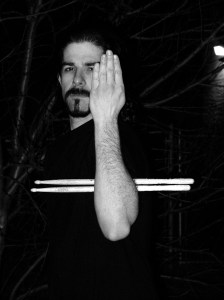
charnel czarChris Dick: Timeline: When did you start? When did you stop?

S.Craig Zahler: I started in 1999, during Jeff Wagner’s reign and wrote for the publication until the very last issue in 2009. I’d even written a review of Satyricon’s Age of Nero that never got published and would have gone into the next issue.

CD: What do you remember about music at the time?

SCZ: In the late 90s, black metal still felt scary, but was getting more intricate and progressive. There was one of many thrash revivals occurring and death metal was getting really, really fast with bands like Krisiun and Nile. There was also a true metal resurgence, which was a good idea, but unfortunately centered around a shit band like Hammerfall. Eventually, this led to a wider appreciation of neglected masters like Manilla Road.

CD: What do you remember about Metal Maniacs? A game-changer or typical outlet?

SCZ: It was a real and true metal magazine, and a smart one. There was an eclectic group of bright and informed writers working for the magazine when I came on board that seemed different from any other magazine— Jeff Wagner, Spider, Stephen O’Malley, Marty Rytkonen, and the always engaging, Chris Maycock.

CD: Were you a reader of Metal Maniacs before you were a writer?

SCZ: I certainly was. Actually, the first thing I ever had printed in the magazine was a letter I wrote to Maycock chastising him for not including Ian Paice of Deep Purple and Ken Owen of Carcass in his discussion of the most important drummers in the history of metal. Fifteen years later, I’m still right about that one.

CD: Or were you in a band? Any conflicts of interest? Or did you start a band as a result of writing about music for Metal Maniacs?

SCZ: Writing criticism is a terrific way to understand a craft. I have written movie criticism and music criticism and book criticism, and I have written movies, music and books. Understanding how and why any kind of art works is how I learned to develop my own distinct voice as a fiction author (my second novel Wraiths of the Broken Land came out last week) and a songwriter (the third album for my doomy epic metal band Realmbuilder will be out later this year on I Hate Records of Sweden).

CD: Did you have your writing “voice” before Metal Maniacs or was it curated during your tenure?

SCZ: I wrote my own fanzine called The Ultimate Steel Dissector, which was filled with the longest and most detailed album reviews I’ve ever come across. Really, they were far, far, far, far, far too long, and are chores to read, but my attention to detail and strong opinions were already in place. At Maniacs, there was a word limit, and this made me more conscious of the importance of each sentence.

CD: What do you remember about your first assignment?

SCZ: It was a review of a band called Ashes, which was quite mediocre, but I was excited to have my name in print in the best metal magazine in the country.

CD: Did you ever travel for features? If so, please provide a synopsis of where you went, when you went, what record you were covering, and any fun stories about your trip?

SCZ: I travelled to Gothenburg to interview In Flames for Clayman (2000), which wound up being the last album of theirs that I liked even some of. I travelled to Los Angeles to interview God Dethroned for the album Ravenous (2000), and I was flown to Norway to interview Emperor when they announced their breakup and the release of the Prometheus (2001) album. Judas Priest, Nile, Iron Maiden all came to New York, which is where I live, so I didn’t have to travel too much.

CD: How did you submit writing to editorial: email, fax, used USPS/UPS to mail work, hand-written?

SCZ: I was not really online until about 2005. For the major part of my writing tenure, I would make a floppy disk copy of my material and travel over to the office and drop it off with either Jeff Wagner or Liz Ciavarella.

CD: How much content freedom did you have?

SCZ: Complete freedom. I wrote a few free form articles, but in general, I wrote reviews of bands that I had some interest in. There was always a scramble to “claim” the review spot for albums that a lot of the reviewers were interested in. Unfortunately, because of my hypercritical reviews, a lot of labels stopped sending me material and it became a bit harder for me to stake my claims early enough.

CD: What was your favorite feature?

SCZ: My interview / review / defense of Mayhem’s Grand Declaration of War, which I adored—and still do—though at the time, most people hated it. The truth is, I wasn’t an especially good interviewer, since 98% of what I’m interested in is the music, and thus, some of my interviews, such as with Judas Priest or Iron Maiden, where too focused on the music and not enough on the band and their lives to be well-rounded interviews. A point of pride as a reviewer was when I reviewed the Holocaust album The Courage to Be and the main guy from Holocaust (John Mortimer) commented in some interview he later did that my critique was helpful and gave him something to think about as a songwriter, informing his process in some way, which felt very rewarding, and Karl Sanders of Nile made some similar comments to me at one point. My review of Metallica’s Death Magnetic was the last thing I had printed in there, and I remember a letter commenting that it was maybe the single best review ever printed in the magazine…so it was a suitable conclusion for me there.

CD: Did you take one for the team? Covering music or artists you had no interest in? What was that like? When was it, if you remember?

SCZ: Nobody assigned me stuff I didn’t like, and at a certain point, I just stopped doing interviews, since I’m too focused on music—and perhaps too opinionated—to do them especially well. When Bruce Dickinson was trying to promote that stupid Ed Hunter videogame, I just kept cutting him off (which isn’t easy to do to Mr. Air Raid Siren), nor a great approach for an interviewer to take. Nor was telling him he was wrong when he called Soundgarden a heavy metal band, even though he was wrong, and they aren’t.

CD: Did you ever get re-writes or story suggestions from Editorial? How’d that go?

SCZ: Again, I just wrote about what interested me. Both Wagner and Liz took this approach with me.

CD: How did you approach reviews?

SCZ: I try to explain what the music sounds like and also evaluate how well is functions.

CD: What did you think of the “No Ratings” system for reviews?

SCZ: I like ratings in general, but a magazine in which different people have different standards is a strange place to put ratings. I have heard 5000+ albums in my lifetime, but how many would receive a 10 from me? Maybe 9 or 10 albums. Even Rust In Peace, which is my favorite metal album ever, has “Poison Was the Cure” and “Dawn Patrol,” which are okay but not excellent, and Mob Rules, which is my second favorite metal album ever, has “Slipping Away,” which is completely mediocre. So to call these albums perfect 10s is hard, though I’d default to giving them each a 10. Lots of other people have lots of 10s every year, so my rating wouldn’t work alongside theirs. My favorite albums of all time would rank in a zone of an 8.5-10, with a lot of 9s. In a good year, I get a few 8s, though not even every year. So my ratings are stingy compared to most and an 8 from me is harder to get than a 10 from most critics.
So I believe that the “no ratings” system focuses people on the content of the review and away from a number that has wildly different values for different people.
Some other favorite albums: Pink Floyd’s Animals, Mayhem’s Wolf’s Lair Abyss, King Crimson’s Red & In the Court of the Crimson King, Blue Oyster Cult’s Spectres, Manilla Road’s Open the Gates, Immortal’s Sons of Northern Darkness, Triarii’s Muse in Arms, Lost Horizon’s A Flame to the Ground Beneath, Emperor’s Anthems to the Welkin at Dusk, Marvin Gaye’s What’s Going On, Bobby Womack’s The Poet, Yes’s Drama, Battleroar’s To Death and Beyond, Minorauri’s II, Reverend Bizarre’s So Long…Suckers, Black Sabbath’s Heaven and Hell, Thin Lizzy’s Thunder and Lightning. Yeah…I like to recommend things…

CD: What was your favorite feature in Metal Maniacs? Shorts, Brash Report, Playlists, etc.

SCZ: Playlists were helpful in the pre-Internet era to just stay on top of new releases as well as randomly revived oddities or classics.

CD: What’d you think of the layout? Obviously you didn’t have a hand in it, but I’m sure there are opinions either way.

SCZ: Sorry to whomever did the layout, but I never thought it looked good at all, especially when compared to things like Terrorizer or Brave Words and Bloody Knuckles. The mix of color and black and white newsprint always seems off—so I don’t know that this could ever look great, unless there was a color section in the middle or something. It looked like a haphazard teen or wrestling magazine.

CD: Did Metal Maniacs change over the course of your writing tenure? If so, how? Editorial Team, layout, features, opportunities, etc.

SCZ: I wrote for Wagner—he and I are good friends—and continued into Liz Ciavarella’s run until the end. Both the magazine and the material it covered changed. Certainly during the Jeff Wagner tenure there was a marked return to the truer side of metal, also with a greater exploration of the darkest corners of the genre, explored there by Spider and Marty Rytkonen and eventually by myself. By the end of the run, it seemed more hardcore / deathcore junk was coming in that I had no interest in, though overall it was still mostly in the right ballpark.

CD: Metal Maniacs had political leanings throughout its existence. Did you pay attention to the politics espoused by the magazine?

SCZ: During my run, there were no uniform politic-leanings “espoused,” because the writers were so diverse. I’m a (non-practicing) Jewish dude, but reviewed bands with white power or fascistic leanings, because I have an “art over politics” viewpoint, and even though Mike G was sensitive about this stuff, he and Wagner still ran reviews—often positive—of this material. People have a right to hate whomsoever they want to hate and also to express that feeling. Charles Dickens has a ton of anti-Semitic shit in his work, and he is a writer I like who was an inspiration to me as a young fiction writer. I’ve just never felt the best way to respond to intolerance is by returning the sentiment—partially because that is the desired response to intolerance.

CD: Did you ever have doubts about telling people who you wrote for? Was there a stigma? Or did you display your Metal Maniacs credentials proudly?
SCZ: There is no stigma that I could imagine about writing for this magazine—I am proud of my long tenure at Metal Maniacs.

CD: Any other fun or interesting stories about your time at Metal Maniacs?
SCZ: Two things—
I have one regret about my time at the magazine, which was when I slammed the album Risk by Megadeth. This is completely terrible album, more pop than rock (much less metal), that deserved the slam, but I made nasty joke connecting the album’s release and the demise of former drummer Gar Samuelson, which happened around the same time. I really regret this barb, which came from a place of hating the direction of the band who had made my favorite metal album ever (Rust in Peace), but regardless, it was a mean and thoughtless comment—a man died and should not be fuel for a critical bonfire and I crossed the line here. I was told that Dave Mustaine tore out the review and wiped his ass with it on stage (maybe in Ohio?), and although I stand by the artistic criticism in there, the comment about the recently deceased drummer (who I used to practice along with as an aspiring drummer myself) was utterly inappropriate and something I feel bad about. Of the hundreds and hundreds of cutting remarks I made in that magazine (I often received more hate mail than all of the writers combined) this one remark about Gar Samuelson was wrong and something I would not do now, as a far more thoughtful adult. If Dave Mustaine comes across this piece—I apologize. And thanks for musically embracing metal once again.
Early in my tenure on the staff, I threw a party for the Metal Maniacs at my apartment, which was at the edge of the Harlem. This was one of the only concerted efforts I know of in which the staff got together—Wagner, O’Malley, Spider, Vincent Cecolini, Sue Nolz and others turned up— and Marty Rytkonen even flew in from Michigan (he and I became fast friends and are pals to this day). I was a catering chef at the time and made a peanut butter pies that had the Emperor “E” and the Kataklysm “K,” and a ton of other shit. There was a lot of air guitar and truffle oil at that event.

Wagner Links: https://www.facebook.com/pages/Mean-Deviation/252912954786340

https://www.facebook.com/petersteelebio

Zahler links: http://scraigzahler.com/home.html

http://www.decibelmagazine.com/featured/s-craig-zahler-wraiths-of-the-broken-land-realmbuilder-interviewed/

And for Marty’s interview regarding Maniacs posted on this site, go here in case you missed it the first time: https://wormgearzine.com/2013/07/17/return-to-the-firing-squad/

Deals Death – Point Zero Solution

•August 21, 2013 • Leave a Comment

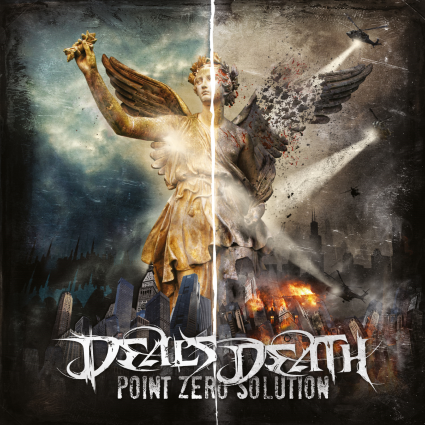
deals deathArising from obscurity (sans demo) to an album deal is always suspect to my jaded old ass. Either you know someone on the inside, or you fit a commercial niche that bigger labels look for when trying to capitalize on someone elses big thing. Just 4 short years and 3 full-lengths later, Sweden’s Deals Death are polishing all the rough edges out of the melodic death metal (?) sound for that chic slickness that’ll find your well groomed mugs all over the glossy metal rags overseas. In all fairness, Point Zero Solution isn’t a horrible release, as it sits quite comfortably alongside more commercially viable bands like Scar Symmetry, Hypocrisy and Dark Tranquillity (all of which DD has shared the stage with), but bands like Hypocrisy (I would say DD’s biggest musical influence) just have more of a history behind them and level of abrasion to their sound that holds true for me in-spite of their commercial status.
Deals Death plays symphonic melodic death metal. Even though this has been done to death over the years, you have to have quality songs to hold the attention of someone who would rather be listening to Bolzer right now. Sure I will likely never listen to this album again after this review is completed, but DD are proficient at their instruments and can craft a noteworthy hook to keep the ear interested and craving the polished pop sensibilities of something like this. Let’s face it… bands like Deals Death are essentially pop music for fans of metal and appeal to a wider fanbase. Their music is readily accessible in execution, aesthetics both visually and “creatively”, all the way down to sometimes cringe worthy musical and vocal ideas and let’s not forget the professional photo shoots and ease of ownership since this “product” is in all the shops. A half million youtube video views don’t lie… a lot of you have fallen into the corporate cogs of the metal machine… you should be ashamed and really need to dig deeper for something with more honesty and conviction. With a competent high register screamer, a digitally processed to the hilt production and grandiose synth/orchestral textures, Point Zero Solution is popular metal by numbers. Again, props for the talent obviously on display here, but Deals Death are a forgettable exercise in “been there, done that and want to forget that”.
This is what the new converts/metal minded youth are flocking to these days… musical wallpaper. Every generation falls into the same gouged out and obvious ruts left behind by a giant and still profitable scene (apparently). The faces and sounds are the same, just young again and in a fancy new leather coat. -Marty
Spinefarm Records/Universal Music

Ulcerate – Vermis

•August 21, 2013 • Leave a Comment

UlcA colleague (and I am paraphrasing here) commented to me that Gorguts’ latest will likely remain ‘the’ atmospheric/technical death metal album of 2013, and that there are similarities between it and the subject of this review. While those statements may have some truth to them, the admittedly excellent Colored Sands will hardly be the only worthy entry into that (relatively) sparsely populated subgenre this year. Allow me to explain …

Two years ago, I picked up Ulcerate’s previous release The Destroyers of All, and the tormented New Zealanders have remained on my radar since, and with good reason. Where other technical DM bands opt for a ‘wet’ production, replete with low frequencies that give good separation along with a meaty sound, Ulcerate take an entirely different route; their dry, mid-rangey sense-assault comes at you as one headlong force of despair. When I hear Gorguts, I am taken to a humid, rotten flesh cavalcade of uncomfortably warm, squalid fear. Ulcerate’s sound, on the other hand, feels like an enveloping, cold desert wind on a moonless night, where one is attempting to purge the forlorn knowledge of an absolute loneliness from the mind. Do both offer a detuned mire of chaos? Yes. But the seeds of each band are of completely disparate origins. Gorguts have a long path harkening back to the earliest death metal, and that DNA comes to bear in the form of godlike chugs, guitar solos frothing with madness and skill, and an odd-time signature wickedness that recalls a Satanic jazz of sorts. All of which are still most certainly rooted in Metal, and effectively achieve the quality of nightmare. Alternatively, Ulcerate are obsessed with the sorrow-sonics of late ’90s Neurosis and Isis, with all riffs capturing the aforementioned bands’ most tense moments, but with absolutely none of either bands’ times of release. On Vermis, unlike other atmospheric/technical DM records, there are no solos, no acoustic moments, and no airy additives to the production. Indeed, there is nothing to grab onto at all but a weary hopelessness, and in that way, Ulcerate’s latest can only be described as a beast of its own making, while an obvious continuation of the path set forth on their last album of desolate death metal. Powered by an innovative drummer expertly giving motion to the most dissonant moments of a post-metal mixtape, Ulcerate have their own voice, and you should listen. -Jim

Relapse Records

Velnias – RuneEater

•August 21, 2013 • Leave a Comment

velniasHaving seen Colorado’s Velnias in the past and enjoyed moments their debut full-length Sovereign Nocturnal due to the inspired building blocks that comprised that effort, this is a band who’s vision and obvious desire to grow hungrily emitted from their music. So admittedly, I went into RuneEater with lofty expectations, just knowing they would be a step closer to achieving that full realization of sound and musical growth that just wasn’t quite there yet on the debut. Surprisingly, RuneEater left me with more questions and confusion than I was anticipating.
RuneEater deals conceptually with mankind’s failure in light of the greatness surrounding him, so you’d think the presence of a huge atmosphere would permeate the air, but instead a very “live”, nearly demo quality guitar tone dominates the mix for more of a dingy basement/hidden away from the world vibe. This wouldn’t have been a problem, but the tone isn’t that welcoming and is loud enough in the mix to highlight riffs and moments that fall in and out of time. There are obvious mistakes, which many artists choose to leave in because they like an overall “take”, but they are frequent and it makes the recording session on display here sound rushed. The performance occasionally sounds like not everyone is on the same page, or the band are creating this music spontaneously in a free form black metal mixed with doom jam session. If that indeed was the case, then it makes this album a bit more impressive for the way in which it was created and captured, but it doesn’t change the fact that some of the tracks wander off on slower journeys that really aren’t that interesting, or just confusing due to the Velnias’ lack of writing with impact or dynamics. Jangly chords establish a groove as on “Reverend Flames of Antiquity” and “Iconoclast” only for awkward key changes to arise and throw the rhythm section offline. Actually, both of these songs in particular are a mess. Out of tune and time and completely strange. It becomes difficult to listen to initially as you try to find a strand of emotion to ride out on, but all the distractions make this process more frustrating than rewarding. After 3 focused listens to this album in it’s entirety, I became accustomed to the lo-fi drums/sound and began picking out musical phrases that where indeed the passion and fire I was looking for picked up and it was just the bands bizarre use of transitions that seem to jumble the flow of each track. Having said that, I am a bit more confident that RuneEater could appeal to the fanbase they have undoubtedly established, but it doesn’t hide the fact that Velnias still have a lot work to do in honing their songwriting skills and overall vision into something more cohesive than a huge collection of musical ideas and movements within a song that sometimes just don’t work together. The vocals remain a burnt out and consistent level of black metal screaming, though used sparingly, which do offer a pleasingly desperate/furious tension to enter this album to offset a guitar tone that is distorted, but in a way that makes the notes sound like they were played through a small/partially blown amp for that dirty surf guitar tone.
RuneEater is a tough album to come to grips with, and not so in a way I think the band was hoping for. It just feels like a departure from what looked like a promising beginning for a band that stylistically was giving a nod of appreciation to Agalloch creatively and the folks that want to sway within that woodsy aura. I will say, I’m far from won over with this album, but am damn curious to see how Velnias recovers and carries on from this point forward. -Marty
Pesanta Urfolk

1 week hiatus…

•August 14, 2013 • 2 Comments

Yes indeed… between guests, school and family insanity, we are resting on WG for a week, but will return rested and ready for action next week with 2 unedited Metal Maniacs interviews from Jeff Wagner and S. Craig Zahler. These are from the Decibel MM feature in their latest issue for you to enjoy and take a trip back on memory lane. Other goodies are in store, so bide your time and await the arrival (of the demons). Until then, here’s a hurried playlist to look over.

Perhaps my cohorts will find the time to add theirs as well!

Thanks and see you next week! -Marty

Subhumans – EP/LP
Summoning – Old Mornings Dawn
Fyrnask – Eldir Nott
Black Sabbath – Tyr
Vemod – Venter På Stormene
Carcass – Surgical Steel (not bad at all…. review forthcoming)
Skinny Puppy – Mind: The Perpetual Intercourse
Sentenced – Amok (This album is perfect for autumn feeling weather. A Mainstay!)
Necromantia – Scarlet Evil Witching Black
Mysticum – In The Streams of Inferno


How could blind eyes see the grandeur, deaf ears hearken the sound?

•August 7, 2013 • 43 Comments

This is far from just another week at the Temple of the Worm. I’m very excited to share my thoughts on the Seidr’s cosmic masterpiece Ginnungagap, as well as the esoteric and bizarre The Cavern Stanzas by the ever evolving Kinit Her. Jim gives his take on Wonder, the excellent new piece of solitary, woodland metal from Lustre, while Marty takes on another industrious week; covering Exhumed, Lacerated and Carbonized, Sargeist, and Vom Fetisch der Unbeirrtheit.

Let us know what you think again, this week! Looking for a conversation topic: How does the Obituary kickstarter strike you? Gimmicky? Great idea? Couldn’t care less?

Marty Rytkonen
Fields of the Nephilim – The Nephilim (eternally amazing album. Never gets old)
Phlebotomized- In Search of Tranquility
Priomordial – The Gathering Wilderness
Falls of Rauros/Panopticon – Split LP master
Emperor – In THe Nightside Eclipse
Bad Brains – 1982 Roir Sessions
Afflicted – Prodigal Sun
Funebrarum – Beneath the Columns of Abandoned Gods
Black Sabbath – Heaven and Hell
Void Meditation Cult – Sulfurous Prayers of Blight and Darkness

Jake Moran
Kinit Her – Gratitudes
Kinit Her – The Poet & The Blue Flower
Lonsai Maïkov – Décembre au Mont des Oliviers
Rain Drinkers – Yesodic Helices
Hädanfärd – Smutsiga sinnen
Hädanfärd – Vederstyggelsens uppväckelse part.II
Lustre – Wonder
Richard Moult – Yclpt
Obsequiae – Obsequiae
Burial Hex – Eschatology I

Jim Clifton
Type O Negative – Dead Again
Trouble – Psalm 9
Trouble – Run to the Light
Trouble – Manic Frustration
Slayer – Show No Mercy
Slayer – Reign In Blood
Slayer – South of Heaven
Thou Art Lord – The Regal Pulse of Lucifer
Lustre – all
Obituary – The End Complete

Exhumed – Necrocracy

•August 7, 2013 • Leave a Comment

exhumedHas it really been since 2003 since I have sat down to listen to an album by Exhumed all the way through? Anatomy is Destiny it was and even though I have always enjoyed Matt Harvey and crew’s best and skillful attempt to siphon a little of that creative putrefaction juice off of Bill Steer and Jeff Walker’s Carcass, I realize there has never been enough of a draw here to “steer” me away from the UK innovators inspirational corpse stopping up this California quartet’s sewer system.

Necrocracy is full-length #6 for Exhumed and the bands dedication to the gore metal craft is to be applauded. So is their knack for writing evenly paced and largely dynamic songs that center on moving solo work and emotive riffs that stir a glistening mash of memorability. More death metal than grindcore, Exhumed 2013 is deeply entrenched musically in a penetrating style that sounds like the proper union of Necroticism: Descanting the Insalubrious and Heartwork, with more of a thrashy persona than the latter, and nowhere near as sinister sounding riffage as the former, but the solos sound very reminiscent of that bluesy union between Steer and Amott, right down to the key shifts and mature interplay between guitarists. The Carcass-isms abound of course, but Exhumed do employ enough of their own spirit and riff style into the material to keep the fire of idolatry from consuming them. Especially on the faster material like Ravening and Carrion Call, where the guitar buzzes deep into menacingly interesting tremolo lines that unlock a bloody dimension where furious death meets traditional metal characteristics. This is the true legacy of Exhumed… well written material that salutes the pioneers with class and an obvious conviction for the craft that has spanned 20+ years. Vocally, the screams and moans are traded between Matt, Bud and Rob, ranging between a speed metal rasp, and more brutal gutturalizations for that tired yet true low verses high, offsetting attack. The overall delivery has been heard time and again when it comes to death and gore grind, but Exhumed have been around long enough to place their own stamp on the evolution (or lack thereof) of the genre to earn a positive approval rating from fans that really connect to this back and forth style.

In the end, Necrocracy is a very mature album that offers a fine movement throughout all 9 tracks and a teeth gritting/head nodding intensity to possess longtime fans (and maybe earn a few new ones) with an old school lust and air guitar virtuosic madness. Even though the songs hold up and the production has a very organic vibe to it, I will really enjoy the time spent with this album, but am unsure if it, like their past works, will stand the test of time and take root in my listening rotation. -Marty

Relapse Records

Kinit Her – The Cavern Stanzas

•August 7, 2013 • 10 Comments

a3066852187_10If The Poet & The Blue Flower represented the spiritual sound alchemists behind Kinit Her as their most elegantly composed and controlled expression of esoteric music, then The Cavern Stanzas generates the perfect balance to the relatively light and airy soundscapes of these Wisconsin mystics last full length. It’s a wildly surreal dive into deep chthonic states, dreamlike metamorphoses, and grotesquely beautiful inversions of daylight consciousness. This is the kind of music that eludes rational thought or description; a feral un-reason lurks and slithers through these oblique compositions, revealing once again that Kinit Her is a many-headed beast capable of speaking in manifold tongues.

While the more abstract nature of this subterranean poetry implies a certain loosening of focus and clarity, Kinit Her is still able to realize their vision with a remarkable sense of careful craft. The production is full and suitably cavernous and the instrumentation and vocal performances have an untamed and ecstatic abandon without getting sloppy or over extravagant. Compositionally, the liturgy is divided into two long sides (this release being solely in LP format), titled “Murex Indigo” and “Pacing The Hollow”.

“Murex Indigo” is the listener’s initiation into The Cavern Stanzas, and it begins with a hypnagogic, oscillating synthesizer. This bewitchingly warped and trance-inducing sound is followed by rich horns, prayer bells, and then the manic chants and litanies of the vocals. The howls, groans, and trills that in certain ways define the sound of Kinit Her are at their best here, with a passionate and incommensurable performance that is excellently highlighted by the completely unhinged violin play. This rapturous incantation eventually wears itself down into a brooding and tumultuous morass of sound before something new and magnificent emerges from this gloomy chrysalis of noise; a meditative synthesizer melody, subtle but deliberate percussion, a gleaming violin drone, and deeply intoned vocals. In a certain (lack of) light, an association can be drawn with this restive moment and two related congregations: the devotional Circulation of Light and the ruminative Rain Drinkers.

From it’s inception, “Pacing the Hollow” is a distinctly more unnerving and unearthly pilgrimage. Screeching, scratching, creaking violins and a host of ghostly voices breathe a frenzied and maddening dreamscape into the listener’s mind, and even as they calm into a more relaxed state the ominous percussion, manic violin repetitions, and the nightmarish chorus refuse to relent for some time. This slowly transfigures into a hypnotic vision of ritual percussion and bass, overlaid with subterranean wind synthesizers and whispered growls. The image is that of a deeply transfixed mind envisioning Orphic symbols and shadowy transfigurations, and hearing voices in incomprehensible languages speaking below their skin. It ends with droning horns, cavernous tones churning deep below, and then nothing.

The Cavern Stanzas is an entrancing plunge into the unconscious, thoroughly realized and incomparable in sound and quality to anything else you’ll find in contemporary music. -Jake

Reue Um Reue

Lacerated and Carbonized – The Core of Disruption

•August 7, 2013 • 2 Comments

lacerated_carbonizedThere was a time not so long ago, when the South American scene produced 100 Sepultura’s and 100 Krisiun’s as many fans from that hemisphere of the globe became inspired by both bands and molded their craft around them in hopes to capitalize on the popularity. Perhaps there is a level of blasting intensity found on the Brazillion born Lacerated and Carbonized’s second full-length, The Core of Deception, that rivals Krisiun, but the clarity in their playing and good sense to ease up on the speed hammer and present songs with variation and hook laden technicality took center stage on this well crafted album. I haven’t had my ear this far south in a decade and it seems that times are changing.

I anticipated hopeless brutal death metal, but Lacerated and Carbonized quickly surprised me with their memorable songwriting style that presents a lot of motion and a mild thrash flair in the tight palm muted riffs and energetic changes. The band also embraces melody quite effectively as found on the excellent track, O Ódio e o Caos that begins as a turbo charged ripper with a searingly catchy verse riff, only to show the bands songwriting maturity in a mid-paced push in the tempo and highly skilled leads that embrace a twin guitar attack. In fact, the guitar work throughout this album is quite impressive with challenging leads for every song and note bloated rhythms as found on The Candelária Massacre, that give the songs a playful melodic death presence. This element further allows a bit of light to seep into the darkness of this album. Perhaps this was the very point as the musicians struggled to emulate through their music the class struggle of wealthy tourism and the often hidden dark underbelly of poverty set in constant conflict in their hometown of Rio de Janiro. Vocally, Jonathan Cruz has a war ravaged set of pipes that grind in the mid to lower range of death abominations. The confidence in his performance is evident and his ear for sculpting independent vocal lines that break away from the main riffs at all the right times is also noticeable as he unleashes a bloody fury to help give this music a full dimension of intensity.The production is booming and incredibly crisp when taking into consideration the speed L&C often works with, and all the thanks goes to the German Stage-One Studios and Producer Andy Classen who has manned the knobs for thrash gods such as Destruction, Tankard and even Krisiun.

The Core of Disruption was a nice surprise as it’s not the style of death metal that I normally listen to these days, but Lacerated and Carbonized have effectively embodied the grind, thrash, death and tech genres and infused their own advanced sense of memorable songwriting to the core foundation of their sound to arrive at nothing new per say, but just very well done. You can feel the conviction leaping out of these songs and the delivery is infectious. -Marty

Mulligore Production

Lustre – Wonder

•August 7, 2013 • 5 Comments

LustreWonderDamn you, Nachtzeit.

Specifically, damn you for forcing me to re-evalute my jaded expectations. For when I saw the promo from Nordvis I thought, surely now, with your fourth full-length release in as many years, the frequency alone of your production would diminish the quality or, at least, the impact of your music, evocative of a living world outside the steel and glass traps of our cars and workplaces, a world where roads end and underbrush begins. But no lapse in quality or impact has occurred; somehow, the heights have grown higher, and I am pleasantly puzzled. Your Lustre project’s ever-present, simple melody lines, repeated with a lulling effect upon the listener, return now in 2013 astride new, continuous harmonic counterpoints as their vehicle, adding more depth to the music’s large-scale atmosphere than ever before. An exploration of higher frequencies via synthesized harpsichord and acoustic guitar sounds makes an appearance on each of the album’s four 9-minute tracks, giving guiding, sonic starlight amidst the aural black. Wonder‘s wider expanse could also be attributed in part to its carefully orchestrated production but, what matters on Wonder is mood – not technique – and, as with all Lustre recordings, of mood there is much to be had. ‘Moonlit Meadow’ captures that brief sense of awe one feels when stepping from a darkened forest onto a plain of lonely field, where wind twists the tops of the grasses in shimmering waves, and the sight of it slows the heart. ‘Green Worlds’ embroiders a teeming, vibrant cosmos with triumphant open guitars and an almost medieval sensibility of structure; in it, I felt as though I were peering over the shoulder of a creator-sorceror, ruminating on all the beauty that has been wrought. ‘A Summer Night’ proves that Lustre’s emotional spectrum stretches far wider than I’d previously understood, with a faster tempo and empowering, ominous keys and chords that command every shoegazer to look up now, and take stock of the dark warmth that surrounds us all, valuing its presence. ‘Petrichor’ translates as ‘the scent of rain on dry earth’, and as this final track heralds the return of reality back to the listener, it’s title resonates appropriately, as I feel music of this caliber reinvigorates, soothing the parched throat of pagans mired in modernity, preparing them, once more, for those unavoidable traps of glass and steel. – Jim

Nordvis Produktion

 
Design a site like this with WordPress.com
Get started